
Government
Tinubu Launches Taskforce to Overhaul Nigeria’s Petroleum Sector

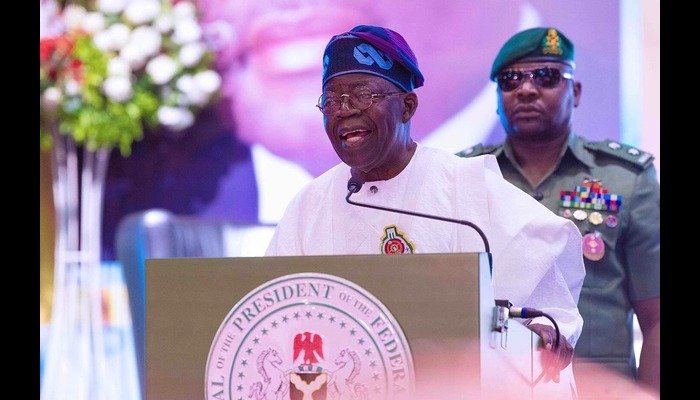
President Bola Ahmed Tinubu has approved the formation of a Presidential Petroleum Reform & Value Optimisation Taskforce to spearhead the next phase of structural reforms in Nigeria’s petroleum industry.
The Taskforce, chaired by Mr Fola Adeola, co-founder of Guaranty Trust Bank and founder of the Fate Foundation, is mandated to produce actionable reform blueprints aimed at consolidating ongoing initiatives, unlocking capital, and positioning Nigeria as a global energy investment hub.
Other members include Ademola Adeyemi-Bero, Osagie Okunbor, Abubakar Suleiman, Adaeze Aguele, Farouk Gumel, Phillipa Osakwe-Okoye, and Seyi Bella, with Mofoluwasho Fadayomi serving as secretary.
According to the President’s Special Adviser on Information & Strategy, Bayo Onanuga, the Taskforce will operate as a technical reform body, consulting industry operators, regulators, investors, and civil society, with a focus on designing and implementing effective policies rather than representing stakeholder interests.
The group is expected to report directly to the President, submitting monthly progress updates, an interim report after three months, and a final blueprint within six months.
President Tinubu has outlined three key deliverables for the Taskforce:
Implementation Toolkit for Immediate Structural Fixes – draft legislative amendments, executive instruments, and institutional restructuring proposals.
Capital & Liquidity Acceleration Blueprint – a strategy to unlock $5–10 billion in sectoral liquidity while safeguarding Nigeria’s sovereign interests.
National Energy Transformation Strategy – a ten-year roadmap with targets for production, GDP contribution, foreign exchange earnings, and cost competitiveness.
The President has directed all Ministries, Departments, Agencies, regulators, and relevant institutions to provide technical support and align their existing initiatives with the Taskforce’s mandate. Existing committees and working groups in the sector are also expected to coordinate with the Taskforce to prevent duplication and ensure cohesive reform implementation.
The creation of the Taskforce is seen as a strategic move to accelerate petroleum sector reforms, optimise national energy assets, strengthen governance, and transform Nigeria’s oil and gas industry into a long-term driver of economic growth.
The Taskforce will automatically dissolve once its final report is submitted and approved.



Government
Oborevwori Approves ₦400bn Mega Infrastructure Projects, Orders 25 Police Divisional HQs Across Delta
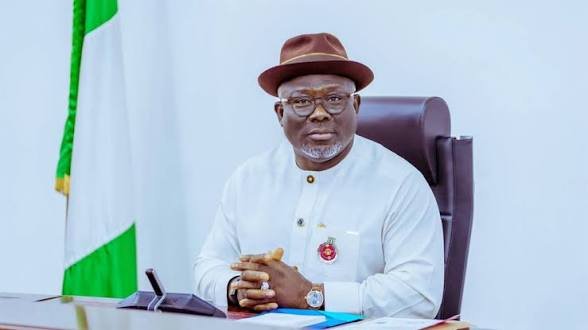
The Delta State Government has approved projects worth over ₦400 billion for the construction, rehabilitation and upgrading of roads and other critical infrastructure across the state.
The approvals were granted on Friday during the State Executive Council meeting presided over by Governor Sheriff Oborevwori.
Briefing journalists after the meeting, the Commissioner for Works (Rural Roads) and Public Information, Charles Aniagwu, said the projects span several local government areas including Warri South, Warri South-West, Udu, Ughelli North, Ughelli South, Ethiope East, Ethiope West, Aniocha North, Aniocha South, Ika North-East, Ika South, Ndokwa West, Ndokwa East, Bomadi, Burutu, Isoko North and Isoko South.
According to him, the projects are designed to improve transportation, strengthen security, stimulate economic activities and enhance connectivity among communities across Delta State.
Aniagwu disclosed that the council also approved the construction of a Special Protection Unit (SPU) Base for the Nigeria Police Force to reinforce security operations in the state.
He further revealed that the government approved the construction of Police Divisional Headquarters in all 25 local government areas of the state in anticipation of the Federal Government’s proposed policy on the establishment of state police.
The commissioner said the approvals reflect the administration’s determination to upgrade infrastructure and reinforce the state’s security architecture.
Among the major road projects approved is the rehabilitation of the Aghalokpe–SPDC–Adagbrassa–Aragba Road and adjoining streets in Okpe Local Government Area, as well as the rehabilitation and asphalt overlay of Okotomewo/Oviri Court/Adeje Road within the same council.
The council also approved the construction of Barrister Omamuzo Erebe and Eze Akporube Streets in Oshimili North, the reconstruction of failed sections of major roads in Asaba, and the cutting of the hill at Asaba Airport to improve access and safety.
Additional projects in the state capital include the construction of Asagba Palace Road off Nnebisi Road, GBC Murphy Avenue with a spur to Chief Ugwuja Close/Nze Francis Road off Benin–Asaba Road, as well as Chris Abudeyi Street and Ogbeeshi Monochie Street.
In Sapele, the government approved the rehabilitation and reconstruction of Powerline Road and the construction of Tutulane/Obodokwu Road.
For the Warri axis, projects include the reconstruction of Warri Internal Ring Road Phase Two, rehabilitation of the first three kilometres of the Trans-Warri Ode-Itsekiri Road, construction of Orient Drive off NPA Expressway and Orient Way off Niger Cat Road in Ekpan, rehabilitation of Enerhen Police Station Road and Aladja Avenue Road, resurfacing of River Road in Ekpan, and the construction of Old Okoko Road from Koko Garage to the Lagos Expressway Phase One in Warri North.
In Udu Local Government Area, the council approved the rehabilitation and reconstruction of the Otu-Jeremi/Udu Road, erosion control works along Ekakpamre/Ekrokpe–Usiefrun/Orhuwhorun roads, and the construction of internal and external roads at Udu Harbour Market.
Projects in the Ughelli axis include the extension of Imoniyame Road off Iwhrekpokpor Road in Ughelli North, construction of Okwagbe internal roads and Imode Street in Ughelli South, the extension of Olori Road, and internal roads in Patani.
Major reconstruction works are also planned for Ethiope East and Ethiope West, including the reconstruction of the Eku–Osubi Road Phase Two, construction of Chief Ogefere Street, Eseme Street and Oswotu Close in Abraka, and reconstruction of sections of Jesse–Boboroko Road.
In Ika North-East and Ika South, approved projects include the construction of Asuen Road in Owa-Ekei, Obi Ifeanayi Chukwu Road in Mbiri, Idumuigwe Road and Ogebe-Aku Road in Akumazi, Ugbala Road in Owa-Alero, and the Ekuku–Agbor/Okpe–Abavo Road Phase Two.
For riverine communities, the government approved the construction of Macaulay and Mitubiri Roads in Bomadi, internal roads in Odimodi and Ogulagha communities in Burutu, and the Torugbene–Ojobo Road with a spur to Ojobo Town.
Projects approved in Isoko North and Isoko South include the construction of Emese Road in Urude community, reconstruction of Otor-Igho Township Road, construction of Godwin Ogorugba, Eduje and Matthew Enarube Streets, and the reconstruction of the Oteri–Igbide–Emede Road.
In Ndokwa East and Ndokwa West, the government approved the construction of Ogbedigbo Afor Road with a spur to Obi Palace Road, reconstruction of Ebendo–Iyasele–Ashaka Road, Ogbe-Ogume–Ebendo Road Phase One, and access roads into the Kwale Free Trade Zone.
Beyond road infrastructure, Aniagwu said the council also approved the construction of male and female hostels in state-owned universities, renovation of magistrate courts, and area and district customary courts across the state.
The council further approved the construction of five judges’ quarters in Osubi and prototype judges’ quarters with auxiliary facilities in Asaba to improve the welfare and working conditions of judicial officers.
Also approved was the completion of the Senate and Administrative Building at the Delta State University, Abraka, aimed at strengthening administrative efficiency at the institution.
Aniagwu, who briefed journalists alongside the Attorney-General and Commissioner for Justice, Ekemejero Ohwovoriole (SAN), Commissioner for Higher Education, Nyerhovwo Tonukari, Commissioner for Housing, Godknows Angele, Chief Press Secretary to the Governor, Festus Ahon, and Technical Assistant to the Governor, Bob Nakpodia, said the approvals underscore the administration’s commitment to strengthening institutions, improving security architecture and delivering modern infrastructure to drive development across Delta State.

The Nigerian Economic Summit Group (NESG) has projected that Nigeria could earn between N2.3 trillion and N30.2 trillion in additional oil revenue if the ongoing tensions in the Middle East continue to push global crude oil prices above the country’s 2026 budget benchmark.
In a policy brief released on Friday, the economic think tank said the escalating crisis involving the United States, Israel and Iran since late February 2026 has triggered one of the most significant global energy shocks since the Russia–Ukraine War, sending international oil prices sharply upward.
According to NESG, crude oil prices rising above the 2026 budget benchmark of $64.9 per barrel could result in a major fiscal windfall for Nigeria. However, the group noted that the magnitude of the gains will largely depend on the duration and scale of the conflict, as well as the government’s policy responses.
The report outlined three possible scenarios.
Under a short-lived crisis lasting four to six weeks, with oil prices averaging $90 per barrel, Nigeria could earn about $1.62 billion (approximately N2.27 trillion) in additional revenue.
If the conflict spreads across the Gulf region and lasts up to three months, with oil prices averaging $110 per barrel, the country’s additional earnings could increase to about $7.48 billion (N10.47 trillion).
In a worst-case scenario, where the crisis escalates globally and oil prices average $130 per barrel for six months, Nigeria could generate as much as $21.58 billion (N30.21 trillion) in extra oil revenue.
NESG added that in the most severe scenario, the Federal Government’s share—estimated at about N15.9 trillion—could be sufficient to cover Nigeria’s annual debt-servicing obligations or finance nearly 60 percent of the capital budget.
The group explained that Nigeria’s position as an Atlantic oil exporter provides a strategic advantage in the current crisis. Unlike producers in the Gulf region, Nigeria’s crude exports do not pass through the Strait of Hormuz, a critical shipping route that handles roughly one-fifth of global oil supply and sits at the centre of the tensions.
Because Nigerian crude shipments leave the Gulf of Guinea directly, the country can benefit from rising global prices without facing the immediate supply disruptions affecting Middle Eastern producers.
Despite the potential gains, NESG warned that higher global energy prices could also increase domestic inflation through rising fuel, transportation and logistics costs.
Its simulations suggest that the oil price shock could push Nigeria’s headline inflation up by between 1.3 and 5.2 percentage points over the next two to three quarters, depending on the intensity of the crisis.
However, the group said the inflationary impact may be partly cushioned by improved local refining capacity, particularly from the Dangote Refinery, which has reduced Nigeria’s reliance on imported petroleum products.
NESG also noted that stronger oil export receipts could boost foreign exchange inflows and support the naira. Under moderate crisis conditions, the exchange rate could strengthen toward N1,200–N1,300 per dollar, while allowing the Central Bank of Nigeria to rebuild external reserves.
Nevertheless, the think tank cautioned that Nigeria risks repeating its historic boom-and-bust cycle if the potential windfall is not carefully managed.
NESG advised the government to save excess oil revenues, sustain fuel subsidy reforms, reduce public debt and expand targeted social protection programmes, rather than resorting to excessive public spending or broad price controls.
According to the group, the crisis presents both risks and opportunities, warning that weak policy responses could undermine Nigeria’s recent economic reform efforts.

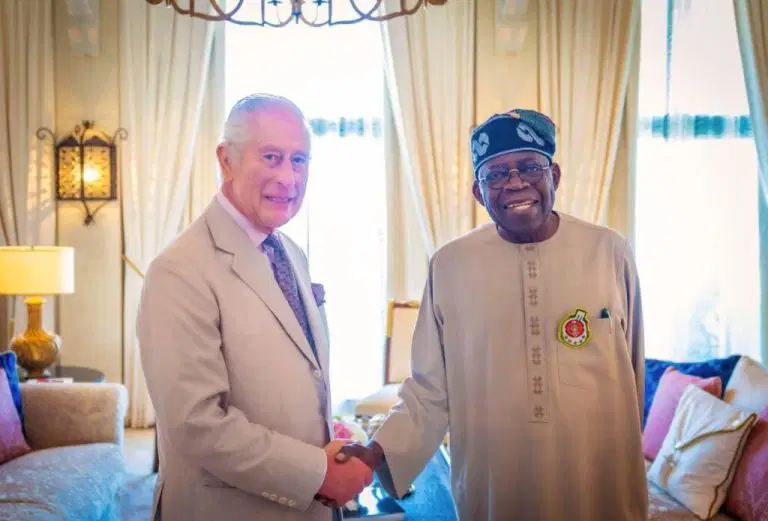
The United Kingdom has announced heightened security measures, including temporary airspace restrictions, in Windsor ahead of President Bola Ahmed Tinubu’s state visit next week.
According to Thames Valley Police, the measures are part of a coordinated security operation involving the Royal Borough of Windsor and Maidenhead, the Royal Household, and other partners to safeguard dignitaries, spectators, and the general public.
Chief Superintendent Adrian Hall, of Thames Valley Police’s Joint Operations Unit, stated:
“The air restrictions are just one aspect of a robust security operation. Many measures will be visible, others will not. Our experience in policing Royal events ensures that we have thoroughly planned and prepared for this visit. We will keep all attendees safe while allowing the public to enjoy this historic occasion.”
Windsor Castle already has permanent airspace restrictions year-round, but on Wednesday, March 18, these will be extended from 7:00 a.m. to 11:59 p.m., in coordination with the Civil Aviation Authority (CAA). Any violation will be treated as a criminal offense under the Air Navigation Order.
Police will deploy officers with specialist capabilities, including search teams, mounted units, armed officers, roads policing, and Project Servator personnel. Windsor’s CCTV network, hostile vehicle mitigation barriers, and other security measures will also be in use.
Members of the public are urged to report any suspicious activity by calling 101, or 999 in case of an emergency.
The measures reflect the UK’s commitment to ensuring both the safety of dignitaries and the smooth conduct of this high-profile state visit.