
General News
TWO FOREMOST SOCIOCULTURAL ORGANISATIONS CONDEMN SENATOR FADAHUNSI ON CALLING FOR NSA RIBADU’S REMOVAL


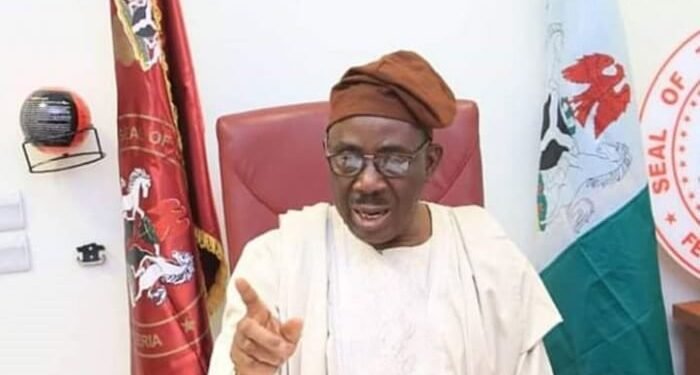
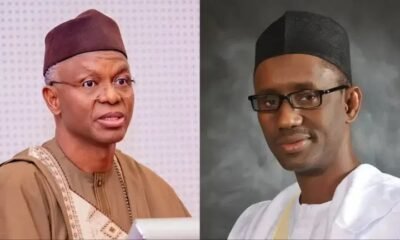
Two foremost sociocultural organisations—the Oodua Peoples’ Network (OPN) and the Niger Delta Stakeholders Forum (NDSF)—have strongly condemned Osun East Senator, Francis Fadahunsi, for urging President Bola Ahmed Tinubu to sack the National Security Adviser (NSA), Mallam Nuhu Ribadu. Senator Fadahunsi had argued that Ribadu, a retired Assistant Inspector General of Police (AIG), should be replaced with a retired military officer. But both organisations described the statement as reckless, outdated and unhelpful, especially at a time the nation is collectively battling multifaceted security challenges.
The Niger Delta Stakeholders Forum, in a statement signed by its Chairman, Barr. Andrew Mene, Secretary Roland Abarasi Tamunopiri, and Publicity Secretary Umukoro Joseph Erhimeyoma, said the senator’s remarks reveal a “narrow understanding of modern security leadership.” They noted that contemporary security threats—ranging from terrorism and cybercrime to intelligence coordination—require a leader with strategic depth, intelligence expertise and inter-agency coordination skills, all of which Ribadu has “consistently demonstrated.” According to the forum, “Ribadu’s track record as former EFCC Chairman and his longstanding involvement in security and governance reforms show that effective leadership is not defined by military background, but by competence, integrity and the ability to integrate intelligence with security operations.” They stressed that President Tinubu’s appointment of Ribadu aligns with global best practices, as leading democracies routinely appoint civilians, technocrats or intelligence professionals—not just retired soldiers—as national security advisers. The forum added, “Security is no longer about who wears a uniform; it is about who can analyse threats, dismantle complex networks, and coordinate civilian and military institutions effectively. Senator Fadahunsi’s argument belongs to the past.” They cited countries such as the United States, United Kingdom, Canada, Australia and India, where NSAs are predominantly civilians, intelligence specialists or diplomats.
Similarly, the Oodua Peoples’ Network (OPN), in a statement signed by President Chief Olasupo Bamidele, Secretary Chief Emmanuel Adesokan, and Director of Organisation Kehinde Olasope, dismissed Senator Fadahunsi’s call as “simplistic and dangerously out of touch with global realities.” The group said modern national security challenges—especially in complex environments like Nigeria—demand intelligence, integrity, and cross-agency coordination, not just military credentials. According to OPN, “Ribadu brings to the table far more than a badge or a uniform ever could. His record in dismantling criminal networks, fighting corruption, and coordinating intelligence frameworks places him far ahead of outdated rank-based assumptions.” They emphasized that hybrid threats such as banditry, kidnapping, pipeline vandalism, cyber-crime and terrorism require brains, strategic foresight and policy coherence, not “nostalgia for military-era thinking.” The organisation further noted that many global powers abandoned rank-based security leadership decades ago because contemporary threats require diplomacy, intelligence gathering, interoperability and civilian oversight, not military might alone.
Both groups reminded Senator Fadahunsi that the Office of the National Security Adviser has never been the exclusive preserve of military personnel. They highlighted that the first two coordinators of national security—Late Muhammadu Gambo Jimeta, a retired Inspector General of Police (1990–1993), and Alh. Ismaila Gwarzo, a seasoned intelligence officer (1993–1998)—performed exceptionally and remain highly regarded. The organisations reiterated that Nigeria is experiencing difficult times and requires unity, responsible leadership, and constructive engagement, not divisive or uninformed commentary. They reaffirmed their support for President Tinubu’s choice of Ribadu as NSA, describing him as the “most competent, credible and strategically equipped” personality for the role. “What Nigeria needs now is results, not recycled arguments. The nation must rally behind efforts to strengthen intelligence gathering, enhance operational synergy, and secure sustainable peace,” they said. Both groups urged political leaders to avoid politicizing security matters and instead contribute meaningfully to nation-building.



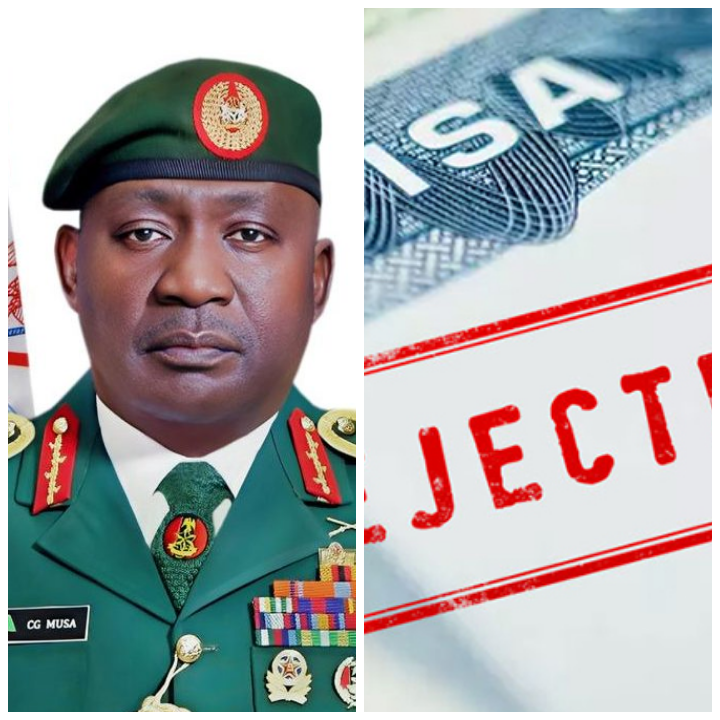

The Independent National Electoral Commission (INEC) has unveiled a revised draft of its 2026 Regulations and Guidelines for Political Parties as part of efforts to strengthen Nigeria’s electoral process ahead of the 2027 general elections.
INEC Chairman, Joash Amupitan, disclosed this on Tuesday during a consultative meeting with political party leaders in Abuja, where he called for stakeholder input on the proposed framework.
Amupitan said the revised guidelines were developed to align with the Electoral Act 2026 and to address shortcomings identified in previous regulations, particularly those guiding the 2022 electoral cycle.
He emphasised that credible elections begin with transparent processes within political parties, especially in candidate selection.
“We are not just here to discuss new regulations, but to reaffirm our shared commitment to strengthening Nigeria’s democracy. Credible elections begin long before polling day—they begin with the transparency of candidate emergence,” he said.
According to the INEC chairman, the review followed a comprehensive assessment supported by empirical data, including insights from the Political Party Performance Index developed in collaboration with the Westminster Foundation for Democracy.
He noted that the assessment revealed a significant gap between party constitutions and actual practices at the grassroots level.
The revised guidelines introduce reforms across key areas such as party registration and mergers, internal administration, conduct of primaries, campaign operations, financial transparency, and conditions for party deregistration.
Amupitan said the measures are specifically designed to curb irregularities in party primaries and promote internal democracy.
“These guidelines aim to sanitise party primaries and eliminate opaque processes that impose unpopular candidates, which often lead to voter apathy and avoidable litigation,” he added.
On campaign finance, he explained that the Electoral Act 2026 empowers INEC to set spending limits in consultation with political parties, urging stakeholders to pay close attention to provisions relating to election funding and expenditure.
With the 2027 general elections scheduled for January 16 for presidential and National Assembly polls, and February 6 for governorship and state assembly elections, Amupitan noted that the commission is working within a tight timeline.
“We are operating within a compressed timetable that requires precision and efficiency in implementation,” he said.
He further revealed that the draft guidelines include measurable benchmarks aimed at increasing participation among women, youth, and persons with disabilities in the electoral process.
Calling for constructive engagement, the INEC chairman urged political parties to see the guidelines as protective measures rather than restrictions.
“By strengthening these rules, we are safeguarding the sovereign will of Nigerians from the nomination stage to the final declaration of results,” he stated.
Reaffirming the commission’s neutrality, Amupitan maintained that INEC remains an impartial umpire committed to defending democratic values and ensuring credible elections.
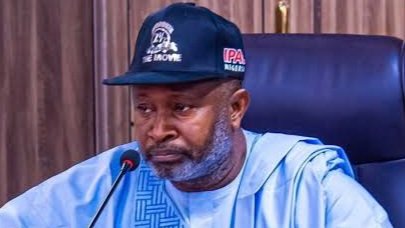
The Inter-Party Advisory Council (IPAC) has called for an urgent amendment of the Electoral Act 2026, warning that its current provisions could threaten the integrity of Nigeria’s 2027 general elections.
IPAC National Chairman, Yusuf Mamman Dantalle, made the position known on Tuesday during a meeting with the Independent National Electoral Commission (INEC) and political party leaders in Abuja.
He described the law as regressive, noting that it fails to reflect the expectations of Nigerians despite extensive public consultations during the reform process. According to him, the Act poses significant risks and could undermine democratic stability if not urgently reviewed.
Dantalle further expressed concern that the legislation has already been used as the basis for INEC’s 2027 election timetable, placing political parties—especially those outside government—under undue pressure to comply with challenging requirements.
Among the contentious issues raised by IPAC is the mandatory adoption of direct primaries for candidate selection. The council argued that the provision erodes the independence of political parties and called for the reinstatement of indirect primaries.
IPAC also faulted the requirement for parties to submit detailed membership registers, including National Identification Numbers (NIN), within a limited timeframe in April 2026. It described the directive as impractical and warned that it could exclude many Nigerians who have yet to obtain NIN.
On electoral transparency, the council stressed the need for the full and unconditional electronic transmission of results. It urged INEC to ensure that polling unit results are uploaded to the IReV portal immediately after announcement, referencing challenges experienced during the 2023 presidential election.
The body further raised concerns over what it termed weakened sanctions for vote buying in the new law, reiterating its demand for the establishment of an Electoral Offences Commission to prosecute electoral offenders.
IPAC disclosed that it has formally written to the National Assembly, seeking the repeal of the Electoral Act 2026, and appealed to international partners to support Nigeria’s democratic process through constructive engagement.
As preparations begin for upcoming governorship elections in Ekiti and Osun states, the council urged INEC to enhance its readiness, particularly in deploying critical technologies such as the Bimodal Voter Accreditation System (BVAS) and the IReV portal.
Dantalle emphasised that restoring public confidence in the electoral system is crucial, warning that voter apathy may persist without meaningful reforms.
The meeting also reviewed INEC’s proposed 2026 Regulations and Guidelines for Political Parties, which are yet to be officially released and are separate from the Electoral Guidelines.
General News
Global Oil Prices Rise on Strait Disruptions, as Iran Rejects U.S. Dialogue, Supply Risks Persist

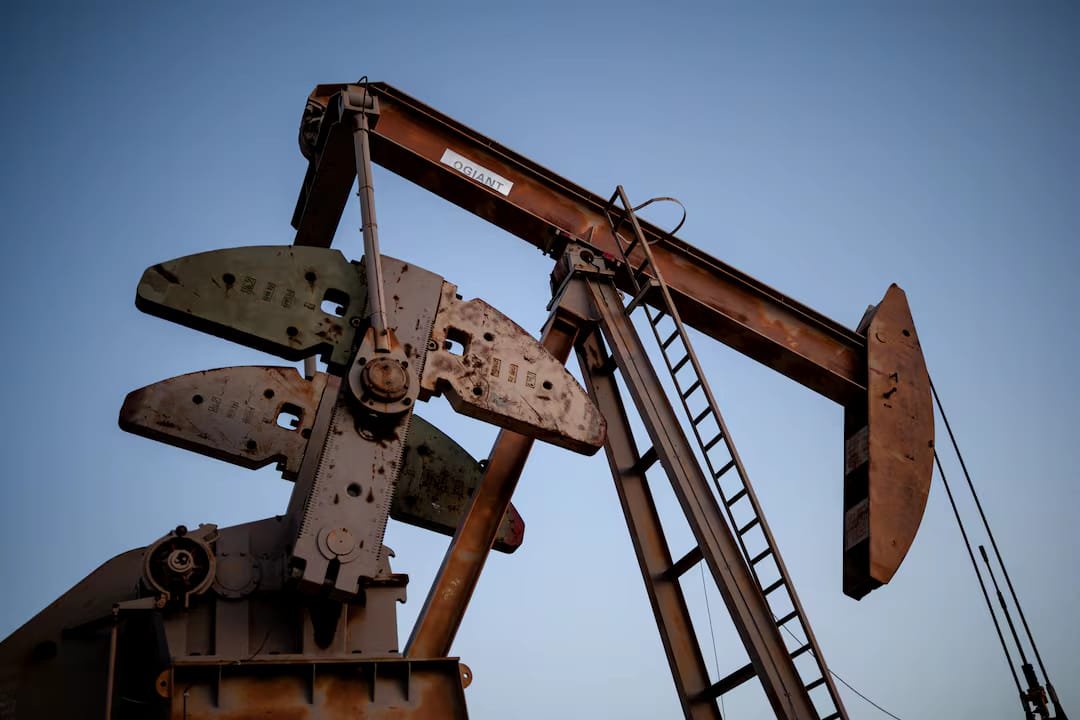
Global oil prices climbed sharply on Tuesday as ongoing supply disruptions in the Middle East and renewed geopolitical tensions between Iran and the United States rattled energy markets.
Benchmark crude prices rose above the $100 per barrel mark, with Brent crude gaining nearly $2 and U.S. West Texas Intermediate also posting significant increases. The surge comes amid persistent concerns over disrupted supply routes, particularly through the strategic Strait of Hormuz; a critical chokepoint that handles roughly 20% of global oil shipments.
Tensions escalated further after Iran denied claims by the U.S. officials that negotiations were underway to ease the conflict. The denial contradicted earlier remarks, suggesting progress in diplomatic engagement, adding to uncertainty in global markets.
The ongoing conflict has already disrupted energy infrastructure across the region, with reports indicating that dozens of oil and gas facilities have been damaged. Analysts warn that these disruptions could keep prices elevated for an extended period, even if hostilities ease in the near term.
Adding to market volatility are continued military exchanges and attacks on energy assets, which have heightened fears of a prolonged supply crunch. Oil prices have already surged significantly since late February as traders factor in the risk of further escalation.
Energy experts caution that if the disruption to shipping routes persists, prices could spike even higher, potentially exceeding previous record levels. The uncertainty surrounding diplomatic efforts and the ongoing damage to infrastructure continue to weigh heavily on global energy markets.
The developments underscore the fragile state of global oil supply chains, with markets reacting swiftly to both geopolitical tensions and conflicting signals on potential negotiations.