
Education
Venezuelan Students Return to Streets After Years of Political Repression

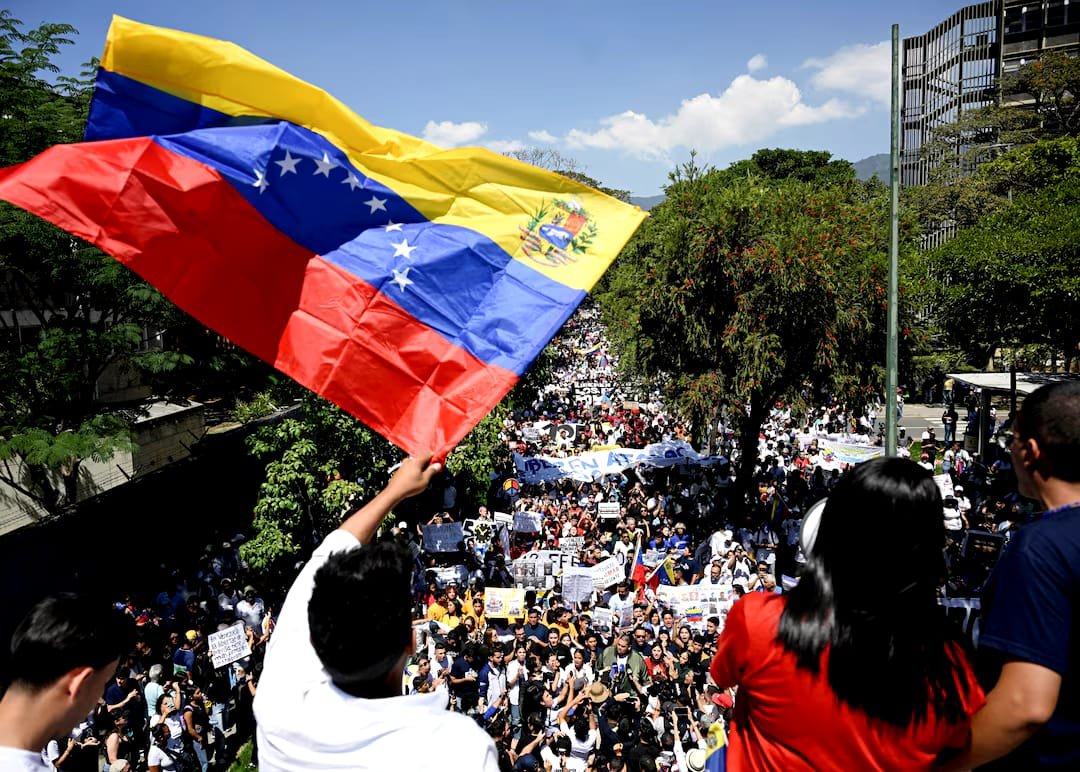
University students across Venezuela have begun returning to the streets in renewed demonstrations, marking a significant shift after years of political repression and fear under the country’s former leadership.
In recent weeks, hundreds of students from the Central University of Venezuela in the capital, Caracas, staged marches that moved beyond university campuses into public streets, an action that had long been considered dangerous due to the risk of arrests, violence, or intimidation by security forces.
The protests reflect a resurgence of youth activism following the dramatic capture of former president Nicolás Maduro in early January, an event that many students say has created a rare opening for public dissent and demands for political reform.
Carrying national flags and chanting slogans for freedom, student demonstrators marched alongside relatives of political detainees, demanding the release of prisoners, institutional reforms, and credible democratic elections. Many protesters also called for improved conditions in the country’s struggling university system, including higher salaries for lecturers and better funding for campuses.
For many young activists, the moment represents a generational awakening. A large number of the protesters are in their early twenties and grew up entirely under the political system known as Chavismo, which began with former president Hugo Chávez in 1999 and continued under Maduro.
Student leaders say the renewed demonstrations show that fear is gradually giving way to hope. While many celebrate the political changes that have occurred in recent months, they remain cautious about the country’s future and stress the need for a democratic transition led by Venezuelans themselves.
Despite the renewed activism, human rights observers warn that Venezuela’s repressive security structures remain largely intact, meaning protesters could still face risks as demonstrations continue.
The federal government has approved ₦2 billion each as take-off grants for two newly established institutions; Epe University and Tinubu Polytechnic, sparking widespread debate among Nigerians on social media over the timing and priorities of the decision.
The funding approval was disclosed in a post circulating on X (formerly Twitter), where the announcement quickly drew mixed reactions from users questioning the rationale behind creating new institutions while many existing universities and polytechnics struggle with deteriorating infrastructure and underfunding.
Critics particularly raised concerns over the naming of Tinubu Polytechnic after Nigeria’s sitting president, Bola Ahmed Tinubu.
Several commentators argued that naming public institutions after a current leader could be perceived as politically motivated and premature.
Others questioned the government’s spending priorities, suggesting that the ₦4 billion combined take-off grant could have been directed toward revitalizing older federal institutions facing infrastructure decay, overcrowded classrooms, and inadequate funding.
Some social media users also expressed skepticism about the establishment of new institutions at a time when discussions have emerged about slowing down the proliferation of tertiary institutions in the country. Critics said Nigeria already has hundreds of universities and polytechnics, many of which struggle with funding, staffing, and accreditation challenges.
“There are universities with abandoned projects and poor facilities. Why not invest in fixing those before building new ones?” one user wrote on X, reflecting a sentiment widely echoed in the comment sections.
Others went further, alleging that new institutional projects sometimes become avenues for political patronage or mismanagement of public funds, although no evidence was presented to support those claims in the current case.
However, supporters of the initiative argued that establishing new institutions can expand access to higher education, especially in rapidly growing areas where demand for university and technical education continues to rise.
Nigeria has seen a steady increase in tertiary institutions over the past two decades as governments attempt to address the growing number of students seeking admission each year. Education experts note that millions of qualified candidates are unable to secure university placements annually due to limited spaces.
Despite the criticism, government officials have not yet issued a detailed explanation regarding the selection of the institutions or the rationale behind the take-off grant allocation.


A chieftain of the African Democratic Congress, Lauretta Onochie, has weighed in on the controversy surrounding the National Youth Service Corps (NYSC) certificate of the Deputy Speaker of the House of Representatives, Benjamin Kalu.
Onochie made her position known in a post on her official X account on Friday, March 13, 2026, stating that participation in the National Youth Service Corps does not necessarily prove that an individual graduated from a tertiary institution.
The issue resurfaced following a report by THISDAY which indicated that the Legal Practitioners Disciplinary Committee had yet to dismiss a petition filed against Kalu over his NYSC documentation. The petition was reportedly submitted by the Civil Society Groups for Good Governance, triggering fresh debate about the relationship between NYSC certification and academic qualifications.
Reacting to the development, Onochie argued that the NYSC scheme and academic graduation are separate processes and should not be treated as the same.
“I know someone who took part in the National Youth Service Corps even though he did not do graduation,” she wrote, stressing that possession of an NYSC certificate alone should not be regarded as proof of completing a university or polytechnic programme.
Her remarks come as public scrutiny over the academic credentials of political figures continues to intensify. In Nigeria’s political landscape, questions about educational records have repeatedly generated debate and legal challenges.
Observers say Onochie’s comments highlight the need to distinguish between NYSC participation and formal graduation records, noting that academic certificates remain the primary evidence of educational attainment.
The statement has since sparked reactions across social media and political circles, with some Nigerians supporting her clarification while others insist that transparency in the documentation of public officials is vital for maintaining public confidence.
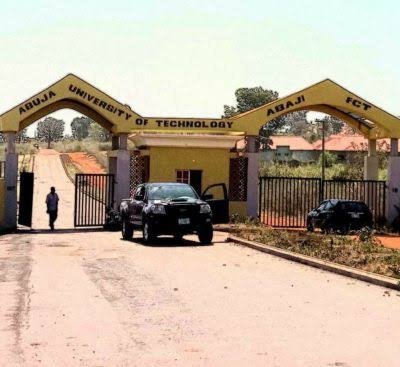
The Federal Capital Territory (FCT) University of Science and Technology in Abaji is poised to begin operations under the leadership of President Bola Ahmed Tinubu.
FCT Minister Dr. Nyesom Wike announced during a thank-you visit to Abaji, Abuja, that the administration has already started building the essential infrastructure and facilities for the university’s launch.
Dr. Wike urged residents to remain patient, assuring them that the university will soon become a reality under President Tinubu’s administration.
In addition to the university, the Minister pledged to construct the Gurara Market bridge, tackle gully erosion in two communities, and reactivate a 15-kilometre abandoned road connecting other local communities. He also revealed plans to upgrade all third-class chiefs to second-class chiefs and all second-class chiefs to first-class chiefs.
Alhaji Abubakar Abdullahi, Chairman of Abaji Area Council, highlighted that Abaji previously had minimal Federal Government presence and thanked President Tinubu for giving the area a renewed sense of inclusion and development.