
Foreign
Voyager 1 Becomes First Human-Made Object to Reach One Light-Day from Earth

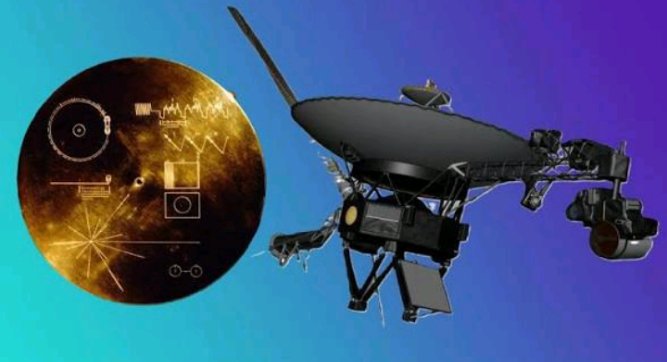
NASA’s Voyager 1 spacecraft has crossed a historic threshold, becoming the first human-made object to reach a distance of one light-day from Earth, nearly five decades after its launch.
According to NASA’s calculations, the probe crossed the milestone at 5:16 a.m. EST on Wednesday, November 18, 2026, placing it approximately 16.09 billion miles (25.89 billion kilometers) from Earth.
A light-day is the distance light travels in 24 hours. At this range, a radio signal sent from Earth takes a full day to reach the spacecraft, and its reply requires another day to return.
“If you want to say ‘hello’ to Voyager, you send your message and then you go home and you wait two days before you finally get a response,” said Suzanne Dodd, Voyager project manager at NASA’s Jet Propulsion Laboratory.
Voyager 1, traveling at about 38,000 mph (61,000 kph), has taken nearly 50 years to cover this distance since its launch in 1977. The spacecraft is now roughly 173 times the Earth-sun distance from home. Its twin, Voyager 2, launched two weeks earlier but is on a slower trajectory and will not reach the one light-day mark until 2035.
The milestone comes amid recent engineering challenges. In September, the team completed a power-saving operation nicknamed the “Big Bang,” simultaneously switching off three devices and replacing them with lower-power alternatives to extend the spacecraft’s science operations.
In October, NASA briefly lost contact with Voyager 1 for 48 hours before the signal returned on its own, an event engineers are still investigating.
More recently, NASA reported that while a carrier signal from Voyager 1 was still being detected, the probe had stopped sending back usable science and engineering data as it approached the milestone.
The issue appears to lie with the onboard computer responsible for formatting data for transmission.
Despite the technical troubles, the crossing of the one light-day threshold stands as a testament to the spacecraft’s endurance. NASA had encouraged the public to celebrate by shining flashlights into the night sky in Morse code spelling “VGR,” Voyager’s call sign.
Voyager 1 entered interstellar space in 2012 and remains the only spacecraft to have directly studied that region alongside its twin. It will take another 18,000 years for the probe to reach a full light-year from Earth.