Uncategorized
WEST AFRICAN LEADERS RENEW COMMITMENT TO REGIONAL SECURITY AT ACCRA CONFERENCE

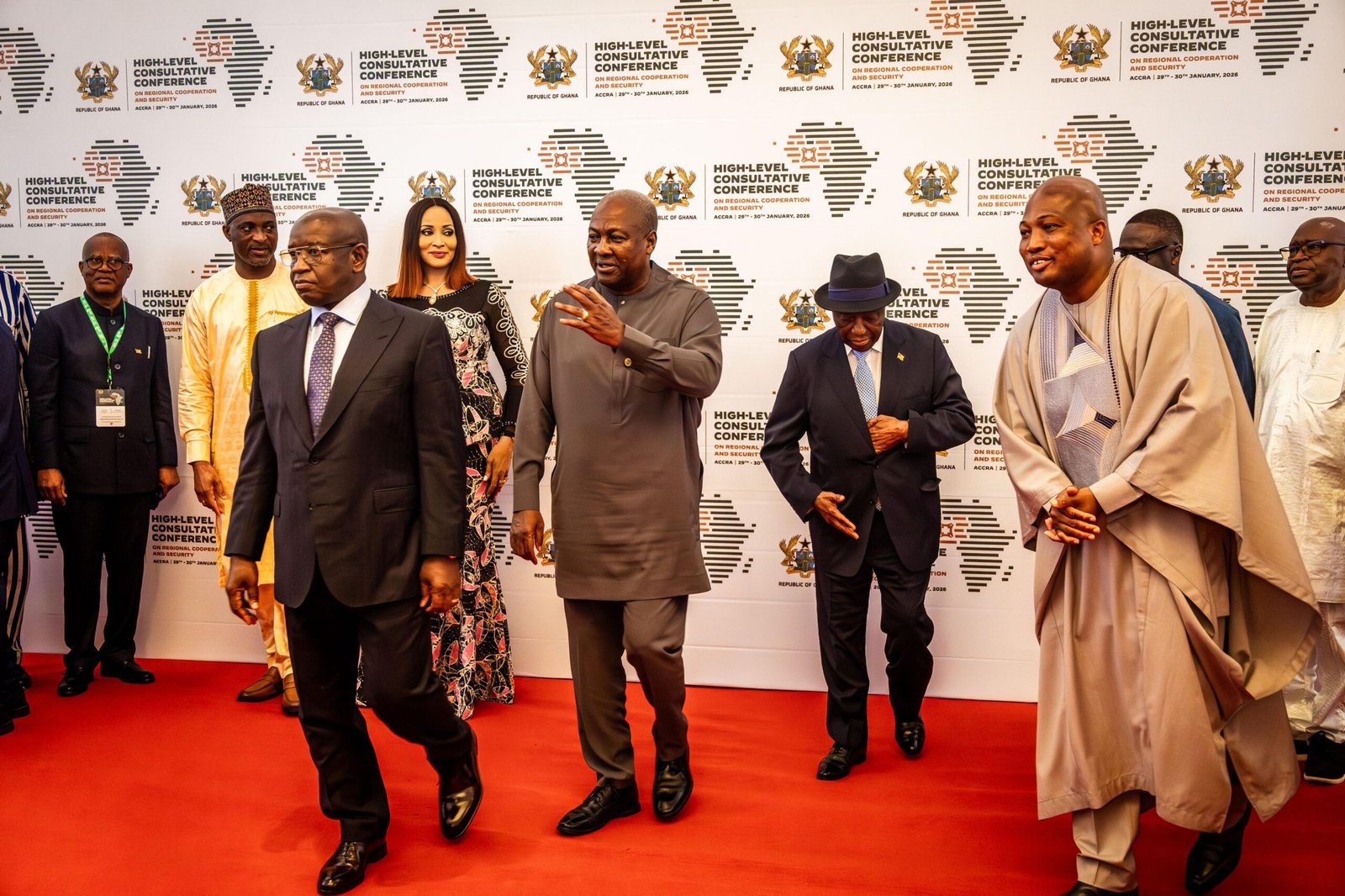
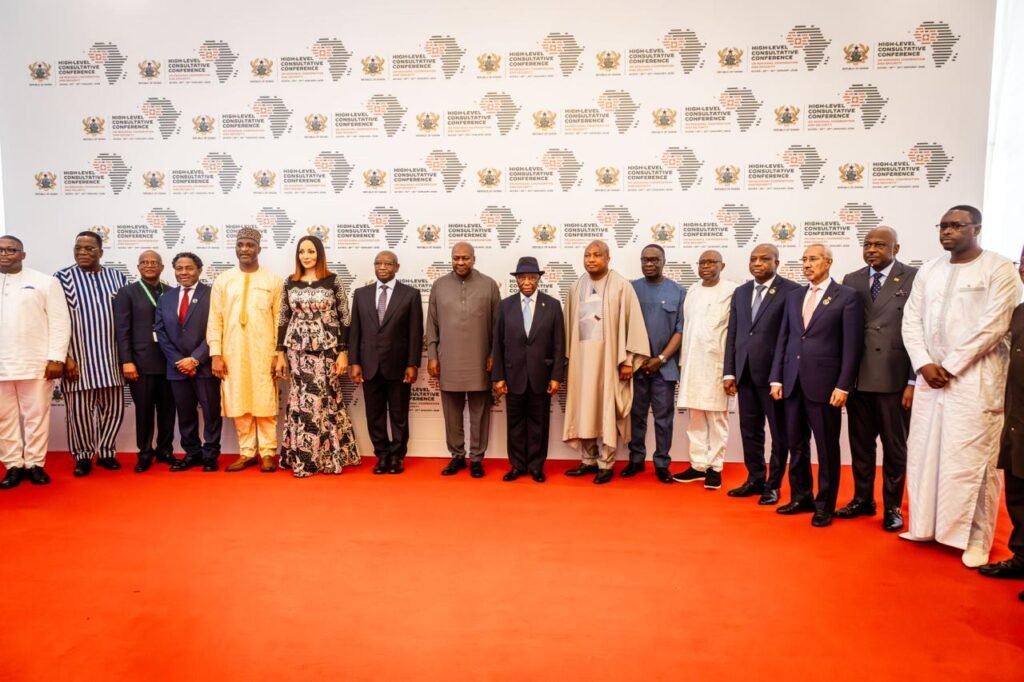
Heads of State and Government from Ghana, Liberia, and Sierra Leone, along with representatives from Burkina Faso, Mali, Mauritania, Nigeria, Senegal, and Togo, have reaffirmed their commitment to strengthening regional cooperation on security, governance, and human development.
The announcement followed a two-day High-Level Consultative Conference held in Accra from January 29–30, 2026.
The conference, chaired by Ghanaian President John Dramani Mahama, brought together President Julius Maada Bio of Sierra Leone, President Joseph Boakai of Liberia, and senior delegations from the participating states.
Discussions focused on the growing security crisis in West Africa, described by leaders as the global epicenter of terrorism and violent extremism.
According to the closing communiqué, participants expressed concern over the surge in terrorist attacks across the region, noting that at least eight attacks occur daily, claiming an average of 44 lives.
Leaders stressed that inaction was no longer an option, warning that insecurity threatens livelihoods, governance, and regional stability.
The conference followed earlier consultations among Ministers of Foreign Affairs, Defence and Security officials, intelligence chiefs, and partners including the African Union Commission, the United Nations Development Programme (UNDP), and civil society organisations.
Key agreements included:
Moving beyond ad hoc cooperation to establish a structured, permanent framework for regional collaboration.
Enhancing intelligence sharing, harmonising legal systems, and developing shared security, infrastructure, and resilience programmes.
Prioritising human security, with people-centered and gender-responsive strategies alongside respect for national sovereignty and regional solidarity.
Strengthening counterterrorism measures, cross-border prosecutions, and de-radicalisation initiatives.
Improving coordination against transnational crimes, including arms, narcotics, and human trafficking.
Considering “hot pursuit” arrangements through bilateral, minilateral, or multilateral agreements.
Ghana’s Minister for Foreign Affairs was tasked with drafting a foundational Memorandum of Understanding (MoU) within three months, with adoption expected within six months.
Beyond security, leaders highlighted the importance of governance, economic opportunity, and service delivery in sustaining peace.
Commitments were made to improve food security, healthcare, education, job creation, local governance, and border management through digital technologies.
Climate change was also recognised as a threat multiplier, with agreements to integrate climate and food security into regional peace planning and disaster preparedness.
The Consultative Conference will now become a biannual platform, supported by a monitoring mechanism to track implementation, and the proposed MoU will outline strategies for resource mobilisation to sustain cooperation.
The conference concluded with a renewed sense of regional solidarity and determination to translate commitments into tangible outcomes that protect lives and livelihoods across West Africa.