General News
Senate Committee Questions SDGs Office Over ₦3.8bn Release from ₦348.7bn 2025 Budget
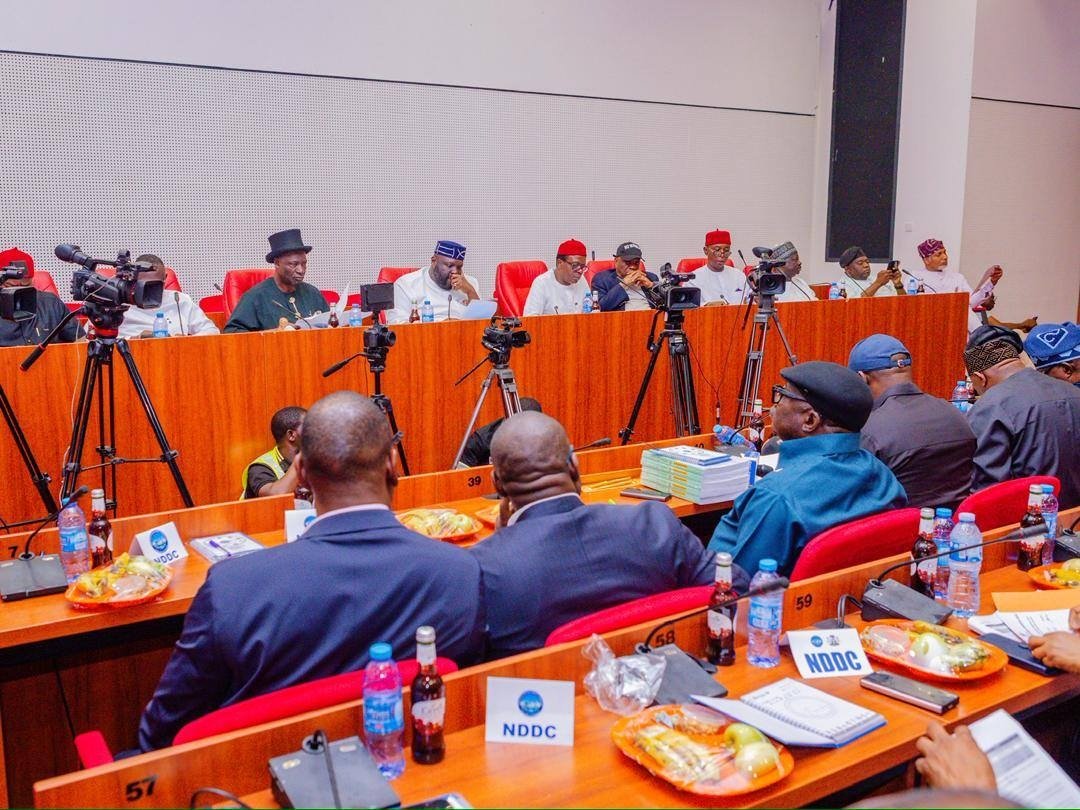
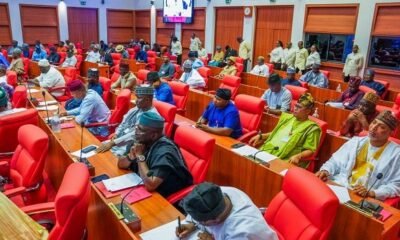
The Senate Committee on Sustainable Development Goals (SDGs) has queried the implementation of the 2025 budget of the SDGs office, revealing that only ₦3.8 billion has so far been released from the ₦348.7 billion appropriated for the year.
The committee, chaired by Senator Danjuma Goje, raised the issue during a budget defence session in Abuja.
The Senior Special Assistant to the President on SDGs, Adejoke Orelope-Adefulire, was absent from the session due to bereavement. She was represented by the Administrative Head and Secretary of Programmes (SOP), Mohammed Bala, who presented the budget performance report on behalf of the office.
Bala informed lawmakers that although the National Assembly approved ₦348.7 billion for the SDGs office in the 2025 fiscal year, only ₦3.8 billion had been released to date. He added that the office remains committed to delivering interventions in healthcare, education, environmental sustainability and other priority sectors across the country.
However, under questioning, the SOP admitted that some of the figures contained in the 2025 budget documents were inaccurate. He assured the committee that the records would be reviewed and corrected figures forwarded to the chairman.
Members of the committee also expressed concern over numerous uncompleted projects attributed to the SDGs office. In response, Bala apologised and blamed the delays on contractors who had yet to fully supply required materials, assuring lawmakers that steps were being taken to fast-track completion.
The lawmakers further raised allegations that some projects were executed with substandard materials, warning that such practices defeat the objectives of sustainable development initiatives. The committee stressed the importance of quality control, accountability and transparency in project implementation.
On the proposed 2026 budget, the SDGs office submitted a figure of ₦67.4 billion. The committee, however, queried aspects of the proposal and directed the office to conduct a comprehensive review before resubmitting it for further legislative scrutiny.
Chairman Goje reiterated the committee’s determination to ensure effective utilisation of funds allocated for sustainable development programmes nationwide.
General News
EO9 Defended as Constitutional Safeguard for Federation Revenues
The Federal Government has defended Executive Order 9 (EO9), insisting that it does not amount to the President “making law” but rather enforces constitutional provisions governing the custody of Federation revenues.
In a press statement issued on February 23, 2026, the Director-General of the Budget Office of the Federation and Secretary of the Implementation Committee on Executive Order 9, Tanimu Yakubu, said commentaries alleging executive overreach misrepresent both the Constitution and the fiscal issues involved.
Yakubu cited Section 80(1) of the 1999 Constitution (as amended), which mandates that all revenues or other monies raised or received by the Federation must be paid into and form one Consolidated Revenue Fund of the Federation.
He stressed that public revenue cannot lawfully be retained, applied, or warehoused outside constitutionally recognised funds.
He further referenced Section 162 of the Constitution, which requires revenues accruing to the Federation to be paid into the Federation Account for distribution in line with constitutional allocation principles.
According to him, the constitutional sequence is clear: revenue must first enter recognised constitutional accounts before it can be appropriated, shared, or spent.
The statement explained that EO9 operationalises these constitutional provisions within the oil and gas sector by directing the direct remittance of petroleum revenues including royalties, taxes, profit oil and gas, penalties, and related receipts into constitutionally recognised accounts.
It also seeks to strengthen reconciliation and transparency across revenue collection, custody, and reporting processes.
Yakubu maintained that EO9 does not encroach on legislative powers. He noted that Section 60(1) of the Constitution preserves the procedural autonomy of the National Assembly and argued that the Order neither regulates legislative procedure nor amends the Petroleum Industry Act (PIA), nor repeals any statute.
Rather, he said, it is an executive instrument issued pursuant to Section 5 of the Constitution to ensure the faithful execution of the Constitution and existing laws.
He added that any challenge to the constitutional validity of EO9 should be determined by the judiciary. Pending any judicial pronouncement, he said, the Executive remains duty-bound to safeguard Federation revenues, uphold constitutional supremacy, and strengthen fiscal integrity in support of FAAC distributions, budget credibility, and macroeconomic stability.
General News
Bola Ahmed Tinubu Hosts Governors for Ramadan Iftar at Aso Rock Presidential Villa
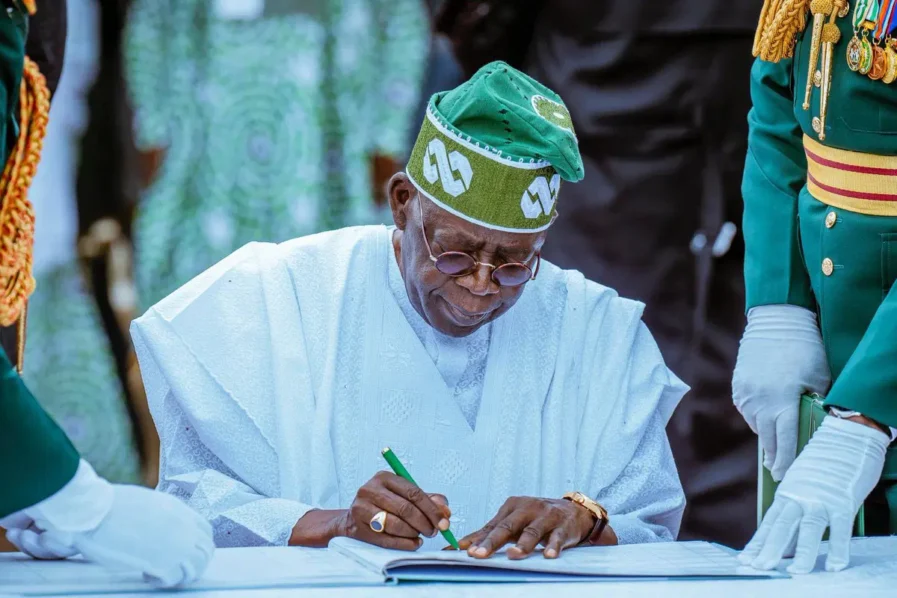
President Bola Ahmed Tinubu on Monday hosted state governors at the State House, Abuja, for a Ramadan fast-breaking dinner.
The iftar, held at the Presidential Banquet Hall of the Aso Rock Presidential Villa, marks the first in a series of engagements planned for the Muslim holy month. It is also the third consecutive year the President has hosted the annual reception.

The gathering brought together governors, deputy governors and senior government officials who joined the President to break the day’s fast at sunset.
Governors in attendance included those from Adamawa, Abia, Imo, Ogun, Edo, Kogi, Borno, Gombe, Sokoto, Delta, Niger, Jigawa, Nasarawa, Kano, Taraba and Benue states, among others.
Also present were Vice President Kashim Shettima and Chief of Staff to the President, Femi Gbajabiamila.
In previous years, President Tinubu has used the Ramadan dinner to emphasise unity, national cohesion and the need for selfless leadership among political office holders.
General News
ECOWAS Parliament Urges Stronger Democracy, Faster African Continental Free Trade Area Implementation
The ECOWAS Parliament has called for stronger democratic governance and accelerated implementation of the African Continental Free Trade Area (AfCFTA) as it opened its First Parliamentary Seminar and First Extraordinary Session of 2026 in Abuja.
Declaring the session open at the Parliament’s headquarters, Speaker of the ECOWAS Parliament, Hadja Mémounatou Ibrahima, said West Africa must move beyond rhetoric and deliver measurable economic transformation through deeper regional integration.
“The AfCFTA presents a historic opportunity to transform our economies,” she said. “But integration must be implemented, not merely proclaimed.”
Ibrahima noted that intra-regional trade within West Africa remains below 10 percent, describing the figure as unacceptable for a regional bloc of nearly 400 million citizens. She called for harmonised trade laws, removal of non-tariff barriers, digitalised customs systems, and stronger legislative oversight to ensure the free movement of goods across borders.
“Our responsibility is clear — to make AfCFTA a true lever for structural transformation in West Africa,” she added.
Over the decades, the Economic Community of West African States (ECOWAS) has introduced frameworks such as the Trade Liberalisation Scheme and protocols on democracy and good governance, while playing a central role in peacekeeping and conflict resolution across the sub-region.
With AfCFTA seeking to create a single African market, ECOWAS is aligning its regional trade and legislative mechanisms with continental objectives to boost industrialisation and economic growth.
President of the ECOWAS Commission, Omar Alieu Touray, represented by Commissioner for Economic Affairs and Agriculture, Kalilou Sylla, reiterated the bloc’s zero-tolerance stance on unconstitutional changes of government.
“Democracy remains the foundation for successful regional integration and sustainable development,” he stated, stressing that political instability undermines economic cooperation.
Nigeria’s Senate President, Godswill Akpabio, represented by the First Deputy Speaker of the ECOWAS Parliament, Barau Jibrin, said AfCFTA offers ECOWAS an opportunity to upscale its integration achievements, strengthen regional value chains and attract investment, renewing West Africa’s leadership in advancing Africa’s collective economic prosperity.
Also speaking, Nigeria’s Minister of State for Foreign Affairs, Bianca Odumegwu-Ojukwu, represented by the Head of ECOWAS National Unit, Nonyelum Afoekelu, described the seminar’s theme — “Deepening Regional Integration through AfCFTA: Opportunities and Challenges for Expanding Intra-Community Trade” — as timely and strategic.
She noted that ECOWAS already possesses institutional frameworks that can be harmonised with AfCFTA to fast-track regional competitiveness.
Lawmakers are expected to deliberate on legislative harmonisation, trade facilitation, and strategies to empower women, youth and small-scale enterprises under the AfCFTA framework.
The session is expected to set the tone for the Parliament’s activities in 2026 as the region seeks to consolidate democratic governance and accelerate economic integration.