Connect with us

Featured

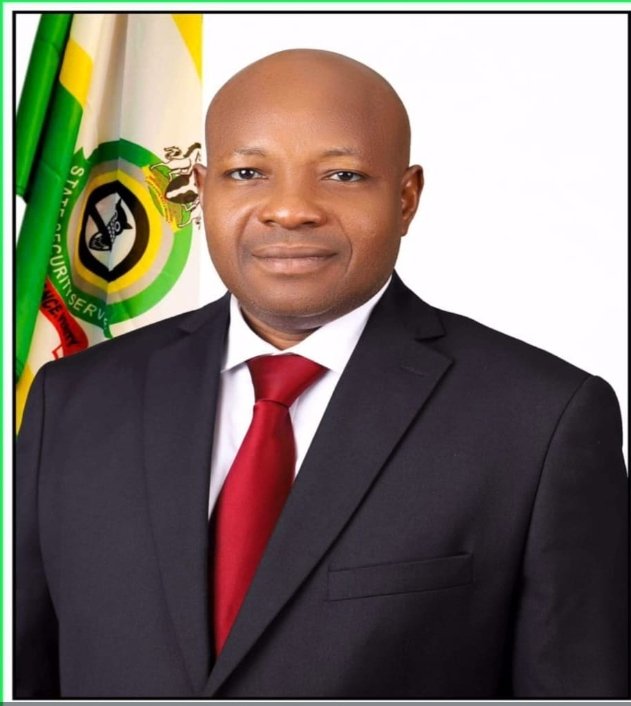
DSS, THE WALIDA ABDULLAHI EPISODE, AND THE QUIET LEADERSHIP OF DG ADEOLA OLUWATOSIN AJAYI- OLUMIDE BAJULAIYE

Published

on

Share

The Department of State Services (DSS), also known as the State Security Service (SSS), remains one of the most misunderstood institutions within Nigeria’s security architecture.

For many Nigerians, the agency only comes into public focus during dramatic arrests or when politics dominates the conversation. Yet intelligence work is far deeper and far more complex than the moments that make the headlines.
At its core, the DSS is Nigeria’s primary domestic intelligence service. Its duty is not simply to arrest suspects but to prevent threats before they escalate into national crises. Terror networks, espionage activities, sabotage against government institutions, and plots capable of destabilising the country all fall within its operational radar.


Like many institutions in Nigeria, the DSS has faced its share of criticism. There have been allegations of political interference, controversial arrests and occasional heavy-handed operations. Such scrutiny is normal in a democracy where powerful institutions are expected to remain accountable.
However, the other side of the story—often overlooked—is the critical role intelligence plays in keeping the country stable.
Intelligence successes rarely trend on social media because when intelligence works, crises are prevented before they occur. And “nothing happened today” rarely qualifies as breaking news.

Over the years, the DSS has helped disrupt terror financing networks, track extremist recruiters and intercept plots that could have resulted in major national security incidents. The agency has also provided intelligence support in the fight against insurgent groups such as Boko Haram, assisting security forces in anticipating threats.

Under the leadership of the current Director-General, Adeola Oluwatosin Ajayi, observers say the agency has focused increasingly on preventive intelligence, institutional reforms and improved collaboration with other security agencies.
Ajayi’s tenure has been associated with strengthening intelligence coordination among security institutions and placing greater emphasis on professionalism and lawful operations. Security analysts say the DSS has intensified efforts against kidnapping networks, arms trafficking rings and organised criminal syndicates threatening national security.

See also  ODE TO THE HEROINE OF THE PRESS

Another area where the current leadership has drawn attention is the effort to rebuild public confidence in the agency. In recent years, the DSS has demonstrated a willingness to review controversial cases, comply with court processes and engage more openly with stakeholders, including the media.
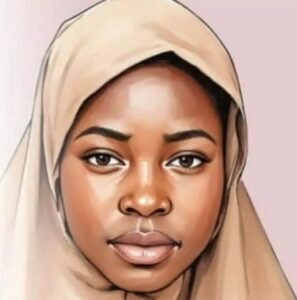
The recent episode involving Walida Abdullahi also illustrates the delicate balance intelligence agencies must maintain between national security responsibilities and public perception.

While details surrounding the matter sparked debate in public spaces, it also underscored how intelligence operations—often conducted quietly and based on sensitive information—can quickly become subjects of political or social interpretation once they enter the public domain.
For the DSS leadership, such situations represent the difficult terrain intelligence institutions must navigate: acting decisively when national security concerns arise while ensuring that operations remain within legal and professional boundaries.
Observers argue that the measured handling of such sensitive matters reflects the broader leadership approach of Ajayi—one that prioritises caution, institutional discipline and strategic restraint rather than dramatic publicity.

Beyond operational issues, the DSS under Ajayi has also sought to improve engagement with the media and civil society, a move many believe is necessary in building transparency without compromising intelligence confidentiality.
Ultimately, intelligence work remains one of the most paradoxical professions in public service.
When intelligence agencies succeed, the public rarely notices because crises are prevented before they happen. But when something goes wrong—or even appears controversial—everyone suddenly becomes an expert.

The DSS, like every intelligence service in the world, will continue to face criticism and scrutiny. That is part of democratic accountability.
Yet beyond the noise of politics and public perception, the agency remains a critical pillar in Nigeria’s internal security structure—often working quietly while the public sees only fragments of its work.

See also  EDO GUBER DISPUTE: PARTIES ADOPT WRITTEN ADDRESSES, AWAIT CRUCIAL JUDICIAL VERDICT

And if the current trajectory continues, the story of the DSS under DG Oluwatosin Ajayi may ultimately be defined not by the controversies that occasionally make headlines, but by the threats that never materialise.

Olumide Bajulaiye is the Publisher, Daily Dispatch Newspaper, writes from Abuja.

Continue Reading
Click to comment

Leave a Reply

Your email address will not be published. Required fields are marked *

Featured

‘Help! My Uncle Is Kidnapped in Nigeria’ – Haruna Mohammed Salisu Cries Out

Published

on

Share

By Haruna Mohammed Salisu


Three weeks ago, my uncle left home at dawn, as he always did. He never returned.

Gunmen abducted him along a route that cuts across Taraba, Plateau and Bauchi states. Since then, he has been held in a forest stretching across those regions. As I write, he is still alive. And time is slipping away.

My uncle is not wealthy. He holds no public office. He owns no property beyond what feeds his family. He is a subsistence farmer a man who has lived by the discipline of hard work and modest expectations. He asks for nothing but the right to return home safely at the end of each day.

But safety is no longer guaranteed.

Ransom Raised to ₦100 Million

When the kidnappers first contacted us, their demand was calculated. They had studied him what he owned, what he earned, what his family might reasonably gather.

Then, after weeks in captivity, they escalated their demand to ₦100 million.

That figure is staggering. At Nigeria’s minimum wage, ₦100 million represents over a century of earnings. A smallholder farmer earning roughly ₦400,000 in a good year would need 250 uninterrupted years of harvest to raise such a sum.

We do not have 250 years. We barely have days.

Silence, Then Exposure

Initially, the family chose silence. In Nigeria’s kidnapping economy, the perception of wealth can inflate ransom demands. As someone currently in the United States completing a graduate degree, my location alone was enough to create that perception.

We feared publicity would worsen the situation.

See also  JONATHAN, IT'S TIME TO GET BACK!

Eventually, the abductors learned of my presence abroad. They told him they knew his nephew was in America. The ransom did not decrease.

According to Nigeria’s National Bureau of Statistics, about $1.42 billion was paid in ransoms between May 2023 and April 2024. Thousands of families across northern Nigeria face similar anguish  negotiating quietly, often alone.

This crisis is no longer exceptional. It is systemic.

A Personal and Professional Reckoning

I am a journalist. I document cases like this. I understand the mechanics of ransom negotiations, the patterns of armed groups, the silence that often surrounds rural victims.

Now, I am living the story I once reported.

My uncle is one of ten captives currently held. He is not famous. His name has not appeared in headlines. He is simply a man who worked every day of his life and harmed no one.

A Public Appeal

This is why I am going public.

If you have connections within Nigeria’s security services, community leaders, religious authorities or anyone operating near these forested areas, please act. Please intervene.

My uncle and the others deserve to return home  not because of who I am, but because of who he is: a decent man who sought nothing more than peace and survival.

Tonight, he sits in a forest, waiting. We are asking the world not to look away.

Haruna Mohammed Salisu publishes WikkiTimes and writes from the United States. He can be reached at harunababale@wikkitimes.com.

Continue Reading

Featured

The Era That Restructured Power: Chimaroke Nnamani and the Politics of Architecture

Published

on

Share

When Nigeria returned to democratic rule in 1999, optimism filled the air. So did uncertainty. After decades of military dominance, institutions were fragile, political parties were still defining themselves, and states across the federation faced a pressing question: how would governance be rebuilt?


In Enugu State, that question found an answer in Chimaroke Nnamani  a medical doctor-turned-politician whose approach to power was less about spectacle and more about structure.

He did not simply govern. He engineered.

Democracy’s Early Uncertainty

The dawn of Nigeria’s Fourth Republic demanded leaders who could stabilize institutions while navigating a delicate political transition. Many governors of that era focused on political survival in an unpredictable environment. Nnamani, however, appeared preoccupied with something more enduring: building a structure that could outlive his tenure.

Elected governor in 1999 under the platform of the Peoples Democratic Party (PDP), he represented a generational shift  a younger political class stepping into leadership at a defining national moment. But beyond symbolism, his administration was marked by method.

His two terms, from 1999 to 2007, coincided with the foundational years of Nigeria’s democratic experiment. Institutions were fluid. Party loyalties were evolving. Governance structures were being tested. By the time he secured re-election in 2003, his influence in Enugu was no longer merely electoral; it had become structural.

And structure, unlike applause, endures.

From Medicine to Mobilization

Born on May 30, 1960, Nnamani trained as a medical doctor, studying in Nigeria before further professional engagements abroad. His early leadership orientation was visible during his tenure as National President of the Nigerian Medical Students’ Association (NIMSA), a role that demanded coalition-building, negotiation, and disciplined organization.

See also  ODE TO THE HEROINE OF THE PRESS

Those formative experiences shaped his political instincts. He approached governance like surgery methodical, systemic, and attentive to institutional frameworks. Politics, for him, was less about personality and more about architecture.

EBEANO: Philosophy Meets Power

Perhaps the most defining feature of Nnamani’s era was the emergence of the EBEANO political family. Framed around the Igbo concept of Aladimma  the common good and collective advancement EBEANO evolved from a philosophical ideal into a durable political ecosystem.

It was more than a slogan. It was organization.

For over two decades, Enugu’s political trajectory has been difficult to discuss without referencing the EBEANO structure. Whether viewed as mentorship or criticized as dominance, its longevity reflects strategic design. Temporary office was converted into long-term influence.

During his first term, Nnamani laid the foundations of that architecture through:

Institutional Expansion: Strengthening educational and health institutions, including advancing the permanent campus of Enugu State University of Science and Technology and expanding medical training infrastructure.

Political Organization: Building a grassroots-based loyalty network that extended beyond elite political circles.

Succession Planning: Demonstrating early awareness that political continuity requires preparation long before transition.

Unlike leaders who relied solely on charisma, his strategy centered on layered organization and policy-backed legitimacy.

Governance as Visibility

Influence without performance is fragile. Nnamani understood this.

Under his administration, Enugu witnessed visible infrastructural and institutional development. The permanent campus of ESUT was completed and equipped. The Enugu State University Teaching Hospital and College of Medicine at Parklane took shape. The Enugu Campus of the Nigerian Law School was constructed and handed over to the Federal Government.

See also  GLASGOW SUMMIT: OKPEBHOLO’S OPPONENTS IN WHIRLWIND CONFUSION

Urban renewal projects  including expanded road networks and the landmark Ebeano Tunnel  altered the physical landscape of the capital city.

These were not merely development projects. They were instruments of legitimacy. In politics, visibility stabilizes authority.

His medical background was reflected in the establishment of district and cottage hospitals and expanded rural health services. Education and healthcare became governance anchors  tangible, measurable, and enduring.

The Psychology of Dominance

Between 1999 and 2007, Enugu’s political rhythm largely moved within an ecosystem influenced by Nnamani. Alliances, candidacies, and transitions seldom occurred outside his network’s orbit.

This was not dominance rooted purely in popularity. It was organization and organization is the highest form of political intelligence.

By the end of his second term, his imprint on the state’s political structure was unmistakable. Power had been consolidated, but more importantly, it had been systematized.

Beyond Government House

Leaving office in 2007 did not signal the end of his relevance. Nnamani transitioned to the Senate, representing Enugu East Senatorial District, and returned again in 2019. His continued presence in national politics reinforced a reality long established: his influence was not tied to a single electoral cycle.

As a senator, he contributed to key committees, including those focused on NEPAD and African cooperation, reflecting broader continental interests. He cultivated the image of an intellectual politician  one comfortable engaging policy, governance theory, and democratic consolidation.

Even his controversial positions during the 2023 general elections followed a familiar pattern: strategic calculation over emotional populism. Agree or disagree, his political choices have consistently reflected structured reasoning rather than impulsive alignment.

See also  SENIOR ADVOCATE OF NIGERIA SPEAKS OUT AGAINST DSS SCREENING OF NEW SAN DESIGNATES

Legacy: The Architecture of Power

To judge Chimaroke Nnamani solely by projects or tenure is to miss the larger story.

His enduring legacy lies in the architecture he built  a networked political structure that has shaped Enugu’s leadership dynamics for more than two decades. He understood that influence is not sustained by rhetoric alone, but by systems, loyalty, and deliberate continuity.

He did not merely occupy office. He defined an era.

Yet his story also offers a broader reflection: power, no matter how carefully engineered, remains in conversation with time. What survives when applause fades? What remains when tenure ends?

In Nnamani’s case, the answer is clear. The structures endure.

And in the annals of Enugu’s political evolution, that may be the most consequential legacy of all.

Continue Reading

Analysis

MACHINA: THE CITY THAT REFUSES TO SLEEP

Published

on

Share

A Homeland Honouring Its Son

By Mualeem Ibrahim

There are cities that exist on maps, and there are cities that live in the bloodstream of their people. Machina—ancient, resilient, and proud—belongs to the latter. Nestled in the northwestern sands of Yobe State, this Emirate has carried its traditions with a devotion that has outlived empires. Its formal leadership, historians remind us, stretches back to 980 AD, when Mai Hariyu Bolo Kandira ascended the throne and began a lineage of guardianship that still stands, unbroken, like a desert baobab defying time.

Machina is not merely a place; it is a pulse. A memory that breathes. A heritage that refuses to dim. Chinua Achebe once wrote that “a people are as strong as the stories they tell about themselves.” Machina’s story is one of endurance, dignity, and a cultural splendour that glows like embers in the Sahel night.


SEVEN DAYS WHEN TIME STANDS STILL

Each year, Machina calls its sons and daughters home—no matter how far their journeys have taken them. For seven radiant days, the city becomes a living tapestry of colour, rhythm, and ancestral pride. The Machina Annual Cultural Festival (MACUF) is not merely an event; it is a homecoming of the spirit. It draws dignitaries, scholars, traditional rulers, journalists, activists, and admirers from across Nigeria and beyond.

Like the festivals in Soyinka’s Death and the King’s Horseman, MACUF reminds us that culture is not a relic to be archived—it is a living force, a heartbeat that binds generations.

But the 2026 edition was touched by something deeper. Something historic.


Dr Kole Ahmed
A FESTIVAL CROWNED BY HONOUR

This year, the desert winds carried whispers of anticipation. Machina was preparing to honour one of its most illustrious sons—Dr. Kole Ahmed Shettima. The city swelled with visitors: activists, civil society leaders, academics, politicians, and cultural custodians converged to witness a moment destined for the Emirate’s chronicles.

On January 31, beneath the watchful eyes of ancestors and the jubilant gaze of his people, the Emir of Machina, His Royal Majesty Mai Bashir Abishir Bukar, OON, L’ONN, turbaned Dr. Kole as Zanna Yuroma. It was the crowning jewel of MACUF 2026.

The Emir spoke with warmth and conviction. This honour, he said, was not merely a recognition of Dr. Kole’s service to Machina, but a tribute to a man whose compassion radiates far beyond the borders of his birthplace. His love for humanity, the Emir declared, is as expansive as the Sahel sky.
And on Sunday, February 1, the festival’s grand finale, Machina seemed to overflow its own boundaries. It felt as though the entire cabinet of Yobe State had migrated to the Emirate. The Executive Governor, His Excellency Hon. (Dr.) Mai Mala Buni, the SSG, former governors, and over 40 Emirs from across northern Nigeria graced the occasion. Security agencies worked tirelessly to guide the sea of humanity—each person eager to witness history.

See also  20 ARRESTED FOR HACKING 2025 UTME RESULTS


Buni
One lesson stood out like a desert sunrise: though Machina is an Islamic city, it does not silence its women. Draped in radiant traditional attire, they danced with grace, perfumed the air with sweet fragrances, and infused the celebration with a joy reminiscent of Senghor’s immortal tribute— “Naked woman, black woman… your beauty strikes me to the heart.”

A LIFE OF SERVICE, A LEGACY OF IMPACT

For more than three decades, Dr. Kole Ahmed Shettima has walked the intertwined paths of scholarship, philanthropy, and public service with the quiet dignity of a man who understands that true leadership is measured not in titles, but in lives touched. His journey has been neither loud nor ostentatious; instead, it has been steady—like the desert wind that shapes dunes over centuries, transforming landscapes with patience and purpose.

From the lecture halls of academia to the frontlines of development work, Dr. Kole has carried with him a philosophy rooted in empathy. He believes, deeply, that knowledge must serve humanity, and that privilege must bend toward justice. His work reflects this conviction.

Through the Kole Shettima Trust Fund and the Machina Emirate Development Association, he has built a legacy that stretches across generations:

• Scholarships for hundreds of undergraduates, ensuring that the dreams of young people do not wither for lack of opportunity.
• Feeding the poor, not as charity, but as an affirmation of dignity.
• Clothing orphans, wrapping them not only in fabric but in hope.
• Building places of worship, where communities gather to pray, reflect, and find solace.
• Constructing water points, bringing life to communities where water is a daily struggle.
• Paying medical bills, so that illness does not become a death sentence for the vulnerable.
• Mentoring youth, guiding them with the wisdom of experience and the tenderness of a father.
• Settling fines for the imprisoned poor, freeing men and women whose only crime was poverty.
• Improving learning conditions for secondary school students, because he knows that education is the first step toward liberation.

See also  DSS NABS SUSPECTED SEA PIRATES, FOILS HIJACK OF CRUDE OIL VESSEL, ABDUCTION OF CREW MEMBERS

These are not mere acts of generosity; they are acts of remembrance. They are the gestures of a man who never severed the umbilical cord that ties him to his homeland. “What is probably important,” he often reflects, “is being rooted in my community since my primary school education.” That rootedness is his compass. It is what keeps him grounded even as his influence spans continents.

His leadership has shaped institutions, strengthened governance, and inspired a generation of thinkers, activists, and public servants. His contributions to humanity are not abstract—they are stories. Stories of children who stayed in school because he believed in them. Stories of families who found relief in moments of despair. Stories of communities whose futures were rewritten because one man chose to act.

Ngũgĩ wa Thiong’o reminds us that “writers and scholars are the memory of a nation.” In many ways, Dr. Kole has become part of Machina’s living memory—preserving its values, expanding its possibilities, and embodying its highest ideals.

His life is a testament to a simple truth: service is the most enduring form of greatness.

MACHINA REJOICES


When the turban was tied and the title bestowed, Machina did not simply applaud—it exhaled. A collective breath, held for generations, was released into the desert air. The joy that followed was not the fleeting excitement of a festival; it was the deep, resonant pride of a people witnessing one of their finest sons return home in honour.

The city transformed into a living organism—its streets pulsing with movement, its courtyards humming with anticipation, its skies echoing with the sounds of celebration. Men, women, elders, youth, and children poured into the open spaces as though answering an ancestral call. It felt as if the very soil of Machina had awakened to join the festivities.

The celebration unfolded with the splendour of an epic:

• Drums thundered, their rhythms rolling across the Emirate like distant storms announcing abundance.
• The Kakaki trumpet pierced the air, its regal notes slicing through the crowd with the authority of centuries-old tradition.
• Dancers swirled in vibrant attires, their garments catching the sunlight and scattering it like shards of colour across the sand.
• Wrestlers stepped forward, their bodies glistening with pride, embodying the strength and honour of the land.
• Snake charmers mesmerized the crowd, their movements fluid, ancient, and hypnotic—echoes of a time when magic and culture were inseparable.
• Praise singers chanted genealogies, weaving Dr. Kole’s name into the long tapestry of Machina’s history.
• Music flowed like a river, winding through alleyways, courtyards, and open fields, binding strangers and kin in a shared rhythm.

See also  SHEIKH GUMI, BANDITS AND IDPs

It was not merely a festival; it was a rebirth.

The Emirate glowed with a unity rarely seen in modern times. Farmers stood shoulder to shoulder with scholars. Traders danced beside civil servants. Children clapped in delight as elders nodded in approval, their eyes shimmering with memories of festivals past. The air was thick with incense, dust, perfume, and the unmistakable scent of celebration—a fragrance that only a city deeply in love with its heritage can produce.

Even the desert seemed to pause. The wind softened, as though listening. The sun lingered a little longer on the horizon, reluctant to set on such a moment. And when night finally draped itself over Machina, lanterns and fires lit up the darkness, turning the Emirate into a constellation on earth.

It was a scene reminiscent of the grand communal gatherings in Achebe’s Arrow of God—a people united not by necessity, but by pride, memory, and shared destiny.


Machina did not merely celebrate a title; it celebrated a legacy, a lineage, a reaffirmation of who it is and what it stands for. In honouring Dr. Kole, Machina honoured itself.

A Tribute to a Worthy Son

In honouring Dr. Kole Ahmed Shettima, Machina honoured the values it cherishes most—service, humility, scholarship, and humanity. The title of Zanna Yuroma is not just a recognition; it is a covenant between a son and his homeland.

And so, with pride and admiration, we join millions across Nigeria in celebrating High Chief Dr. Kole Ahmed Shettima. May his reign as Zanna Yuroma bring wisdom, compassion, and progress to Machina and beyond.

Long may he serve.
Long may Machina flourish.


Mualeem Ibrahim is Human Rights commentator and advocate. He writes from Abuja

Continue Reading