
Featured
The Era That Restructured Power: Chimaroke Nnamani and the Politics of Architecture

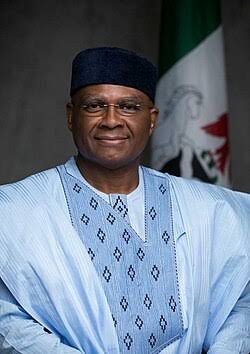
When Nigeria returned to democratic rule in 1999, optimism filled the air. So did uncertainty. After decades of military dominance, institutions were fragile, political parties were still defining themselves, and states across the federation faced a pressing question: how would governance be rebuilt?


In Enugu State, that question found an answer in Chimaroke Nnamani a medical doctor-turned-politician whose approach to power was less about spectacle and more about structure.
He did not simply govern. He engineered.
Democracy’s Early Uncertainty
The dawn of Nigeria’s Fourth Republic demanded leaders who could stabilize institutions while navigating a delicate political transition. Many governors of that era focused on political survival in an unpredictable environment. Nnamani, however, appeared preoccupied with something more enduring: building a structure that could outlive his tenure.
Elected governor in 1999 under the platform of the Peoples Democratic Party (PDP), he represented a generational shift a younger political class stepping into leadership at a defining national moment. But beyond symbolism, his administration was marked by method.
His two terms, from 1999 to 2007, coincided with the foundational years of Nigeria’s democratic experiment. Institutions were fluid. Party loyalties were evolving. Governance structures were being tested. By the time he secured re-election in 2003, his influence in Enugu was no longer merely electoral; it had become structural.
And structure, unlike applause, endures.
From Medicine to Mobilization
Born on May 30, 1960, Nnamani trained as a medical doctor, studying in Nigeria before further professional engagements abroad. His early leadership orientation was visible during his tenure as National President of the Nigerian Medical Students’ Association (NIMSA), a role that demanded coalition-building, negotiation, and disciplined organization.
Those formative experiences shaped his political instincts. He approached governance like surgery methodical, systemic, and attentive to institutional frameworks. Politics, for him, was less about personality and more about architecture.
EBEANO: Philosophy Meets Power
Perhaps the most defining feature of Nnamani’s era was the emergence of the EBEANO political family. Framed around the Igbo concept of Aladimma the common good and collective advancement EBEANO evolved from a philosophical ideal into a durable political ecosystem.
It was more than a slogan. It was organization.
For over two decades, Enugu’s political trajectory has been difficult to discuss without referencing the EBEANO structure. Whether viewed as mentorship or criticized as dominance, its longevity reflects strategic design. Temporary office was converted into long-term influence.
During his first term, Nnamani laid the foundations of that architecture through:
Institutional Expansion: Strengthening educational and health institutions, including advancing the permanent campus of Enugu State University of Science and Technology and expanding medical training infrastructure.
Political Organization: Building a grassroots-based loyalty network that extended beyond elite political circles.
Succession Planning: Demonstrating early awareness that political continuity requires preparation long before transition.
Unlike leaders who relied solely on charisma, his strategy centered on layered organization and policy-backed legitimacy.
Governance as Visibility
Influence without performance is fragile. Nnamani understood this.
Under his administration, Enugu witnessed visible infrastructural and institutional development. The permanent campus of ESUT was completed and equipped. The Enugu State University Teaching Hospital and College of Medicine at Parklane took shape. The Enugu Campus of the Nigerian Law School was constructed and handed over to the Federal Government.
Urban renewal projects including expanded road networks and the landmark Ebeano Tunnel altered the physical landscape of the capital city.
These were not merely development projects. They were instruments of legitimacy. In politics, visibility stabilizes authority.
His medical background was reflected in the establishment of district and cottage hospitals and expanded rural health services. Education and healthcare became governance anchors tangible, measurable, and enduring.
The Psychology of Dominance
Between 1999 and 2007, Enugu’s political rhythm largely moved within an ecosystem influenced by Nnamani. Alliances, candidacies, and transitions seldom occurred outside his network’s orbit.
This was not dominance rooted purely in popularity. It was organization and organization is the highest form of political intelligence.
By the end of his second term, his imprint on the state’s political structure was unmistakable. Power had been consolidated, but more importantly, it had been systematized.
Beyond Government House
Leaving office in 2007 did not signal the end of his relevance. Nnamani transitioned to the Senate, representing Enugu East Senatorial District, and returned again in 2019. His continued presence in national politics reinforced a reality long established: his influence was not tied to a single electoral cycle.
As a senator, he contributed to key committees, including those focused on NEPAD and African cooperation, reflecting broader continental interests. He cultivated the image of an intellectual politician one comfortable engaging policy, governance theory, and democratic consolidation.
Even his controversial positions during the 2023 general elections followed a familiar pattern: strategic calculation over emotional populism. Agree or disagree, his political choices have consistently reflected structured reasoning rather than impulsive alignment.
Legacy: The Architecture of Power
To judge Chimaroke Nnamani solely by projects or tenure is to miss the larger story.
His enduring legacy lies in the architecture he built a networked political structure that has shaped Enugu’s leadership dynamics for more than two decades. He understood that influence is not sustained by rhetoric alone, but by systems, loyalty, and deliberate continuity.
He did not merely occupy office. He defined an era.
Yet his story also offers a broader reflection: power, no matter how carefully engineered, remains in conversation with time. What survives when applause fades? What remains when tenure ends?
In Nnamani’s case, the answer is clear. The structures endure.
And in the annals of Enugu’s political evolution, that may be the most consequential legacy of all.