Education
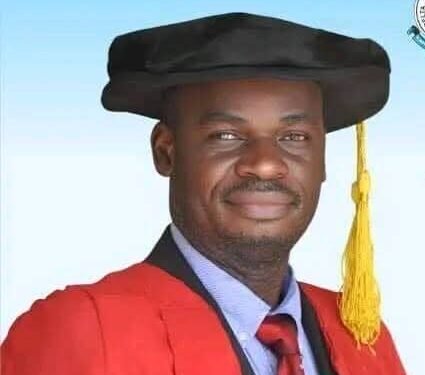
Oborevwori Approves Prof. Awhefeada as Vice-Chancellor of Southern Delta University
Delta State Governor Sheriff Oborevwori has approved the appointment of Professor Sunny Ijirhevwe Awhefeada as the new Vice-Chancellor of Southern Delta University, Ozoro.
Awhefeada, a renowned Professor of English and Literary Studies, was announced as the institution’s new helmsman in a move aimed at strengthening academic leadership and advancing the university’s development agenda.
The newly appointed Vice-Chancellor is widely respected in academic and literary circles. He is a fellow of the Association of Nigerian Authors and a member of the Nigerian Academy of Letters, reflecting his contributions to scholarship and Nigerian literature.
Before his appointment, Awhefeada built a distinguished career as a lecturer and researcher, gaining recognition for his work in modern Nigerian literature and cultural studies. He also recently delivered the 117th inaugural lecture series at Delta State University, focusing on the evolution of Nigerian literary engagement.
According to reports, his appointment marks a new chapter for the university as it seeks to consolidate academic excellence, expand research output, and strengthen institutional development.
Reacting to the appointment, Awhefeada expressed gratitude to the Delta State Government for the opportunity to serve, pledging to build on the foundation laid by his predecessor and work with stakeholders to move the university to greater heights.
The appointment has been welcomed by academics and stakeholders across the Niger Delta, who believe his experience in scholarship, leadership, and public engagement will help shape the next phase of growth for Southern Delta University.
Education
FEC Approves Six-Year Freeze on Establishment of New Universities
The Federal Executive Council (FEC) has approved a six-year freeze on the creation of new tertiary institutions across Nigeria as part of sweeping reforms aimed at strengthening the country’s education system.
The decision was announced after Wednesday’s council meeting, where several policy measures were adopted to improve the quality and sustainability of higher education institutions, particularly privately owned universities.
Addressing journalists after the meeting, the Minister of Education, Dr. Tunji Alausa, explained that although demand for university education in Nigeria continues to rise, many institutions are currently grappling with operational and financial sustainability challenges.
He said the temporary suspension of approvals for new universities, polytechnics and colleges of education would allow the government to concentrate on strengthening existing institutions and improving the overall standard of education.
According to him, data from the Joint Admissions and Matriculation Board (JAMB) shows that more than 2.3 million candidates applied for admission into universities last year, while public universities were able to provide fewer than 228,000 admission slots.
Alausa noted that the Tinubu administration is determined to raise the standard of education and ensure Nigerian students receive quality learning comparable with global standards.
“We want to ensure that every child and citizen in this country has access to high-quality education that meets international standards,” he said.
The council also approved the restoration of the National Commission for Mass Literacy, Adult and Non-Formal Education as a fully independent commission. The move, the minister said, is designed to tackle Nigeria’s high level of adult illiteracy and expand access to digital and basic education.
He disclosed that Nigeria currently has about 56 million illiterate citizens, stressing that the government intends to educate more than 50 million young adults within the next two to three years while equipping them with digital skills.
“In line with Mr President’s vision to drastically reduce illiteracy, the council approved the restoration of the commission to strengthen its capacity to deliver on this mandate,” he said.
FEC also endorsed an amendment to the National Postgraduate Medical College Act to recognise medical fellowship qualifications as equivalent to doctoral degrees.
Alausa explained that the amendment is intended to remove career barriers faced by highly trained medical specialists who often spend over a decade undergoing rigorous medical training, residency programmes and fellowships but are still required to obtain PhDs before qualifying for professorial roles in universities.
He said once the proposed Executive Bill is passed by the National Assembly, fellows of the National Postgraduate Medical College would have their qualifications officially recognised as equivalent to a PhD.
In addition, the council approved comprehensive insurance coverage for the country’s 180 Federal Unity Schools.
Education
FG Approves N48bn for Engineering Upgrades in 12 Universities
The Federal Government has approved N48 billion for engineering infrastructure upgrades in 12 selected universities across the country.
Minister of Education, Tunji Alausa, disclosed this on Monday during the inauguration of the Implementation Committee on Tertiary Education Trust Fund Special High-Impact Intervention Projects in Abuja.
Under the intervention, each beneficiary institution will receive N4 billion to either upgrade existing facilities or construct new engineering workshops where necessary.
The universities selected for the intervention include:
Federal University of Technology Minna
Federal University of Technology Akure
Federal University of Technology Babura
Federal University of Technology Ikot-Abasi
Federal University of Technology Owerri
Nigerian Army University Biu
African Aviation and Aerospace University
Shehu Shagari University of Education
Enugu State University of Medical and Applied Sciences
University of Ilesha
Delta State University
Abubakar Tafawa Balewa University
Alausa further revealed that an additional N20 billion has been provided in the 2026 TETFund guidelines to support the upgrade of engineering facilities in other selected universities.
The intervention is aimed at strengthening practical training, enhancing technical capacity, and improving the quality of engineering education in Nigeria’s tertiary institutions.
Education
UNICAL Cancels Accounting Exam After Student Reports Alleged Leakage of Answer Sheet
An examination in the Department of Accounting at the University of Calabar (UNICAL) was abruptly cancelled after a student alerted authorities that the question paper allegedly contained both questions and corresponding answers.
The incident reportedly occurred during a scheduled test when candidates discovered that the answers were printed on the same sheet as the questions.
According to accounts circulating among students, many noticed the error shortly after the exam began but allegedly continued writing without raising an alarm.
The situation took a dramatic turn moments before the end of the examination when a female student stood up to notify invigilators of the oversight. Witnesses said she explained that she felt compelled by the Holy Spirit to speak up and could no longer remain silent about what had happened.
Her disclosure reportedly caused confusion in the examination hall as invigilators examined the script and confirmed that the answers were indeed included. The examiner was immediately informed, and the examination was cancelled.
Students were directed to stop writing and submit their scripts, while departmental authorities announced that a new date would be fixed for a rescheduled examination.
The development has sparked debate within the university community, with students expressing mixed reactions over issues of academic integrity, collective responsibility, and personal conscience during examinations.
As of the time of filing this report, the university management had not issued an official statement on the matter or indicated whether disciplinary action would be taken against the examiner.