Connect with us

Energy

Oil Prices Surge Past $115 Per Barrel as Iran War Disrupts Global Supply

Published

on

Share


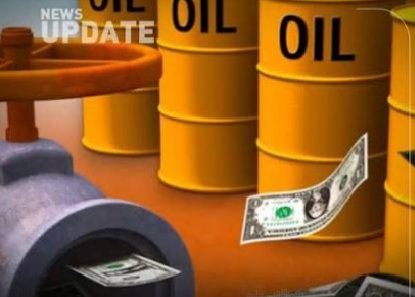
Global oil prices have climbed above $115 per barrel for the first time in more than three and a half years as the ongoing conflict involving Iran, Israel and the United States continues to disrupt energy production and shipping across the Middle East.

Data from the Chicago Mercantile Exchange showed that the price of Brent crude, the international benchmark for oil, rose to $107.97 per barrel, marking a 16.5 percent increase from Friday’s closing price of $92.69.

Similarly, West Texas Intermediate (WTI), the main benchmark for U.S. crude oil, climbed to about $106.22 per barrel, representing a 16.9 percent rise from its previous close of $90.90.

The surge follows a sharp increase last week, when U.S. crude prices jumped 36 percent while Brent crude gained 28 percent, driven largely by fears of supply disruptions as the conflict entered its second week.

Strait of Hormuz Disruptions

A key factor in the price spike is the disruption of shipping through the strategically important Strait of Hormuz. According to energy research firm Rystad Energy, about 15 million barrels of crude oil  roughly 20 percent of global supply  normally pass through the strait daily.

However, threats of missile and drone attacks linked to the conflict have significantly reduced tanker movement through the waterway. The strait serves as a major export route for oil and gas from countries including Saudi Arabia, Kuwait, Iraq, Qatar, Bahrain and the United Arab Emirates.

Meanwhile, Iraq, Kuwait and the UAE have reportedly reduced oil production as storage facilities become filled due to limited export capacity.

See also  Pope Leo to Visit Four African Nations in April

Attacks on Energy Facilities

Since the conflict began on March 1, strikes targeting oil and gas infrastructure have intensified concerns about global supply shortages. Authorities in Iran reported that Israeli strikes on oil depots in Tehran and a petroleum transfer terminal killed four people.

Israeli officials claimed the facilities were being used by Iran’s military to supply fuel for missile launches.

Iran currently exports about 1.6 million barrels of oil per day, with most shipments going to China. Any disruption to these exports could further tighten global supply and drive prices higher.

Impact on Consumers and Markets

Rising oil prices have already begun affecting consumers and financial markets.

According to the AAA (American Automobile Association), the average price of regular gasoline in the United States climbed to $3.45 per gallon, about 47 cents higher than a week ago. Diesel prices rose to around $4.60 per gallon, an increase of about 83 cents within the same period.

Speaking on State of the Union (CNN program), U.S. Energy Secretary Chris Wright said gasoline prices could fall below $3 per gallon again in the near future.

“Even in the worst case, this situation is likely to last weeks rather than months,” he said.

Financial Market Reactions

The spike in energy prices has unsettled global financial markets, raising fears that higher fuel costs could trigger inflation and slow consumer spending.

Futures tied to the S&P 500 dropped 1.6 percent, while the Dow Jones Industrial Average futures fell 1.8 percent. Futures linked to the Nasdaq Composite declined 1.5 percent, signaling potential losses when markets reopen.

See also  Iran Confirms Death of Khamenei’s Wife After Air Strikes

Analysts warn that if oil prices remain above $100 per barrel for a prolonged period, the strain on the global economy could intensify.

Natural gas prices have also risen during the conflict, though at a slower pace, reaching $3.33 per 1,000 cubic feet, about 4.6 percent higher than the previous closing price.

Continue Reading
Click to comment

Leave a Reply

Your email address will not be published. Required fields are marked *

BREAKING NEWS

Dangote Refinery Raises Petrol Price to N1,175, Diesel to N1,620 …Sales resume as depot prices surge nationwide

Published

on

Share


The cost of goods and services in Nigeria may rise further following a fresh increase in fuel prices by the Dangote Petroleum Refinery, which has raised the gantry price of Premium Motor Spirit (PMS), popularly known as petrol, to N1,175 per litre.

The latest adjustment represents the third price increase within a week, signaling continued volatility in the country’s downstream petroleum sector.

The refinery communicated the new price to petroleum marketers on Monday, increasing the gantry price from N995 per litre announced on Friday to N1,175 per litre, an increase of N180 or about 18.1 per cent within three days.

In addition, the refinery revised the gantry price of Automotive Gas Oil (AGO), commonly known as diesel, to N1,620 per litre.

A senior refinery official, who spoke on condition of anonymity because he was not authorised to comment publicly, confirmed that the new prices had already been circulated to marketers and depot operators.

“Yes, the gantry prices have been adjusted. PMS is now N1,175 per litre while Automotive Gas Oil is N1,620 per litre,” the official said.

According to the source, the changes reflect the realities of the current global market environment.

“The market has been extremely volatile and replacement costs have shifted significantly in recent days. These adjustments reflect prevailing market fundamentals and the cost environment we are currently operating in,” the official added.

Industry checks showed that the updated prices have already been reflected on the petroleum pricing platform petroleumprice.ng, indicating a shift in the benchmark prices used by downstream marketers.

See also  President Trump to Headline White House Correspondents’ Dinner, Accepts Honoree Role

The latest increase follows previous adjustments that moved the refinery’s petrol gantry price from N774 to N995 per litre, with retail pump prices now exceeding N1,000 per litre in many parts of the country. In some locations, filling stations are already dispensing petrol at about N1,200 per litre, worsening the financial strain on consumers.

Analysts warn that the hike is likely to trigger another round of price increases at filling stations nationwide, as higher fuel costs typically translate into increased transportation, logistics, and production expenses.

The development comes despite ongoing efforts by the Nigerian National Petroleum Company Limited to boost crude supply to the refinery through international third-party traders in order to sustain domestic refining operations.

A senior NNPC official explained that crude oil is being sourced at rates comparable with international market prices.

“Leveraging our global crude trading network, we are sourcing third-party crude for the refinery at prices that are competitive with prevailing international market rates,” the official said.

He added that the national oil company remains committed to ensuring stable crude supply for domestic refining.

“As the national oil company entrusted with safeguarding Nigeria’s energy security, NNPC Limited remains fully committed to supporting domestic refining, including the Dangote Petroleum Refinery. Within the framework of our existing agreements, we continue to facilitate crude supply to the refinery, despite temporary availability constraints.”

However, the official cautioned that the intervention may not immediately lead to lower fuel prices for consumers.

“This will not necessarily impact price. The current crisis in the Middle East is affecting global energy markets, including crude oil, LNG, and other fuels, and that has implications for refined product pricing worldwide,” he said.

Continue Reading

Energy

Rising Oil Prices From Iran Crisis Shake Asian Financial Policies

Published

on

Share


The escalating conflict involving Iran is forcing central banks across Asia to reconsider their monetary policies as surging oil prices and global economic uncertainty threaten inflation and economic growth across the region.


Financial markets across Asia reacted nervously on Monday as crude oil prices surged above $100 per barrel, fueled by supply disruptions linked to the Middle East crisis. The sharp rise in energy costs is increasing inflationary pressure in countries heavily dependent on imported fuel, while also weakening several Asian currencies against the strengthening U.S. dollar.

Economists say policymakers now face a difficult balancing act between supporting economic growth and curbing inflation. For many emerging Asian economies, lowering interest rates to stimulate growth has become risky because higher fuel costs are already driving prices upward and could trigger capital outflows.


Countries such as India may prioritize currency interventions to stabilize their markets, while others, including Thailand and the Philippines, could be forced to reconsider plans to ease monetary policy. The situation is particularly challenging for manufacturing-driven economies like Japan and South Korea, which rely heavily on imported energy and global trade stability.


Analysts warn that the conflict could lead to a period of “stagflation” a combination of rising inflation and slowing economic growth if oil prices remain elevated for an extended period. The disruption of key energy routes and supply chains is already sending shockwaves through financial markets and prompting policymakers to prepare for further economic turbulence.


Central banks across Asia are now closely monitoring developments in the Middle East as they reassess interest rate policies, currency stability measures, and inflation control strategies in the face of one of the most significant global economic shocks in recent years.

See also  Pope Leo to Visit Four African Nations in April
Continue Reading

Energy

Anambra Reclaims 10 Oil Wells Previously Attributed to Delta State

Published

on

Share


The Anambra State Government has announced the recovery of about 10 oil wells previously attributed to neighbouring Delta State following a verification exercise by federal authorities.


The development was disclosed by Professor Charles Ofoegbu, Managing Director of the Anambra State Solid Minerals Development Company and Chairman of Anambra State Petroleum Energy Resources Limited, while briefing journalists in Awka, the state capital.


According to Ofoegbu, the oil wells are located within the Anambra River Basin but had previously been credited to Delta State due to long-standing boundary disputes between the two states.


He explained that the recovery followed a verification exercise carried out by the Revenue Mobilisation Allocation and Fiscal Commission to determine the exact ownership and location of disputed oil and gas wells across the Niger Delta region.


Ofoegbu noted that once the commission’s report is formally approved, Anambra State will begin to receive additional revenue from the recovered oil wells through the constitutional 13 per cent derivation allocated to oil-producing states.


The official also revealed that the state government is working with foreign investors to establish a modular refinery in Ossamala, located in Ogbaru Local Government Area, which is expected to produce petroleum products and generate further economic benefits for the state and surrounding regions.


Anambra was recently admitted into the league of oil-producing states in Nigeria after confirming commercial oil production with an initial output estimated at about 3,000 barrels per day.


The recovery of the oil wells is expected to significantly boost the state’s revenue base and strengthen its position within Nigeria’s oil-producing region.

See also  US-Israeli Airstrikes Reportedly Kill Iran’s Acting Defence Minister Hours After Appointment
Continue Reading