International
Japan Real Wages Rise for First Time in 13 Months

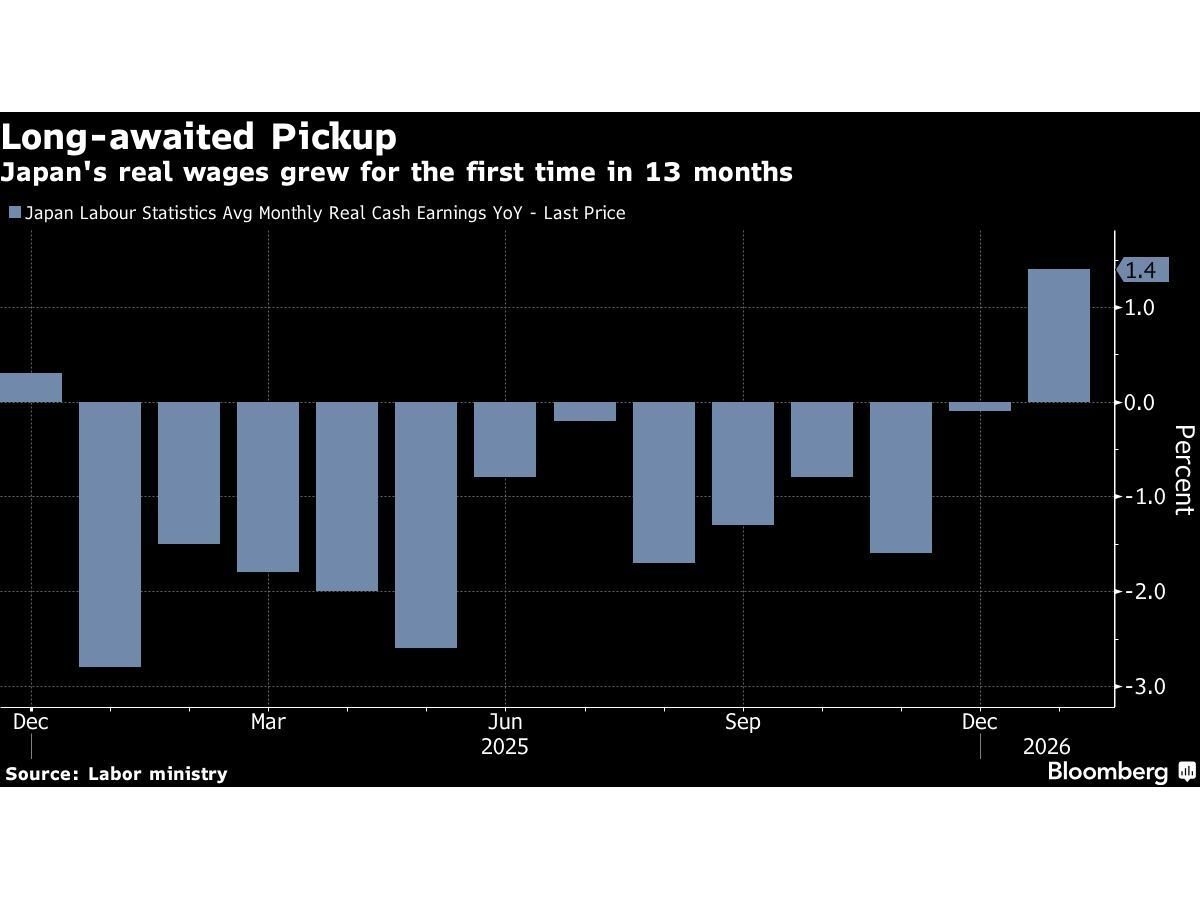
Japan’s real wages have increased for the first time in 13 months, a development that could strengthen the case for the Bank of Japan to continue raising interest rates as the country attempts to normalize its monetary policy.
Data released by Japan’s labour ministry showed that inflation-adjusted wages rose by 1.4 percent year-on-year in January, marking the first positive growth after more than a year of declines. Nominal wages also climbed by around 3 percent, reaching an average of about 301,000 yen ($1,900).
The increase in pay came as consumer inflation eased to roughly 1.7 percent, allowing wage growth to outpace price rises for the first time in months. Analysts say the development could boost household spending and provide support for Japan’s economic recovery.
Base salaries recorded their strongest growth since 1992, while overtime pay and bonus payments also increased, indicating improving labour market conditions across several sectors.
Economists say the stronger wage data could encourage the Bank of Japan to proceed with further interest-rate hikes after decades of ultra-loose monetary policy aimed at combating deflation. The central bank had already raised its benchmark rate to 0.75 percent in December 2025, the highest level in about 30 years.
The wage gains also come ahead of annual wage negotiations between Japanese companies and labour unions, with the country’s largest union federation pushing for nearly 6 percent pay increases in 2026 to sustain income growth.
However, economists caution that global factors, including rising energy prices linked to geopolitical tensions in the Middle East, could still affect Japan’s economic outlook and influence the timing of further rate hikes.
If wage growth continues and consumer spending strengthens, analysts say the central bank may feel more confident about tightening policy further as it gradually moves away from decades of aggressive stimulus.