International
3,800 Workers Plan Strike at Major U.S. Meatpacking Plant in Colorado
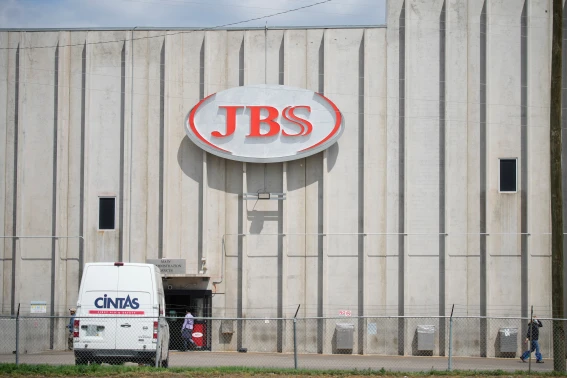
About 3,800 workers at one of the largest meat-processing facilities in the United States are set to begin a strike on Monday at the Swift Beef Co. plant in Greeley, Colorado, marking what union leaders say could be the first walkout at a U.S. beef slaughterhouse in decades.
The strike is expected to start at 5:30 a.m. local time, according to Kim Cordova, president of United Food and Commercial Workers Local 7, the union representing workers at the plant.
Union officials accuse the plant’s owner, JBS USA, of retaliating against employees and engaging in unfair labour practices during ongoing contract negotiations. The previous labour agreement between the company and workers expired at midnight on Sunday.
According to the union’s general counsel, Matt Shechter, company managers attempted to pressure workers into leaving the union during individual meetings. He added that the company declined the union’s request to resume negotiations over the weekend.
Cordova said nearly all employees supported the move, with 99 percent voting to authorise the strike.
The labour dispute comes at a challenging time for the U.S. cattle industry. Government figures show the national cattle population has dropped to 86.2 million animals as of January 1, a 1 percent decline from the previous year and the lowest level in about 75 years. Rising beef prices have also contributed to economic concerns in the country.
The administration of Donald Trump has sought to address food price pressures through trade measures, including a deal with Argentina aimed partly at increasing beef supply.
The looming strike follows the closure of a meatpacking plant earlier this year in Lexington, Nebraska, which analysts say has already affected the local economy and meat supply chain.
In a statement, JBS USA said workers who choose not to participate in the strike would still have jobs available and would continue to receive pay.
The company said it plans to operate two shifts at the Greeley facility and may temporarily shift production to other JBS plants if necessary.
“Our goal is to minimise the impact on customers, partners and the broader marketplace while we work toward a fair resolution in Greeley,” the company said.
Union officials say the planned walkout would be the first strike at a U.S. slaughterhouse since workers at a Hormel Foods plant in Minnesota went on strike in 1985.
That dispute lasted more than a year and was marked by violent confrontations between protesters and police, according to the Minnesota Historical Society.
International
Macron Rejects Trump Claim, Rules Out French Role in Hormuz Operations
French President Emmanuel Macron has firmly stated that France will not participate in any military operations aimed at reopening or securing the Strait of Hormuz, contradicting earlier remarks by U.S. President Donald Trump suggesting Paris was open to involvement.
Speaking amid rising tensions in the Middle East, Macron emphasized that France’s position remains unchanged, stressing a preference for diplomatic de-escalation rather than military intervention in the strategically critical waterway.
The Strait of Hormuz, a vital oil transit route through which a significant portion of the world’s oil supply passes, has become a focal point of global concern following escalating hostilities involving Iran and Western allies.
Trump had earlier indicated that key allies, including France, were prepared to support efforts to ensure free navigation through the strait. However, Macron’s latest comments appear to directly counter that claim, highlighting divisions among Western partners over how to respond to the crisis.
French officials reiterated that while Paris supports freedom of navigation, it will not engage in offensive or escort missions that could further inflame tensions in the region. Instead, France is advocating for international dialogue and a coordinated diplomatic approach.
The disagreement underscores broader hesitation among the U.S. allies about deeper military involvement in the Gulf, as fears grow over the potential for a wider regional conflict.
General News
Iran Arrests 10 Foreign Nationals Over Alleged Espionage in Northeast
Iranian authorities have arrested ten foreign individuals in the country’s northeast on allegations of espionage, according to a report by the semi-official Tasnim News Agency.
The arrests were carried out by the intelligence arm of Iran’s Islamic Revolutionary Guard Corps (IRGC), which accused the suspects of gathering information on sensitive locations and preparing for potential field operations.
Details surrounding the identities and nationalities of the detainees have not been disclosed, and Iranian officials have yet to provide further clarification on the scope of the alleged activities.
The development comes amid heightened tensions in the region, as Iran continues to face ongoing military pressure and intelligence threats linked to its conflict with the United States and Israel.
Security agencies have intensified internal crackdowns in recent weeks, with hundreds of individuals reportedly detained across the country on suspicion of collaborating with foreign entities.
Analysts say the arrests reflect growing concerns within Iran over infiltration and intelligence leaks, especially as recent strikes have reportedly relied on detailed information about strategic sites.
Authorities have accused foreign actors of attempting to destabilize the country from within, though such claims are often difficult to verify independently.
Human rights groups have previously raised concerns about Iran’s use of espionage charges, arguing that such arrests can sometimes be politically motivated. Iranian officials, however, insist the measures are necessary to safeguard national security during a period of heightened conflict.
The situation remains fluid, with more details expected as investigations continue.
International
Iran Launches Fresh Strikes on UAE as Trump Faces Questions Over Prior Intelligence Warnings
Iran has carried out a fresh wave of attacks targeting the United Arab Emirates, escalating tensions in the Gulf and widening the scope of its retaliation against the U.S. allies in the region.
The latest strikes, which reportedly involved drones and missiles, hit strategic locations, including infrastructure facilities, marking a continuation of Iran’s response to earlier U.S. and Israeli military actions. Authorities in the UAE confirmed multiple incidents in recent days, including attacks on fuel storage and government-linked sites, though damage and casualties remain limited in some cases.
The escalation comes amid growing scrutiny of U.S. President Donald Trump, who had publicly expressed surprise at Iran’s decision to target Gulf nations. However, multiple intelligence sources and officials have indicated that the possibility of such retaliatory strikes had been communicated in advance.
According to reports, U.S. intelligence assessments warned that Iran could expand its response beyond American and Israeli targets to include regional allies such as the UAE, Saudi Arabia, and other Gulf states.
Despite these warnings, Trump maintained that the scale and direction of Iran’s retaliation were unexpected, a position that has sparked criticism from political observers and raised questions about the administration’s handling of pre-war intelligence.
Iran, for its part, has defended its actions, framing the strikes as a response to what it describes as aggression supported by Gulf states. Iranian officials have also accused some regional governments of quietly backin the U.S. operations, further intensifying geopolitical tensions.
The attacks have heightened fears of a broader regional conflict, with Gulf countries increasingly exposed to the fallout of the war. Analysts warn that continued strikes on key infrastructure; including airports and oil facilities, could disrupt global energy markets and deepen instability across the Middle East.
As the situation unfolds, international calls for de-escalation are growing, but there is little indication that either side is ready to back down.