General News
Nigeria’s Mining Sector Gains Momentum with $2.6bn Investment Inflow
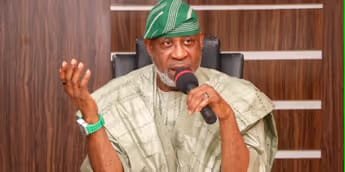
Nigeria’s Minister of Solid Minerals Development, Dele Alake, has called for the establishment of regional energy hubs across Africa as a key strategy to accelerate mining industrialization and strengthen the continent’s role in the global supply of critical minerals.
Speaking at the Powering Africa Summit in Washington, D.C., Alake said deeper collaboration between African nations and global partners, particularly the United States remains essential to meeting the growing global demand for minerals critical to the energy transition.
He emphasized the need to develop cross-border industrial corridors similar to the Lobito Corridor. According to him, initiatives such as the Lagos–Abidjan corridor, which spans Nigeria, Benin, Togo, Ghana, and Côte d’Ivoire, and the Walvis Bay Corridor, could unlock vast mineral resources while boosting regional integration.
Alake explained that such corridors would serve as economic engines by improving infrastructure, expanding energy access, and enabling industrial growth across borders. He added that shared energy solutions; such as nuclear power, could support multiple countries within a corridor, creating opportunities for local processing, manufacturing, and technology transfer.
“If three to five such corridors are developed across Africa, it would significantly fast-track industrialization and deliver mutual benefits for both Africa and its global partners,” he said.
Highlighting recent reforms under President Bola Ahmed Tinubu, the minister noted that improvements in governance, regulatory frameworks, and licensing processes have made Nigeria’s mining sector more attractive to investors.
He said the government has strengthened the security of mineral titles, ensuring long-term stability for investors, while also expanding the availability of internationally certified geological data to guide investment decisions.
On tackling illegal mining, Alake pointed to the creation of Mining Marshals, revealing that over 350 suspects; including foreign nationals, have been arrested within the past year, with more than 150 currently facing prosecution.
Reaffirming Nigeria’s commitment to attracting foreign investment, he highlighted incentives such as tax waivers on imported mining equipment and the ability for investors to fully repatriate profits after fulfilling tax obligations.
“We have de-risked the sector and created a more transparent environment for investment. In the last two and a half years, Nigeria has attracted over $2.6 billion in foreign direct investment into mining,” Alake stated.
Also speaking at the event, Sarah Whitten of the U.S. Export-Import Bank stressed that sustainable partnerships and long-term policy consistency are critical to unlocking financing for mining projects.
She noted that while American financial institutions are ready to support projects, their role is largely to catalyze private sector investment.
The panel also featured key stakeholders from across the mining and finance sectors, underscoring growing international interest in Africa’s mineral resources amid the global push for clean energy.
Energy
Dangote Warns of Looming Global Oil Crisis, Hails Tinubu’s UK Visit as Game-Changer for Nigeria
Aliko Dangote, Chairman of the Dangote Group, has sounded the alarm over potential global oil shocks that could exacerbate economic hardship across Africa, while praising President Bola Ahmed Tinubu for unlocking critical investment opportunities during his recent state visit to the United Kingdom.
Dangote made the comments following a courtesy visit to President Tinubu at his Lagos residence, explaining that the meeting was primarily to exchange Eid greetings, check on the President’s health, and pay respects.
“I just came to see His Excellency, Mr President, wish him Eid Mubarak, and also ask after his health. I haven’t seen him for a while, and wish him all the very best,” Dangote said.

He described Tinubu’s UK visit as a major diplomatic and investment breakthrough, stressing that modern diplomacy must focus on economic outcomes.
“I think it has opened ways. Today, diplomacy without the economic part of it is not complete. I believe his visit will open quite a lot of doors,” he said.
Dangote highlighted the £746 million UK-backed agreement targeting Nigeria’s infrastructure, especially the ports sector, as a strong signal of international confidence in the country.
“You can see the agreement signed for improving our infrastructure, especially in the ports and other areas, which is almost £746 million. It’s not easy dealing with the British and securing this kind of funding. But it shows confidence in Nigeria,” he stated, adding that the deal is likely to attract further foreign investment from countries such as Germany and others.
He encouraged Nigerian investors to leverage this momentum, particularly by tapping international credit facilities that have remained largely underutilized.
“For Nigerian investors, this shows we can also access these agencies for support. The agency is now open for business for Nigerians, and we should look to tap into it,” he said.
On the global energy outlook, Dangote warned that escalating tensions in the Middle East could drive oil prices higher, intensifying economic pressure, especially in Africa.
“If this crisis doesn’t de-escalate, we’ll end up paying big prices. Africa is already paying debts, and adding more shocks will increase hardship for governments and people alike,” he said.
He also highlighted the cascading effects of rising energy costs on daily life, particularly for small businesses and households that rely on fuel-powered generators.
“People like barbers, bread makers, and small industries who rely on generators will feel the heat if energy prices keep rising,” Dangote warned.
He pointed to global responses to energy pressures, such as reduced work schedules in some countries, drawing parallels to measures taken during the COVID-19 pandemic.
“Some countries are asking people to work from home or reduce workdays to cope. We did something similar during COVID-19,” he explained.
Despite the looming risks, Dangote expressed hope that the Middle East tensions would ease, urging collective prayers and international cooperation to prevent further escalation.
“We need to pray that this situation de-escalates. In Africa, many people depend on daily earnings, and if they don’t work, they won’t eat. All hands must be on deck to bring this to an end,” he concluded.
General News
Atiku Accuses Tinubu Of Driving Nigeria Toward Authoritarian Rule, Crushing Democracy
Former Vice President, Atiku Abubakar, has launched a scathing attack on President Bola Ahmed Tinubu, accusing his administration of dismantling democratic institutions and pushing Nigeria dangerously close to authoritarian rule.
In a strongly worded statement signed by the Atiku Media Office and issued on Monday in Abuja on March 23, 2026, Atiku condemned what he described as a “state-sponsored siege” carried out by operatives of the Department of State Services (DSS) on properties linked to former Attorney General of the Federation, Abubakar Malami.
According to the former vice president, the action—allegedly taken despite the matter being before the courts—amounts to a blatant abuse of power and a calculated attempt to intimidate perceived political opponents.
“This is not governance. This is intimidation. This is a regime weaponising state power to silence dissent,” Atiku stated.
He warned that Nigeria is witnessing a steady erosion of democratic norms, with security agencies increasingly being deployed for political purposes rather than national security.
“What we are seeing is the naked abuse of power—security agencies used not to protect citizens, but to settle political scores. This is how democracies collapse,” he said.
Atiku further alleged that the Tinubu administration is executing a broader strategy to weaken opposition figures ahead of the 2027 general elections, claiming that key political actors are being targeted and pressured.
He referenced figures such as Nasir El-Rufai and Malami, alleging attempts to coerce them into aligning with the ruling party.
“This is political coercion at the highest level—an attempt to force compliance through intimidation,” he said.
The former vice president warned that Nigeria risks becoming a one-party state if dissent continues to be suppressed and opposition voices silenced.
“When opposition is weakened and dissent punished, elections become mere formalities,” he added.
Drawing a historical parallel, Atiku cautioned against a repeat of authoritarian tendencies reminiscent of the Sani Abacha self-succession bid, urging Nigerians to remain vigilant.
He also accused the administration of weaponising anti-corruption agencies to pressure political actors into defection, describing the trend as a dangerous form of state capture.
“No individual has the right to dominate the political system or determine the destiny of millions for personal ambition. Leadership must remain accountable,” he stated.
Atiku concluded by emphasising that democracy depends on freedom of choice and political competition.
“Freedom of choice is the lifeblood of democracy. Once it is undermined, dictatorship takes over,” he said.
General News
ICPC to Arraign El-Rufai Over Alleged Money Laundering
The Independent Corrupt Practices and Other Related Offences Commission (ICPC) has announced plans to arraign former Kaduna State Governor, Nasir El-Rufai, on multiple charges bordering on alleged financial crimes.
According to a statement issued on Monday by the commission’s spokesperson, Okor Odey, the former governor will be arraigned on Tuesday, March 24, 2026, before the Federal High Court of Nigeria.
The charges, filed under suit number FHC/KD/73/2026, include alleged money laundering, conversion and possession of public property.
The ICPC further disclosed that El-Rufai will also face a separate trial before the Kaduna State High Court on allegations of abuse of office, fraud, intent to commit fraud, and conferring undue advantage.
In the second case, marked KDH/KAD/ICPC/01/26, the former governor is listed alongside Amadu Sule, also known as LEDA, while another defendant, Joel Adoga, is named in the federal high court case.
Odey noted that both cases were filed on March 18, 2026, and that the defendants have been duly served in accordance with legal procedures. He added that the date for arraignment at the state high court would be communicated in due course.
“The commission remains committed to due process and the rule of law,” the ICPC spokesperson stated.
El-Rufai has been in ICPC custody since February 18, 2026, following his arrest shortly after his release by the Economic and Financial Crimes Commission (EFCC), which had earlier detained him for 48 hours between February 16 and 18, 2026.