Economy
Reserves Surge to $50 Billion as Nigeria’s Net Position Hits $34.8 Billion, Ten Times 2023 Level

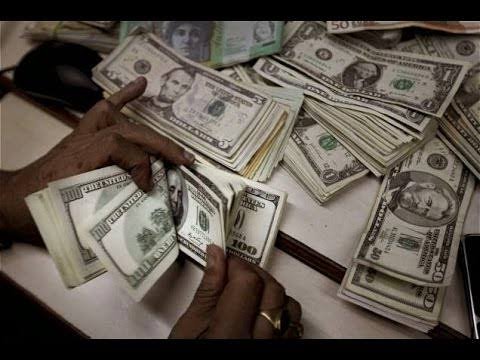
The Central Bank of Nigeria has reported a significant improvement in the nation’s foreign exchange reserves, with gross reserves approaching the $50 billion mark and net reserves recording a nearly tenfold increase since President Bola Tinubu took office in 2023.
According to a statement released by the CBN, the gross external reserves stood at $50.45 billion as of February 16, 2026 . More notably, the net external reserves surged from a low of $3.99 billion at the end of 2023 to $34.8 billion by December 2025, representing a staggering 772 percent increase over two years.

The Central Bank Governor, Mr. Olayemi Cardoso, attributed this dramatic turnaround to enhanced transparency and credibility in foreign exchange management, alongside sustained policy reforms introduced by the Tinubu administration.


“The net reserve position at the end of 2025 alone surpassed the total gross reserves recorded at the close of 2023, which stood at $33.22 billion,” Cardoso disclosed during a post-Monetary Policy Committee briefing. He described the development as a “fundamental improvement in reserve quality”.
Cardoso further explained that the expansion in reserves underscores Nigeria’s strengthened capacity to meet external obligations, support exchange rate stability, and bolster overall macroeconomic resilience.
The gains, according to the CBN governor, were driven by favorable trade conditions, a current account surplus, rising non-oil exports, increased diaspora remittances, and improved investor confidence. He noted, “Underpinning all this, quite frankly, is market confidence. Without market confidence, no matter what you do, you’ll find you will significantly sub-optimise”.
These figures represent a sharp turnaround from the situation inherited by the current administration. Net reserves have climbed from $23.11 billion at the end of 2024 to $34.8 billion at the end of 2025, while gross reserves rose from $40.19 billion to $45.71 billion over the same period . The reserve momentum has continued into 2026, with gross reserves crossing the $50 billion threshold in mid-February.
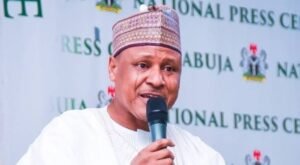
The reserve accumulation is one of several economic achievements credited to President Tinubu’s reform agenda. The Minister of Information and National Orientation, Mohammed Idris, speaking at a world press conference in London ahead of President Tinubu’s visit to the United Kingdom, highlighted that inflation has halved since 2023, the trade surplus is expanding, and the Central Bank’s Purchasing Managers’ Index has recorded fifteen consecutive months of growth.
Additionally, Idris noted that the government has exited the Financial Action Task Force grey list after implementing significant reforms to combat money laundering and illicit financial flows, a development that strengthens the country’s credibility within the global financial system. The Minister of Budget and Economic Planning, Senator Abubakar Bagudu, also confirmed that the macroeconomic reforms implemented over the past two and a half years have begun to show tangible results, including improved macroeconomic stability and heightened investor confidence.
Cardoso reaffirmed the CBN’s commitment to maintaining adequate reserve buffers and ensuring orderly foreign exchange market operations, describing the end-2025 reserve position as strong validation of the bank’s ongoing policy reforms and external sector adjustments.