Economy
Naira Weakens Further Amid Reserve Concerns as Nigerians Grapple with Soaring Inflation and Economic Hardship

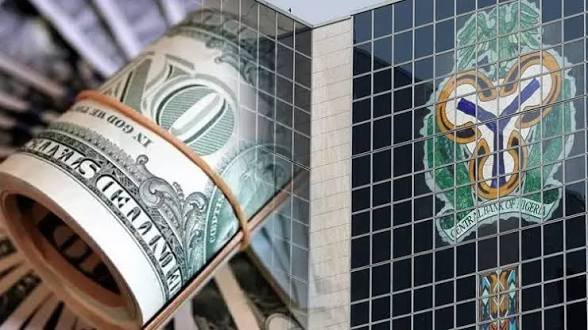
The Nigerian naira commenced trading on Monday, April 20, 2026, on a weaker note against the United States dollar, extending losses into the new week as pressure persists in the country’s foreign exchange market. Data published by the Central Bank of Nigeria revealed that the naira depreciated to N1,349.67 per dollar, down from N1,342.50 recorded at the close of trading on the preceding Friday, representing a loss of over N6 within the official window . By Wednesday, April 22, 2026, the currency was hovering around N1,348.77 in the Nigerian Foreign Exchange Market, showing slight adjustments amid ongoing volatility .
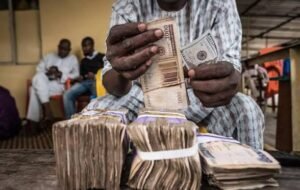
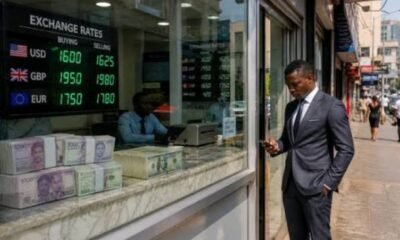
The parallel market, which serves as a barometer for retail dollar demand, recorded wider spreads, with the dollar trading between N1,450 and N1,470 in major currency hubs such as Lagos, Abuja, and Kano, reflecting persistent demand pressures for invisible transactions that often bypass official documentation requirements . This persistent gap between the official and parallel market rates underscores the structural challenges confronting Nigeria’s foreign exchange management framework despite repeated assurances from monetary authorities.
Nigeria’s external reserves have continued their downward trajectory, declining to approximately $48.6 billion as of April 17, 2026, marking a cumulative fall of about $1.38 billion over a five-week period from the 17-year high of $50.02 billion recorded on March 11 . The Central Bank Governor, Olayemi Cardoso, sought to downplay concerns regarding the declining reserves, stating that the trend should not trigger anxiety. Cardoso remarked, “In fact, what concerns me is not so much the decline in reserves, but the reaction to relatively small swings in the numbers, which in today’s market environment should not trigger anxiety” . However, global rating agency Fitch has projected a more cautious outlook, forecasting that Nigeria’s foreign exchange reserves could fall further to $47 billion by the end of 2026, citing higher spending pressures and external risks despite ongoing reforms .

The broader economic landscape remains deeply troubling for millions of Nigerians. Former Vice President Atiku Abubakar, in a strongly worded statement issued on April 19, 2026, criticized the economic policies of President Bola Tinubu’s administration, describing the current situation as organised hardship dressed up as reform. Atiku asserted, “At a time when Nigerians were promised renewed hope, what they have received is renewed hardship—raw, relentless, and unforgiving. The IMF is not breaking news; it is confirming a national emergency that this administration refuses to acknowledge” . His remarks followed the International Monetary Fund’s latest assessment, which downgraded Nigeria’s 2026 growth forecast to 4.1 percent while projecting rising inflation across Sub-Saharan Africa .
The former vice president painted a grim picture of grassroots realities, stating, “Parents are pulling children out of school because education is now a luxury. Farmers are abandoning their lands out of fear of violence. Young people roam the streets, degrees in hand, but hope in short supply. Small businesses are folding up like a pack of cards under the weight of electricity tariffs, taxes, and a suffocating business climate” . Atiku further warned that governance had become disconnected from ordinary citizens’ struggles, adding, “Governance is not a classroom exercise. It is about whether a pot boils in the kitchen, whether transport fare can be afforded, whether a small trader can restock, and whether a nation’s youth can dream again. Today, those simple things have become distant luxuries” .
Former Osun State Governor Rauf Aregbesola, in a separate analysis published on April 21, 2026, offered a scathing assessment of the nation’s direction, noting that the exchange rate had effectively doubled from approximately N700 to the dollar when the current administration assumed office in 2023 to about N1,400 currently. Aregbesola wrote, “In an import-dependent economy, this is devastating” . He highlighted the soaring cost of petrol, now about N1,400 per litre compared to between N185 and N238 previously, and decried the worsening power supply situation, noting that some parts of the country receive an average of two hours of electricity daily while others remain in darkness for weeks and months .
Despite the bleak indicators, some analysts point to ongoing Central Bank interventions and policy reforms aimed at stabilising the currency. The naira had shown intermittent signs of recovery in previous weeks, appreciating by 1.13 percent in the official market during the week ending April 17, supported by improved interbank turnover which rose to $124.34 million . The Central Bank has projected that reserves could rise to $51 billion by the end of 2026 as part of a broader macroeconomic stabilisation strategy aimed at strengthening external buffers and boosting investor confidence .
However, Fitch has warned that risks remain skewed to the downside, including potential deterioration in macroeconomic stability, renewed external shocks, or a sustained rise in fiscal deficits. The agency projected that Nigeria’s budget deficit could widen to nearly five percent of Gross Domestic Product in 2026, attributed to higher government spending on social interventions, security, and possible election-related expenditures . Inflation is expected to remain elevated, averaging about 16 percent in 2026 despite recent moderation, with the agency cautioning that renewed fiscal loosening or further fuel price adjustments could reverse recent disinflation gains .
The number of out-of-school children has reportedly lengthened to some 20 million from 18.3 million previously, while 130 million Nigerians are now multi-dimensionally poor, according to Aregbesola’s analysis . He concluded with a stark warning about the nation’s trajectory, stating, “The country is in dire straits and we cannot allow this continued drift into hopelessness” . As the trading week progresses, market participants will be closely monitoring both the official and parallel market rates, with the naira’s performance remaining heavily dependent on foreign currency inflows, oil price dynamics, and the Central Bank’s continued intervention capacity amid dwindling reserve buffers.