Economy
IMF Warns Rising Transport Costs Deepening Nigeria’s Cost-of-Living Crisis

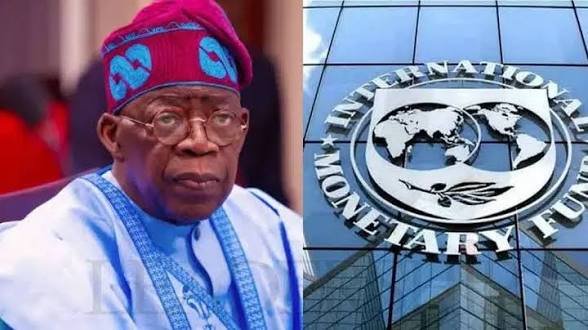
The International Monetary Fund has warned that Nigeria’s worsening cost-of-living crisis is being amplified by rising transport costs, which are feeding directly into food inflation and squeezing household incomes amid lingering global shocks .
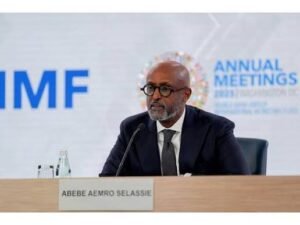
Speaking at a press conference on the Economic Outlook for Sub-Saharan Africa during the ongoing Spring Meetings of the World Bank and IMF in Washington DC, the Director of the African Department at the IMF, Abebe Selassie, said the impact of the ongoing Middle East conflict was already being felt strongly across the region, including Nigeria, with significant pressure on the cost of living .
“The immediate effect will be quite a bit of pressure, including on food security, either through the limited availability of fertilizer, expensive fertilizer, or even more immediately, as transportation costs have gone up, it’s going to raise the cost of food and so quite a bit of dislocation,” Selassie said .
Selassie highlighted the growing strain on households, noting that increases in transportation costs are transmitting quickly into higher food prices, worsening inflationary pressures on families in both urban and rural areas .
“We are already seeing quite a lot of increase in transportation prices that people are facing already. Transportation costs are very high for people in urban areas, rural areas even more so,” Selassie stated . “We are already seeing quite a bit of a pinch from the crisis on people. It is making life difficult for people,” he added .
The IMF also revised Nigeria’s economic growth forecast for 2026 downward by 0.3 percentage points to 4.1 per cent, down from the 4.4 per cent projected in January 2026 . The downgrade reflects rising costs and mixed economic signals, as higher fuel, fertilizer, and shipping costs weigh on non-oil sectors, even as elevated oil prices provide some support .
The Deputy Chief of the Macro-Financial Division in the IMF’s Research Department, Deniz Igan, explained the rationale behind the downgrade. “Turning to Nigeria, we have revised growth down by 0.3 percentage points to 4.1 per cent in 2026. This reflects a balance of two forces: higher fuel and fertilizer prices, along with increased shipping costs, which are expected to weigh on non-oil activity, and some offset from higher oil prices,” Igan said .
“Overall, the balance is expected to weigh on growth in 2026, with some recovery projected in 2027,” she added .
The IMF noted that the relatively strong economic performance seen in Sub-Saharan Africa in 2025 has weakened amid fresh global shocks, particularly the ongoing US-Israel war in Iran, which has disrupted non-oil commodity markets and worsened conditions for oil-importing countries .
For Nigeria specifically, the Fund said higher fuel and fertilizer prices, along with increased shipping costs, are expected to weigh on non-oil activity, while maintaining tight monetary policy and closely monitoring exchange rate movements and inflation expectations will be crucial to achieving the inflation target .
On inflation, the IMF emphasized that median inflation in Sub-Saharan Africa is projected to rise from 3.4 per cent in 2025 to five per cent in 2026, driven by high oil and fertilizer prices, potential fuel shortages, and rising borrowing costs .
Selassie also noted that the immediate effect of the current shocks is not only inflationary but also disruptive to food systems, as higher transport costs, expensive fertilizer, and supply constraints combine to push up the cost of basic commodities .
Meanwhile, the IMF has also projected that Nigeria’s debt-to-GDP ratio will rise to 33.1 per cent in 2027, despite a modest downward revision from its earlier estimate of 35.3 per cent . The figure remains higher than the 32.3 per cent projected for 2026 . Total public debt reached N159.27 trillion by the end of the fourth quarter of 2025, a sharp increase of nearly N6 trillion from the previous quarter .
The Fund warned of a deteriorating fiscal outlook globally, noting that rising geopolitical tensions, including the Middle East conflict, could further strain public finances through higher fuel and food prices, tighter financial conditions, and increased defence spending .
Selassie, however, acknowledged that reforms undertaken in recent years, including efforts to stabilise debt and reduce fiscal deficits, are beginning to provide some buffer against external shocks. “In recent years, steps have been taken to stabilise debt, to reduce fiscal deficits. That stabilisation helps now when another shock like this comes, because there is a little bit more scope to try and defray the impact on people’s livelihoods,” he said .
The IMF also advised Nigeria to deploy targeted, disciplined, and reform-aligned policy responses to navigate the fresh cost-of-living squeeze, warning against policy reversals that could undermine credibility . The Fund specifically advised that Nigeria’s hard-won macroeconomic gains from recent economic and policy reforms, now under renewed pressure, should not be jeopardized; instead, the government should deploy targeted and time-bound support rather than broad subsidies .
“What we are pleading is that these interventions are consistent with the medium-term objectives that countries have, and that they’re not thrown off course by this because that would be a double whammy for countries,” Selassie said .