General News
Korea Shifts From Aid to Strategic Partnership With Nigeria

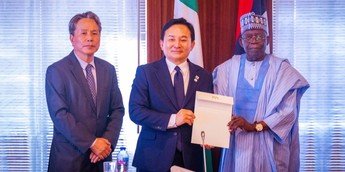
The Embassy of the Republic of Korea in Nigeria has announced a major shift in its engagement with Nigeria, moving away from the traditional donor-recipient model toward a strategic partnership built on shared responsibility, institutional development, capacity building, and stronger economic cooperation.
This was disclosed during a joint seminar titled “Engaging Africa in Dwindling Foreign Aid and Assistance,” organised by the Nigerian Institute of International Affairs (NIIA) in collaboration with the Embassy of Korea in Lagos.
Speaking at the event, the Chargé d’Affaires of the Republic of Korea, Mr. Tak Namgung, said the steady decline in global foreign aid has made it necessary for countries to rethink the way they collaborate.
He revealed that global Official Development Assistance (ODA) dropped to about $174 billion in 2025, representing a 23 per cent decline, which he described as the sharpest fall in recent history.
According to him, bilateral aid to Sub-Saharan Africa is expected to decline by as much as 28 per cent, with major donor countries, including Korea, reducing their aid budgets significantly.
Namgung noted that the old aid-based relationship is no longer sustainable, stressing that future cooperation must be built on knowledge exchange, stronger institutions, and mutual accountability rather than dependency.
Drawing from Korea’s own development journey, he explained that the country focused heavily on building resilient systems, particularly digital governance structures, as part of its transformation into a major global economy.
However, he admitted that Korea’s rapid economic growth came with early trade-offs, especially concerning democracy and human rights.
He warned that economic growth and human rights should not be pursued separately, stating that growth without accountability often leads to instability, while rights without economic foundations remain difficult to sustain.
On Nigeria-Korea relations, Namgung pointed to significant opportunities for stronger economic ties, especially in the area of critical minerals.
He noted that while Korea relies on imports for more than 95 per cent of its critical minerals, Nigeria possesses large reserves of lithium, graphite, and other essential resources needed for electric vehicles, clean energy production, and advanced manufacturing.
He stressed, however, that sustainable industrial development requires more than resource extraction, highlighting the importance of transparency, institutional strength, and trust.
The envoy also noted that Korean companies such as Daewoo E&C have played longstanding roles in Nigeria’s infrastructure development, while firms like Samsung and LG continue to contribute to industrial growth and skills development.
He added that Korea, through its development agency, the Korea International Cooperation Agency (KOICA), has also supported Nigeria’s e-governance initiatives as part of efforts to strengthen public sector efficiency and institutional reforms.