
World News
Trump Revives Trade War With China as Economic Tensions Escalate

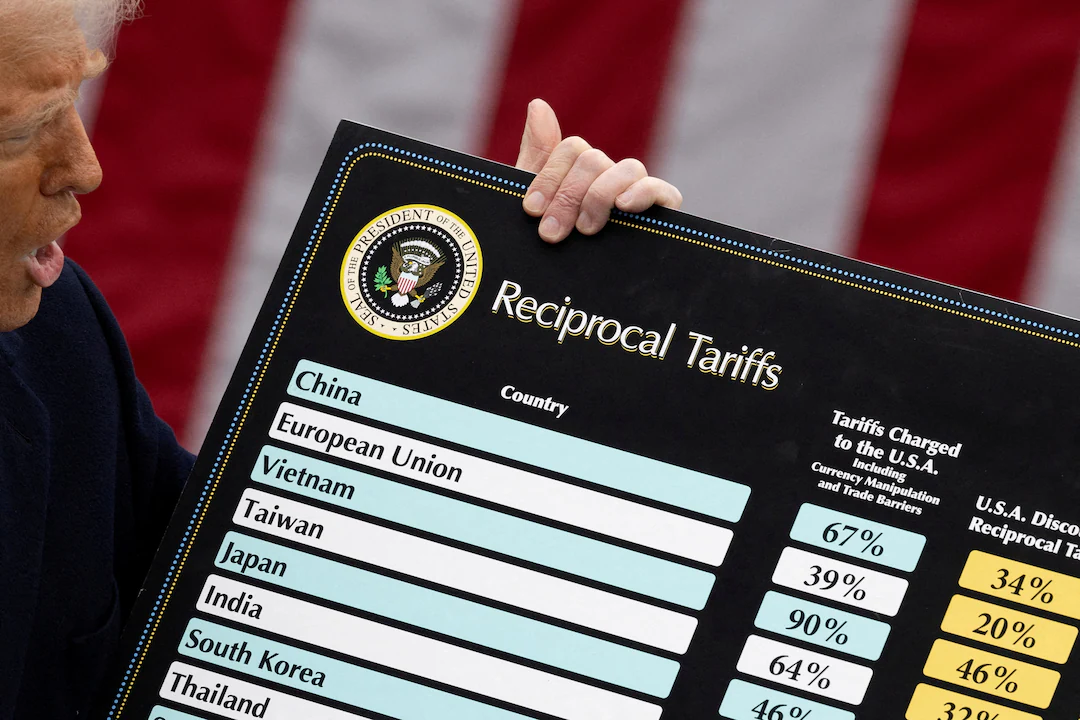
The trade conflict between the United States and China has intensified once again as U.S. President Donald Trump ramps up tariffs, sanctions, and economic pressure on Beijing in what analysts describe as a renewed trade war between the world’s two largest economies.
Since returning to office in 2025, Trump has revived his aggressive “America First” trade agenda, imposing new tariffs on Chinese imports and tightening restrictions on key sectors tied to technology, energy, and critical minerals. The latest measures have further strained relations between Washington and Beijing amid broader geopolitical tensions linked to Iran, Taiwan, and global supply chains.
According to Reuters, the renewed economic confrontation escalated after the United States sanctioned Chinese refineries accused of purchasing Iranian oil, prompting China to activate its anti-sanctions law and prepare retaliatory export restrictions.
The latest phase of the trade war follows a series of tariff increases that began shortly after Trump’s return to the White House. The U.S. imposed sweeping duties on Chinese goods in 2025, with China responding through retaliatory tariffs on American products, including agricultural exports and industrial goods.
At one point, tariff rates between both countries reportedly climbed above 100% before temporary truces were negotiated during trade talks in Geneva and Busan. Despite these pauses, both governments accused each other of violating agreements, leading to fresh rounds of economic restrictions.
China has also tightened controls on rare earth exports; materials essential for electronics, defense systems, and electric vehicle production, giving Beijing significant leverage in the ongoing dispute.
Economists warn that the renewed trade war could disrupt global supply chains, increase manufacturing costs, and slow economic growth worldwide. Businesses in both countries are already adjusting operations as uncertainty grows around future tariffs and trade policy.
Chinese exporters, however, appear more prepared than during Trump’s first administration. Reports indicate many firms have diversified into markets across Africa, Southeast Asia, and Latin America to reduce reliance on the United States. China ended 2025 with a record trade surplus despite declining exports to the U.S.
Meanwhile, American companies remain concerned about rising costs and disruptions in critical sectors such as technology, automobiles, pharmaceuticals, and energy.
Despite the growing tensions, diplomatic engagement between Washington and Beijing has not completely broken down. High-level meetings between U.S. Treasury Secretary Scott Bessent and Chinese Vice Premier He Lifeng have continued in recent months ahead of a possible Trump-Xi summit later this year.
Analysts say both countries are trying to avoid a total economic decoupling while simultaneously competing for technological dominance and global influence.
The renewed trade war is expected to remain a major issue in global politics and financial markets throughout 2026 as businesses and governments brace for further uncertainty.