
General News
Borno Govt Claims 75% Success in Reintegration of 8,000 Ex-Boko Haram Members

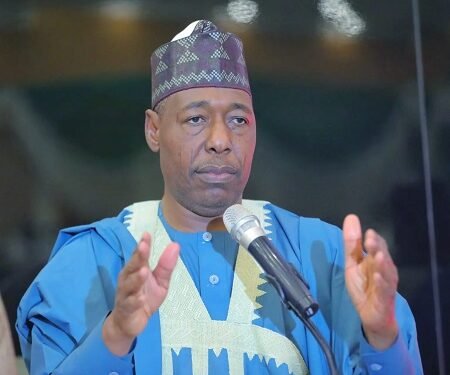
The Borno State Government has revealed that nearly 8,000 former Boko Haram insurgents and their family members have been successfully reintegrated into society, with authorities claiming a 75 per cent success rate in the ongoing rehabilitation programme.
The Commissioner for Women Affairs and Social Development, Zuwaira Gambo, disclosed this while speaking in Maiduguri on Saturday, describing the initiative as a major pillar of the state’s post-insurgency recovery and peace-building efforts.
According to her, the programme became necessary following the mass surrender of insurgents and their families across the North-East, which placed enormous humanitarian and security responsibilities on the administration of Governor Babagana Umara Zulum.
“With all sense of modesty, and I want to be very humble about it, I think we have about 75 per cent success,” Gambo said.
She explained that many of those who surrendered were not fighters directly involved in combat operations but individuals who served as logistics suppliers and support personnel within insurgent camps.
“We have integrated about 8,000 or thereabout,” she stated.
The commissioner noted that the majority of those arriving at rehabilitation camps were women and children, many battling trauma, mental health issues, and the effects of gender-based violence after years spent in insurgent enclaves.
“These are women that are coming out with trauma. These are women that may be victims of gender-based violence. These are women suffering from mental health and psychosocial challenges,” she said.
Gambo further revealed that some of the children brought out of the camps had never experienced organised community life or seen modern infrastructure before entering rehabilitation centres.
She said the state government responded by deploying trained social workers and establishing temporary schools, healthcare facilities, and vocational training centres to ease their transition back into society.
According to her, vulnerable persons, including widows, orphans, elderly citizens, and persons living with disabilities, were separated into specialised care centres where they received targeted support before being reunited with their families and communities after consultations with local leaders.
Despite the progress recorded, the commissioner identified inadequate funding as one of the biggest obstacles confronting the programme.
“It has to do with funding because you bring a lot of people on board. You have to feed them, clothe them and provide access to education,” she said.
She also dismissed allegations that rehabilitated ex-insurgents were returning to terrorist groups, insisting that insurgent factions often reject those who voluntarily surrender and attempt to return.
The reintegration initiative remains one of the most ambitious deradicalisation efforts undertaken in Nigeria’s counter-insurgency campaign against Boko Haram in the North-East.