
International
Taiwan Revives ‘Anti-Communist’ Military Classes as Beijing’s Military Pressure Mounts

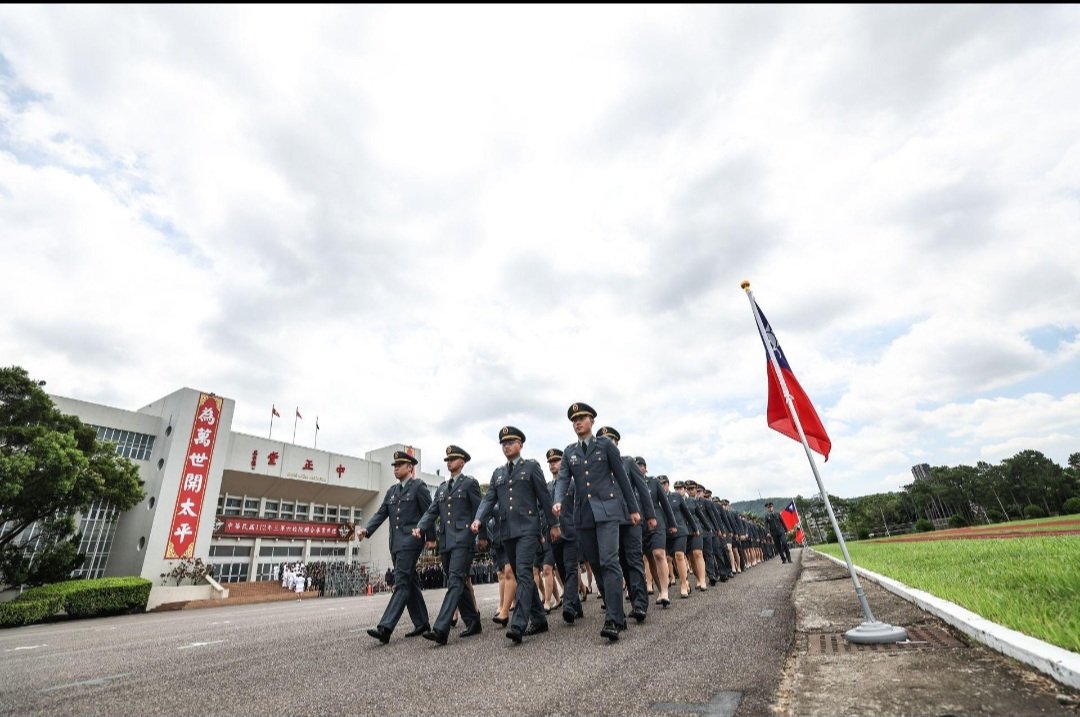
Taiwan has officially reinstated “anti-communist patriotic education” for graduates of its military academies, marking the return of a Cold War-era program that had been discontinued for nearly a quarter of a century. The Ministry of National Defense announced the move on Sunday, saying the decision was driven by the growing military and infiltration threats posed by China.
The specialized classes were originally introduced during the Cold War, when Taiwan regularly warned against what it called the threat of “communist bandits” from mainland China. In 2002, the program was renamed simply “patriotic education” as cross-strait relations entered a less confrontational period. However, officials now say the security environment has changed dramatically, making it necessary to restore the original curriculum.
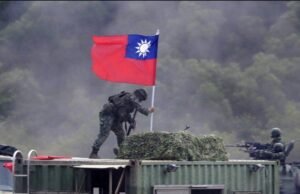
In a statement, Taiwan’s defense ministry said the renewed program is designed to help military graduates clearly understand the country’s national security challenges and reinforce the purpose of military service. Officials said the courses will emphasize “why we fight, and for whom we fight,” while helping graduates distinguish between allies and adversaries in an increasingly complex security environment.
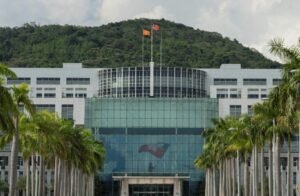
Unlike previous versions of the course, the updated curriculum will include lectures from officials representing several government agencies, including the Mainland Affairs Council, the National Security Council, the Ministry of Justice, and Academia Sinica, Taiwan’s leading government-backed research institution. The broad participation reflects Taiwan’s effort to prepare officers not only for conventional warfare but also for cyberattacks, espionage, disinformation campaigns, and other forms of hybrid warfare that officials say China increasingly employs.
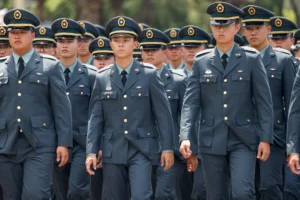
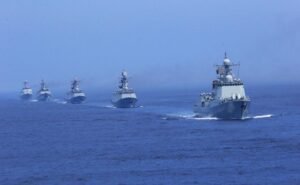
The announcement comes amid a noticeable increase in Chinese military activity around Taiwan. Joseph Wu, Secretary-General of Taiwan’s National Security Council, recently reported that authorities were tracking more than 110 Chinese military and coast guard vessels operating along the so-called First Island Chain, stretching from Japan through Taiwan to the Philippines. He described the deployment as a clear indication of Beijing’s growing regional ambitions.
China, which considers Taiwan part of its territory, has steadily increased military exercises, naval patrols, and air incursions around the self-governing island. Beijing has never ruled out the use of force to bring Taiwan under its control and has repeatedly condemned moves by Taipei that it believes promote formal independence. Taiwan’s government rejects Beijing’s sovereignty claims, insisting that only the Taiwanese people can determine the island’s future.
The revival of the anti-communist education program follows recent speeches by Taiwanese President Lai Ching-te urging military cadets to remain loyal to democratic values and resist Chinese infiltration. Analysts say the government is placing greater emphasis on ideological resilience as part of its broader defense strategy, alongside increased military spending, modernization, and closer security cooperation with partners such as the United States and Japan.
Security experts believe the move reflects Taiwan’s assessment that future conflict may involve not only military force but also influence operations, espionage, and psychological warfare. By restoring the anti-communist curriculum after 25 years, Taipei is signaling that it views ideological preparedness as an essential component of national defense amid rapidly escalating tensions across the Taiwan Strait.