
International
South Korea Urges North to Stop ‘Unnecessary Slander’ Amid Rising Tensions

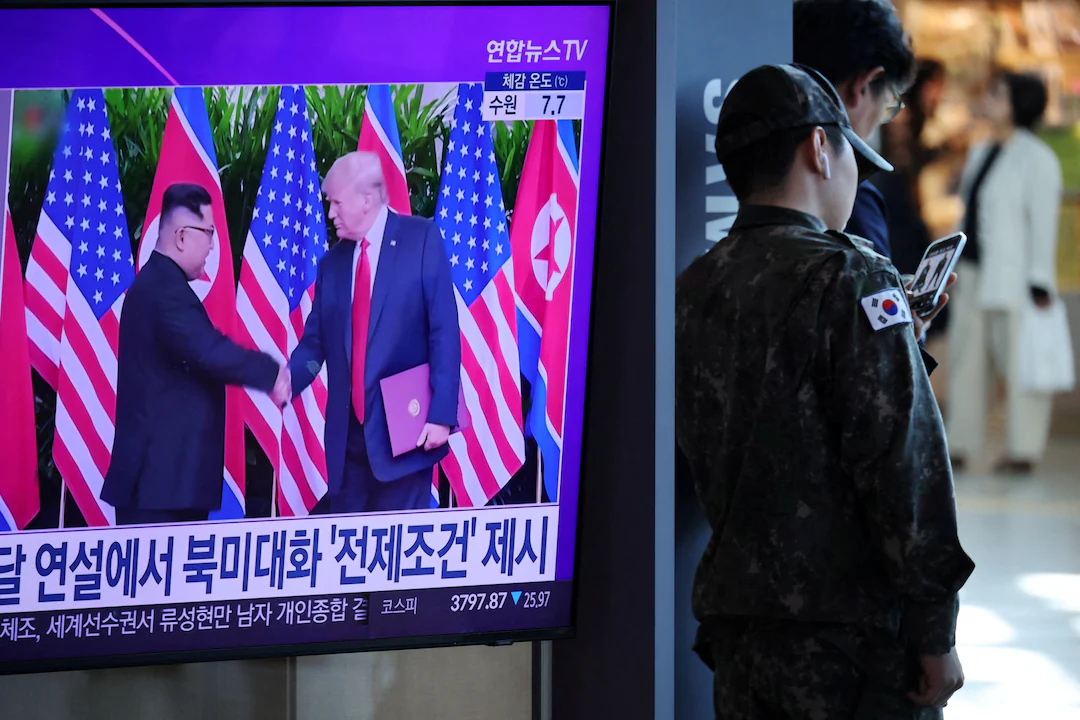
South Korea has urged North Korea to stop what it described as “unnecessary slander” and instead work toward peace on the Korean Peninsula, following a fresh war of words between the two neighbours.
The South Korean presidential office made the appeal on Friday, August 21, after Kim Yo Jong, the influential sister of North Korean leader Kim Jong Un, criticised President Lee Jae Myung over his comments on the scaling back of joint military exercises between South Korea and the United States.
According to South Korean media reports cited by Reuters, Seoul called on Pyongyang to abandon hostile rhetoric and pursue a more constructive approach to inter-Korean relations.
The latest dispute began after President Lee welcomed the US decision to reduce the scale and duration of its military exercises with South Korea, describing the move as potentially helpful in creating conditions for dialogue with North Korea.
Kim Yo Jong, however, accused Lee of making “double-dealing” remarks, arguing that Seoul’s position on the exercises was inconsistent.
She also dismissed the suggestion that the reduction in the drills represented a fundamental change in US policy toward North Korea, maintaining Pyongyang’s long-standing opposition to the military exercises.
In response, Seoul said it was not interested in escalating tensions through exchanges of accusations.
The presidential office instead urged North Korea to focus on creating conditions for peace and stability on the Korean Peninsula, reflecting Lee’s broader push for dialogue with Pyongyang.
The latest exchange comes at a particularly sensitive time on the peninsula. The United States and South Korea recently reduced their annual joint military exercises, with the drills shortened from the originally planned 11 days to five days and some field training scaled back.
The change was part of an effort by Washington to reduce tensions and potentially create room for renewed engagement with Pyongyang.
North Korea, however, has remained deeply critical of the exercises. Pyongyang has repeatedly described the drills as provocative and as preparation for an invasion, despite assurances from Seoul and Washington that they are defensive in nature.
The dispute was followed by a North Korean missile launch on August 20, when Pyongyang fired around 10 short-range ballistic missiles into waters off its eastern coast, according to South Korean and US assessments.
The missile launches further underscored the difficulty facing President Lee’s efforts to improve relations with the North.
Since taking office, Lee has promoted dialogue and measures aimed at reducing military tensions, but Pyongyang has largely rejected Seoul’s overtures and has maintained a hard line toward the South.
North Korean leader Kim Jong Un has also increasingly characterised South Korea as a hostile state and abandoned Pyongyang’s previous reunification policy, further complicating efforts to restore communication between the two sides.
Despite the latest verbal confrontation, Seoul’s response suggests the Lee administration remains committed to avoiding an escalation of tensions and keeping open the possibility of dialogue.
The Korean Peninsula remains technically at war, with the 1950-53 Korean War ending in an armistice rather than a formal peace treaty. The heavily fortified Demilitarized Zone continues to separate the two countries.
For now, however, the latest statements from Seoul indicate that President Lee’s administration is seeking to counter North Korean criticism through calls for restraint and engagement rather than confrontation.