
International
Bessent Blames Lutnick Over Nvidia Chip Exports as Trump Advisers Weigh His Removal

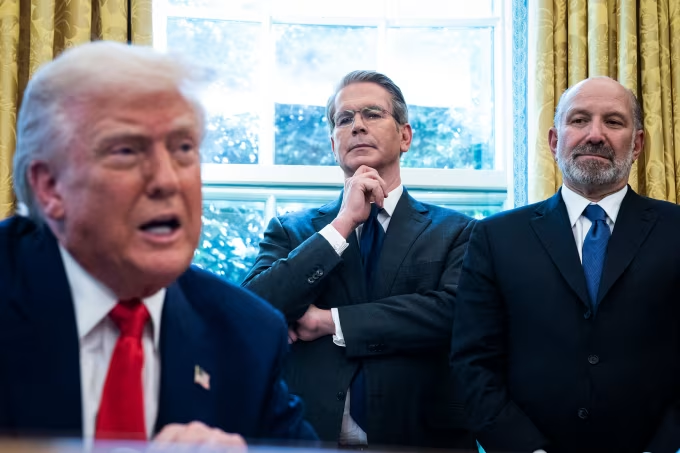
United States Treasury Secretary Scott Bessent has publicly blamed Commerce Secretary Howard Lutnick for delays in restricting Nvidia’s advanced artificial intelligence chip exports to China, amid growing reports that senior advisers to President Donald Trump are considering his removal from office.
Bessent’s criticism, made during an appearance on CNBC on Friday, November 13, exposed growing divisions within the Trump administration over the handling of sensitive technology exports and concerns about China’s access to American artificial intelligence technology.
The dispute centres on Megaspeed, a Singapore-based company that has purchased billions of dollars’ worth of advanced Nvidia chips and is under scrutiny over suspicions that some of the technology could have been diverted to China.

Bessent said several government departments, including the Treasury, State and Defence departments, had supported placing Megaspeed on the US government’s export control blacklist.
However, he argued that the Commerce Department, which has the authority to make the listing, failed to take the necessary action.
“Commerce has the pen. You would have to ask them about their internal processes,” Bessent said during the interview.

He added that President Trump had made his position on restricting China’s access to certain advanced Nvidia chips clear, expressing frustration over what he described as possible gaps in enforcing the administration’s policy.
The disagreement follows a reported confrontation between Bessent and Lutnick during a meeting in the White House Situation Room last week, where the Treasury secretary questioned the Commerce Department’s reluctance to blacklist Megaspeed.
According to CNN, Lutnick did not immediately commit to taking specific action during the meeting.

The controversy has intensified following reports surrounding Nvidia’s former chief executive, Jensen Huang, and his alleged relationship with Alice Huang, an executive associated with Megaspeed who has reportedly attracted the attention of US authorities over suspected links to Chinese intelligence.
The allegations have raised fresh national security concerns about the movement of advanced American technology through international business networks.
Meanwhile, Lutnick’s position has reportedly come under increasing pressure, with senior White House officials and political advisers discussing whether he should remain in office.

The Wall Street Journal reported that some of Trump’s advisers had begun shifting blame towards Lutnick over the controversy, while some political allies had previously raised the possibility of removing him as Commerce Secretary.
Reuters also reported that senior White House officials were discussing his future following growing criticism of the department’s handling of technology exports to China.
Despite the mounting pressure, the White House has publicly defended Lutnick.
A White House official said Trump maintained complete confidence in the Commerce Secretary and his ability to perform his duties.
Lutnick, a longtime Trump associate, has previously defended allowing some Nvidia chip exports to China, arguing that keeping Chinese technology companies dependent on American products could help Washington maintain its influence in the global artificial intelligence market.
However, lawmakers from both political parties have demanded explanations over the administration’s export approvals and the effectiveness of safeguards designed to prevent sensitive technology from reaching Chinese military-linked organisations.
Democratic senators Elizabeth Warren and Chris Coons have also called for relevant government records to be preserved as scrutiny of the transactions intensifies.
The controversy highlights the growing tension between Washington’s commercial interests and national security concerns as the United States competes with China for dominance in artificial intelligence and advanced semiconductor technology.
For Lutnick, the unfolding dispute could become one of the most serious political challenges of his tenure, particularly as questions mount over whether the Commerce Department adequately enforced restrictions intended to protect America’s technological advantage.