
International
Spain’s First General Strike in 14 Years Ends in Violent Clashes in Barcelona

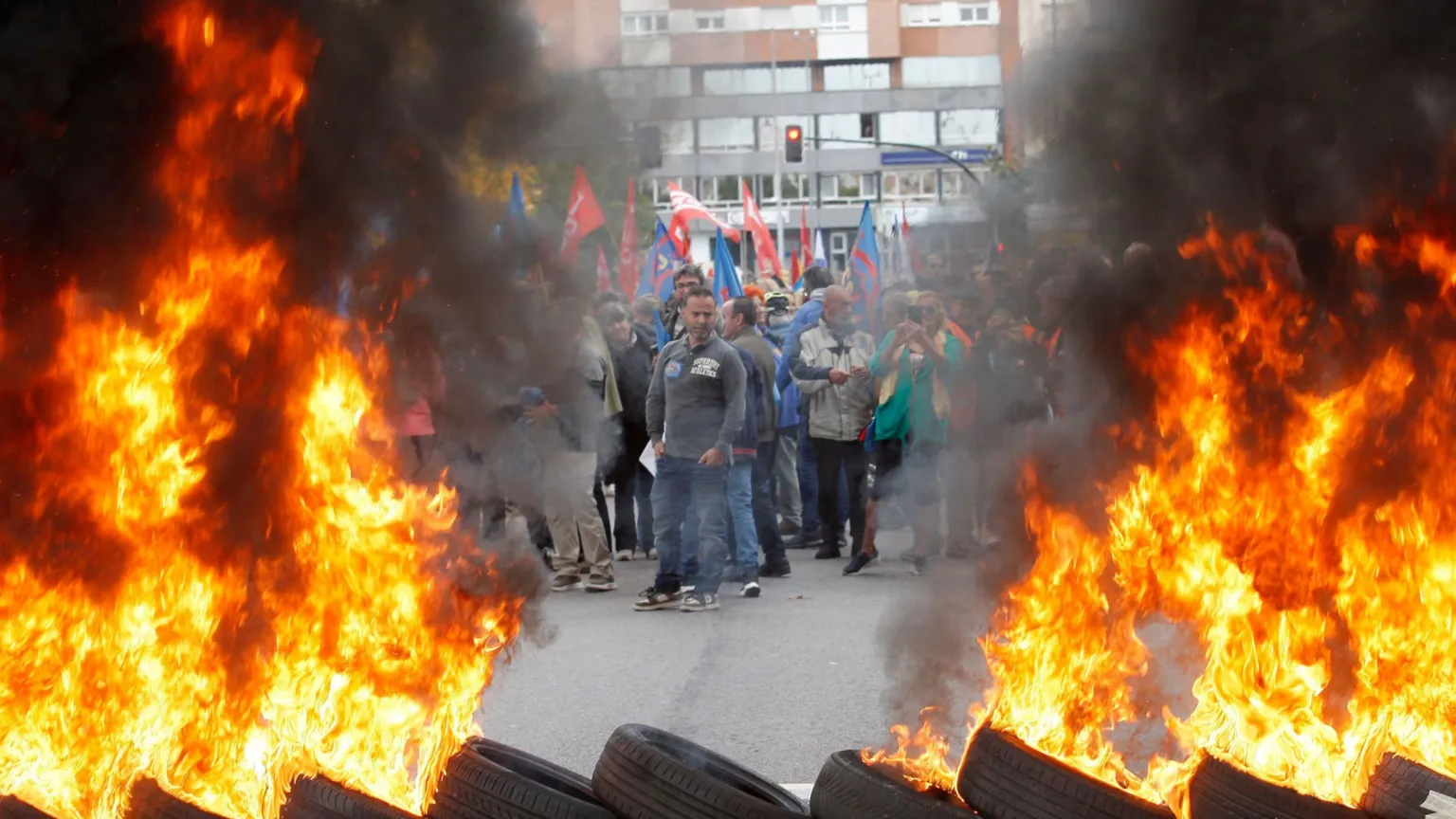
Violent clashes broke out between protesters and police in Barcelona after thousands of people joined Spain’s first general strike in 14 years, protesting against rising housing costs and the increasing cost of living.
The demonstrations, held on Wednesday, November 11, spread across major Spanish cities, including Barcelona and Madrid, with workers, trade unions and housing campaigners demanding better wages and affordable accommodation.

In Barcelona, the largely peaceful demonstration descended into violence in the evening when groups of masked protesters reportedly broke away from the main march, setting rubbish bins and street furniture on fire, smashing shop windows and throwing stones, bottles and fireworks at police officers.
Police responded with tear gas, rubber bullets and baton charges as disturbances spread through parts of the city centre, including Passeig de Gràcia and Plaça de Catalunya.
According to local reports, at least 18 people were arrested in Barcelona following the clashes, bringing the number of arrests connected to the day’s nationwide strike to dozens.

More than 50,000 people reportedly participated in the Barcelona demonstration, according to estimates from local authorities, although organisers put attendance significantly higher.
The unrest followed a nationwide walkout supported by Spain’s two largest trade unions, the General Union of Workers (UGT) and the Workers’ Commissions (CCOO), alongside tenants’ associations and housing campaigners.
Organisers estimated that approximately four million workers participated in the strike, representing about one-fifth of Spain’s workforce.
Demonstrations also attracted large crowds in Madrid, where approximately 120,000 people reportedly took to the streets to demand government action on housing affordability and declining purchasing power.
The strike was driven largely by Spain’s worsening housing crisis, with protesters accusing authorities of failing to address rising rents, housing shortages and evictions.

According to figures cited by Reuters, Spain faces a housing deficit of approximately 750,000 homes, while average monthly rent has climbed to about €1,176, placing increasing pressure on younger workers and low-income households.
The demonstrations also come ahead of Spain’s November 29 snap election, making housing affordability and the cost of living major political issues.
The general strike was the first nationwide walkout since 2012, when workers protested against austerity measures during the eurozone debt crisis.
While trade union leaders described Wednesday’s participation as a major success, the violence in Barcelona and other locations raised concerns about public safety and the handling of demonstrations.
Catalan President Salvador Illa condemned the violence, stressing that the disturbances did not represent the peaceful nature of the wider protest.
The unions also criticised the police response, describing the use of force against demonstrators as disproportionate and indicating plans to pursue a formal complaint.
Transport services, businesses and other public facilities experienced disruptions during the strike, while several factories and industrial facilities reported significant stoppages.
The demonstrations have intensified pressure on Prime Minister Pedro Sánchez’s government to address the country’s housing difficulties and growing economic frustrations as the election approaches.