
International
Democrats Gain Power to Block Trump’s Supreme Court Nominees After Midterm Election Victory


Democrats are preparing to use their newly secured majority in the United States Senate to block President Donald Trump’s judicial appointments, potentially limiting his ability to further reshape the Supreme Court and the wider federal judiciary.
The shift follows the Democrats’ sweeping victory in the November 2026 midterm elections, which will give the party control of both chambers of Congress when the new lawmakers take office in January 2027.

Democrats are projected to hold at least 54 seats in the 100-member Senate, with the possibility of increasing their majority to 56, depending on the final results in Alaska and Mississippi.
Senate Democratic leader Chuck Schumer, who is expected to become majority leader when the new Congress convenes, has vowed to prevent Trump from appointing conservative candidates to the Supreme Court and other federal judicial positions.
In an interview with the Associated Press, Schumer said Democrats would not allow the president to install what he described as a right-wing nominee on the nation’s highest court. He also warned that the party would closely scrutinise nominees for lower federal courts and positions within Trump’s Cabinet.

The development marks a significant reversal of political fortunes after Republicans spent years using their Senate majority to advance conservative judicial appointments, particularly during Trump’s first administration.
Trump appointed three Supreme Court justices during his first term: Neil Gorsuch, Brett Kavanaugh and Amy Coney Barrett. Their appointments helped establish a conservative supermajority on the nine-member court, which later delivered major decisions on issues including abortion rights.
Since returning to the White House in 2025, Trump has also secured confirmation of 56 additional federal judges, adding to the 234 judicial appointments he made during his first four years in office, according to Reuters.
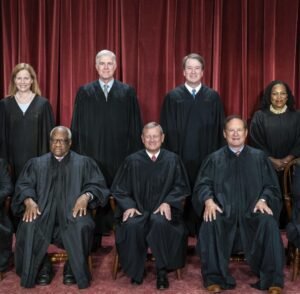
The incoming Democratic majority is expected to make it considerably more difficult for the administration to secure confirmations, particularly for appellate courts and any future Supreme Court vacancies.
Attention has increasingly focused on the Supreme Court’s two oldest conservative justices, Samuel Alito, 76, and Clarence Thomas, 78, amid speculation about whether either could retire before Democrats assume control of the Senate.
Neither justice has publicly announced plans to step down.

Any retirement before January 2027 could give Trump and the outgoing Republican-controlled Senate an opportunity to confirm a replacement before the political balance changes.
However, even during the remaining weeks of Republican control, securing confirmation of a new Supreme Court justice would not be guaranteed.
Republicans are already facing pressure to accelerate consideration of pending judicial nominees before the end of the year.
Meanwhile, Democrats are expected to face pressure from their supporters to adopt the same aggressive confirmation tactics Republicans previously used, including delaying or blocking nominees they consider unsuitable.
The White House has criticised the Democrats’ position, accusing the party of politicising the Supreme Court and undermining judicial independence.
White House spokeswoman Lauren Bis said Trump would not allow Democrats to pack the Supreme Court or damage the independence of the judiciary.
The battle over judicial appointments is expected to become one of the major political confrontations of Trump’s remaining two years in office, with control of the Senate giving Democrats a powerful tool to challenge the administration’s influence over the federal courts.
Although Democrats cannot remove sitting Supreme Court justices or directly change the court’s existing ideological balance, their incoming majority could prevent Trump from filling any vacancies with nominees they oppose.
The outcome could leave the current conservative majority largely intact while limiting the president’s ability to extend his influence over the judiciary.