
International
Egypt Hails First Muslim US Senator, Despite His Criticism of Military Rule

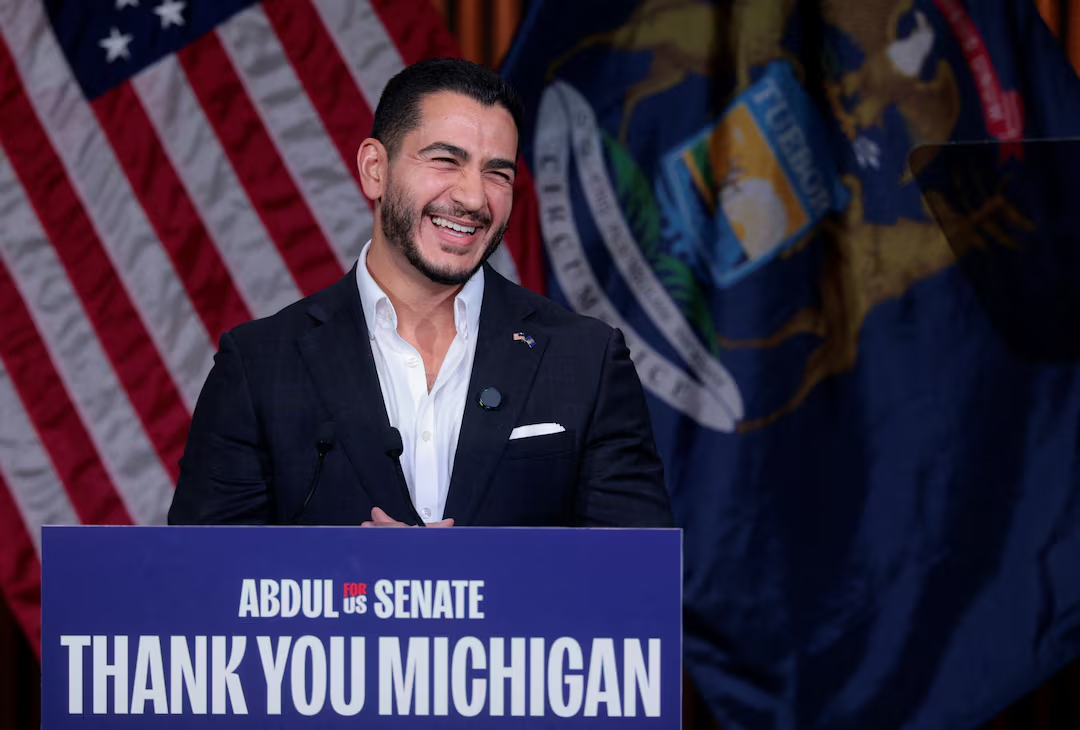
Abdul El-Sayed’s election as the first Muslim member of the United States Senate has sparked celebrations among Egyptians, with prominent public figures and social media users praising his historic victory, even as the country’s state-controlled media gave the development limited attention.
El-Sayed, a 42-year-old Democrat of Egyptian descent, defeated Republican candidate Mike Rogers in Michigan’s November 3 midterm elections, making history as the first Muslim elected to the US Senate. His victory has attracted attention in Egypt, where his family roots and outspoken criticism of the government have made him a politically sensitive figure.
Egyptian television personalities and social media users celebrated the result, presenting it as a significant achievement for a person of Egyptian heritage and a demonstration of the opportunities available within the American political system.
Television presenter Amr Adib highlighted the significance of El-Sayed’s achievement, while another presenter, Yasmine El-Khateib, described the victory as evidence that voters could elect a candidate despite religious and ethnic differences. A video of El-Sayed’s victory speech, including an Egyptian-style ululation, also circulated widely online.
Alaa Mubarak, son of former Egyptian President Hosni Mubarak, shared a clip from the senator-elect’s speech, adding to the public attention surrounding the result.
However, Egyptian state media largely avoided giving the victory comparable coverage. Reuters reported that the contrast was notable because state-aligned outlets have previously highlighted the achievements of other Americans of Egyptian descent.

Egyptian President Abdel Fattah al-Sisi
The limited attention comes against the background of El-Sayed’s criticism of Egypt’s political system and President Abdel Fattah al-Sisi. The senator-elect has described Egypt as a military dictatorship and questioned why American taxpayers should continue financing its military establishment.
Egypt receives approximately $1.3 billion annually in US military financing, making it one of Washington’s largest recipients of such assistance. El-Sayed has argued that American funds should not be used to support governments accused of suppressing political opposition and violating human rights.
His criticism has not always been welcomed in Egypt. During his campaign, comments about the limited economic opportunities available in his parents’ homeland attracted criticism from pro-government commentators and public figures.

El-Sayed was born in the United States to Egyptian immigrant parents and has maintained connections with his family’s country of origin. His father emigrated from Egypt in 1978, while El-Sayed has spoken about his family’s links to Alexandria.
His political views have also drawn controversy in the United States. Republican opponents and President Donald Trump sought to associate him with the Muslim Brotherhood, allegations he rejected. The controversy included claims based on a 2012 letter supporting Egypt’s democratic transition, although a Guardian review found that the letter did not endorse the Muslim Brotherhood.
El-Sayed’s victory followed a campaign in which he faced repeated attacks over his Muslim faith, Arab heritage and political positions. He ran on issues including healthcare, affordability and reducing the influence of wealthy donors in American politics.

His election could give him a more prominent platform to challenge Washington’s military relationship with Cairo, particularly as the Senate plays a central role in approving foreign assistance and scrutinising US foreign policy. However, any major change to American aid to Egypt would require broader political and legislative support.
The contrasting reactions to his victory highlight the complicated relationship between national heritage and political identity. While many Egyptians have celebrated his achievement as a moment of pride for the diaspora, his criticism of Egypt’s leadership presents a challenge for state institutions that might otherwise have treated the election as a success story.