
International
Christa Pike Breaks Silence After Failed Execution, Says She Woke Up ‘Confused and in Pain’


A Tennessee death row inmate who survived a failed lethal injection has spoken publicly for the first time, describing continuous physical pain and emotional distress since waking up in hospital after the execution attempt.
Christa Pike, 50, made the statement on Friday, October 30, exactly one month after Tennessee authorities attempted to execute her at Riverbend Maximum Security Institution on September 30.
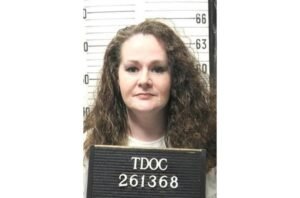
In a statement released through her legal team, Pike said she had prepared herself for death and had made peace with the people she loved before entering the execution chamber.
“Several days later I woke up alone in a hospital confused and in pain,” she said, adding that she had not experienced a moment without pain since that night.
She said her arms, hands and throat continued to hurt and that she was still struggling to speak. Pike also described emotional suffering, saying she had not considered the possibility of surviving the execution attempt and was now trying to understand what had happened.

“I am recovering, and I know that I am getting stronger. But healing is not the same as being okay,” she said.
The execution attempt failed after Pike received two doses of pentobarbital, a drug used in lethal injections. She was taken to hospital in critical condition, with her lawyers later reporting that her arms were swollen, burned and blistered.
Her legal team said she was initially unconscious and placed on a ventilator. She regained consciousness on October 6, after doctors had reportedly considered withdrawing life support.

Pike’s lawyers said she had suffered pneumonia, a blood clot and serious swelling in her arms, leaving her unable to move them properly during the early stages of her recovery. Medical experts have raised the possibility that problems with the intravenous lines caused some of the execution drug to enter surrounding tissue rather than her bloodstream. However, the precise cause of the failed procedure has not been officially established.
She was discharged from hospital on October 10 and transferred to the Deborah K. Johnson Rehabilitation Centre, where she remains in custody.
In her statement, Pike criticised what she described as the incompetence that had placed several people in a difficult position. She also acknowledged the suffering of the family of her victim, Colleen Slemmer, and said she continued to think about their loss.
Pike thanked the doctors, nurses, first responders and legal representatives who supported her during the aftermath of the failed execution. She also described the isolation she has experienced in the prison medical ward, saying it reminded her of the 28 years she had spent in solitary confinement.
“I don’t know why I survived that night. I don’t know what comes next,” she said, adding that she was trying to heal one day at a time.
Pike was sentenced to death for the 1995 murder of 19-year-old Slemmer, a fellow student at the Knoxville Job Corps programme. Pike was 18 at the time of the killing, while her then-boyfriend, Tadaryl Shipp, was 17.
Prosecutors said the pair lured Slemmer into a wooded area, where she was tortured and killed in a crime motivated by jealousy. Pike was convicted in 1996, while Shipp was convicted of first-degree murder in 1997 and sentenced to life imprisonment with the possibility of parole.
The failed execution has raised questions about Tennessee’s lethal injection procedures and the state’s ability to carry out death sentences safely. Pike’s lawyers have argued that subjecting her to another execution attempt after she survived the first could amount to cruel and unusual punishment.
They have asked Republican Governor Bill Lee to commute her death sentence to life imprisonment without parole. Lee has not granted the request, and Pike’s future legal position remains uncertain.

Following the incident, Lee ordered an investigation and postponed the state’s other scheduled execution for the remainder of 2026. The head of the Tennessee Department of Correction also resigned after the failed procedure.
A judge has ordered state officials to preserve evidence connected to the execution attempt, including syringes, intravenous equipment, drug packaging and relevant communications. The material could become important in legal proceedings examining what went wrong.
Pike’s latest statement has renewed attention on the use of lethal injection in the United States, particularly questions surrounding execution procedures, medical oversight and the treatment of prisoners who survive unsuccessful attempts.
For now, Pike says she is concentrating on recovery while her lawyers continue to challenge the possibility of another execution.