
International
Dan Sullivan Accuses Mary Peltola of Election Manipulation Over ‘Spoiler Candidate’ Controversy

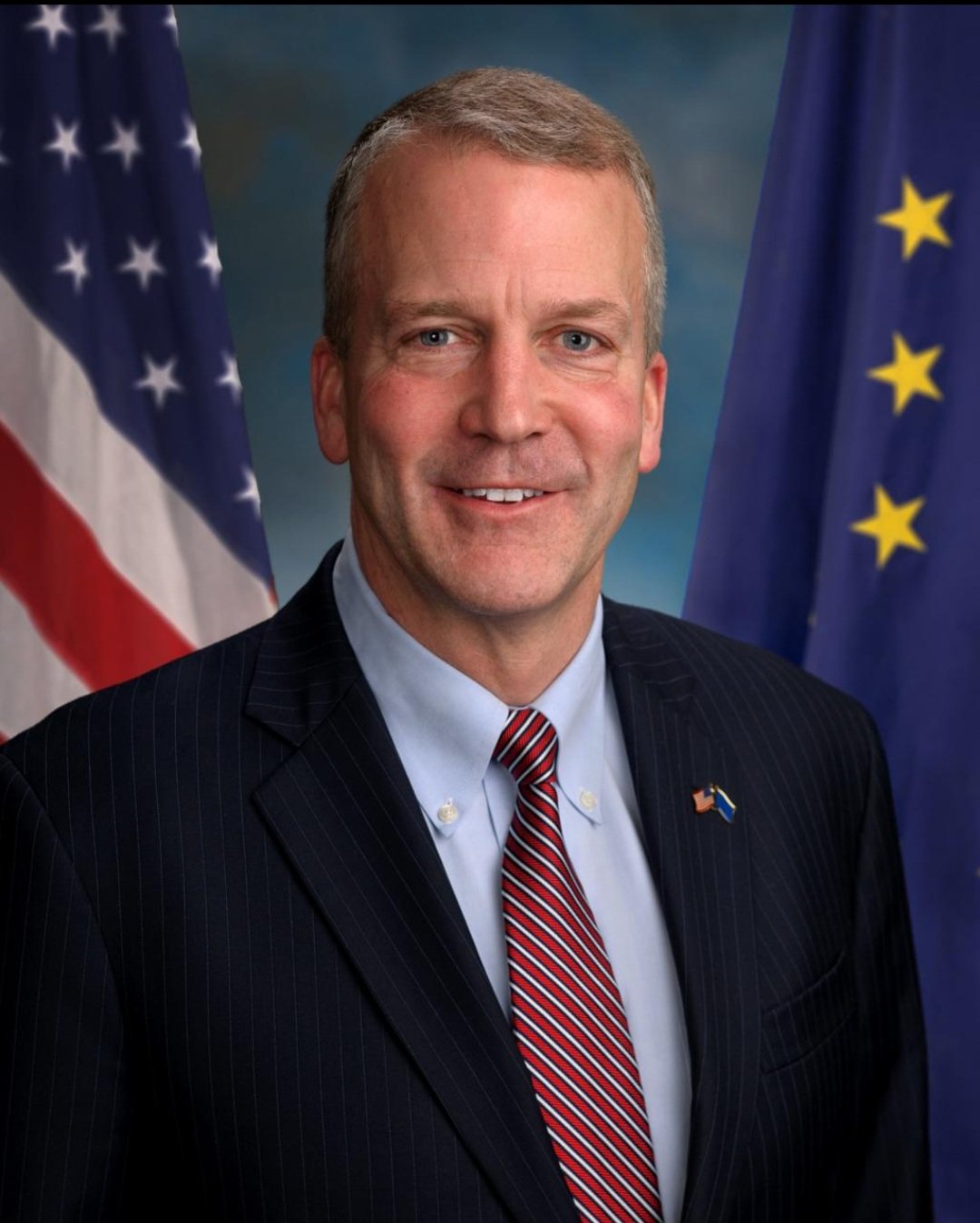
Republican US Senator Dan Sullivan has accused his Democratic opponent, Mary Peltola, of attempting to manipulate Alaska’s Senate election after a report alleged that Democratic operatives helped recruit another candidate with the same name as the incumbent senator.
The controversy follows an investigation by The New York Times, which reported that members of Peltola’s campaign, alongside Democratic political operatives, were involved in efforts to recruit candidates who could potentially divert votes from Sullivan in the closely contested Senate race.
At the centre of the dispute is Daniel J. Sullivan Jr., a retired schoolteacher from Petersburg, Alaska, whose name closely resembles that of the incumbent Republican senator, Dan S. Sullivan.

According to the report, messages and documents reviewed by the newspaper suggested that individuals connected to Peltola’s campaign explored recruiting people with names similar to Sullivan’s in an effort to influence the election outcome.
Sullivan’s campaign has described the alleged operation as a deliberate attempt to confuse voters and undermine the electoral process.
Speaking about the allegations, a spokesperson for the Republican senator’s campaign accused Peltola, her senior advisers and Democratic political operatives of working together to recruit candidates to deceive voters.
Peltola, however, has denied any involvement in recruiting either of the candidates named Sullivan. Her campaign maintained that it had no connection to the other Sullivan’s candidacy.

The Democratic Senatorial Campaign Committee (DSCC) also denied involvement, while arguing that Republicans had previously supported similar efforts to influence electoral contests in Alaska.
Daniel J. Sullivan’s candidacy had attracted scrutiny even before the latest revelations.
An Alaska elections official initially ruled that his candidacy was not a genuine bid for office and had been filed with the intention of confusing voters. However, the decision was overturned by a state court and subsequently upheld by the Alaska Supreme Court, allowing him to participate in the election.
The retired teacher has consistently denied being recruited by Democrats, insisting that he entered the race independently and had no contact with Peltola’s campaign.
The November 3 ballot featured four candidates: incumbent Dan S. Sullivan, Mary Peltola, Daniel J. Sullivan Jr. and Gerald Heikes.
Alaska uses a ranked-choice voting system, under which voters rank candidates in order of preference. If no candidate secures more than 50 per cent of the initial vote, the lowest-performing candidate is eliminated and their votes are redistributed according to voters’ next preferences until a candidate obtains a majority.

The allegations have triggered investigations at both state and federal levels.
Alaska Governor Mike Dunleavy ordered the state’s Department of Public Safety to investigate whether the alleged recruitment operation violated state law and whether criminal or civil action could be warranted.
The US Department of Justice also opened an investigation and issued subpoenas to individuals believed to have information about the alleged recruitment effort.
President Donald Trump, who has strongly criticised Peltola over the controversy, called for legal consequences against her and demanded that the candidates be removed from the ballot.
The administration also filed a lawsuit seeking to prevent Alaska from certifying the election result under certain circumstances if Sullivan lost by a margin smaller than the votes received by the other candidate with the same name.
However, a federal judge dismissed the administration’s lawsuit on November 1, rejecting its attempt to intervene in the state’s election certification process.
The controversy has added another layer of tension to an already closely watched Senate contest, with control of the upper chamber at stake in the 2026 midterm elections.
Alaska’s Senate race has attracted significant national attention because a change in the seat could influence the balance of power in Washington and determine how effectively the opposition can challenge Trump’s administration.
Although the practice of supporting lesser-known candidates to draw votes away from political opponents, sometimes described as ballot stacking, has appeared in previous American elections, questions remain about whether the activities reported in Alaska crossed any legal boundaries.
The investigations and ongoing political accusations have therefore placed renewed attention on campaign ethics, electoral transparency and the potential use of unconventional tactics in America’s increasingly competitive elections.