
International
Ousted Paraguayan President Placed Under House Arrest After Ueno Bank Collapse

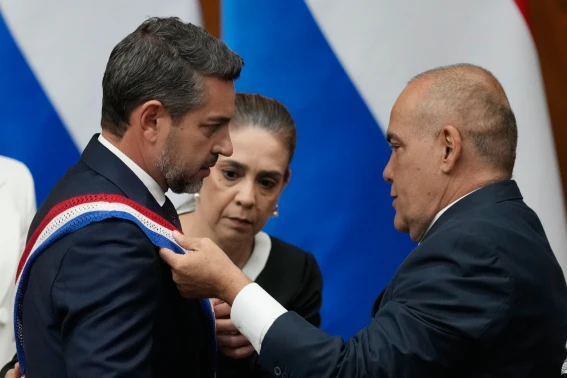
Former Paraguayan President Santiago Peña has been placed under house arrest following his removal from office over allegations of misconduct linked to the collapse of Ueno Bank, a major digital lender whose financial crisis disrupted access to savings for millions of customers.
Peña was detained at his residence in the capital, Asunción, on Friday, November 6, shortly after the Senate voted unanimously to remove him from office, bringing an end to his presidency.
All 44 senators present voted in favour of his removal, accusing him of misconduct in office over his alleged connections to the bank and the handling of public funds deposited with the institution.
Authorities ordered that Peña remain under house arrest pending his appearance before prosecutors from the country’s economic crimes and anti-corruption unit. He is being investigated on suspicion of breach of trust and influence peddling, among other alleged offences.

Peña has denied wrongdoing and rejected allegations that he improperly influenced decisions benefiting the bank.
The political crisis erupted after Paraguay’s Central Bank seized control of Ueno Bank earlier in the week, following findings that its financial position had deteriorated below the legally required solvency threshold.
The intervention left approximately 2.9 million customers unable to access their savings and use their bank cards, triggering widespread anger among depositors, pensioners and businesses.

Ueno had grown rapidly since its establishment in 2021, becoming one of Paraguay’s prominent financial institutions, with nearly three million customers and hundreds of millions of dollars in public funds under its administration.
The bank’s expansion came under increased scrutiny over allegations of excessive lending to businesses connected to its controlling shareholder, Grupo Vázquez.
Peña’s relationship with the financial group became a central issue in the political investigation. The former president had previously held shares in the holding company linked to Ueno but said he disposed of his stake in March 2025.
Lawmakers also questioned his appointment of Carlos Carvallo, a former Ueno executive, as head of the Central Bank. Carvallo resigned after regulators intervened in the lender and was also named in the investigation.
Prosecutors are examining whether public funds, including money belonging to state institutions and pension-related bodies, were channelled into the bank under favourable conditions.
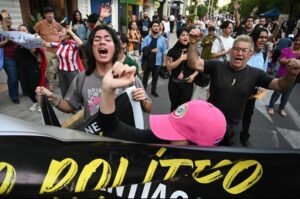
The crisis intensified public protests across the country, with affected customers demanding access to their savings and accountability from those responsible for the institution’s failure.
Some demonstrations took place outside Peña’s residence following his detention, while police maintained a security cordon around the property.
In a further political development, Vice-President Pedro Alliana was sworn in as Paraguay’s new president following Peña’s removal. He is expected to serve the remainder of the presidential term, which ends in August 2028.
In his first address after taking office, Alliana pledged that customers affected by the financial crisis would be fully compensated, promising that the government would not abandon depositors.
Paraguay’s Central Bank has maintained that the Ueno crisis does not represent a wider threat to the country’s banking system, while authorities work to transfer customer accounts and protect deposits.
The political fallout has raised questions about regulatory oversight, the management of public funds and the relationship between political officeholders and private financial institutions.
Peña’s removal and subsequent house arrest mark one of the most significant political upheavals in Paraguay since the country returned to democratic rule in 1989. His case remains subject to ongoing criminal investigations and judicial proceedings.