
International
Trump Administration Moves to Drop Lawsuit Challenging Mary Peltola’s Alaska Senate Victory

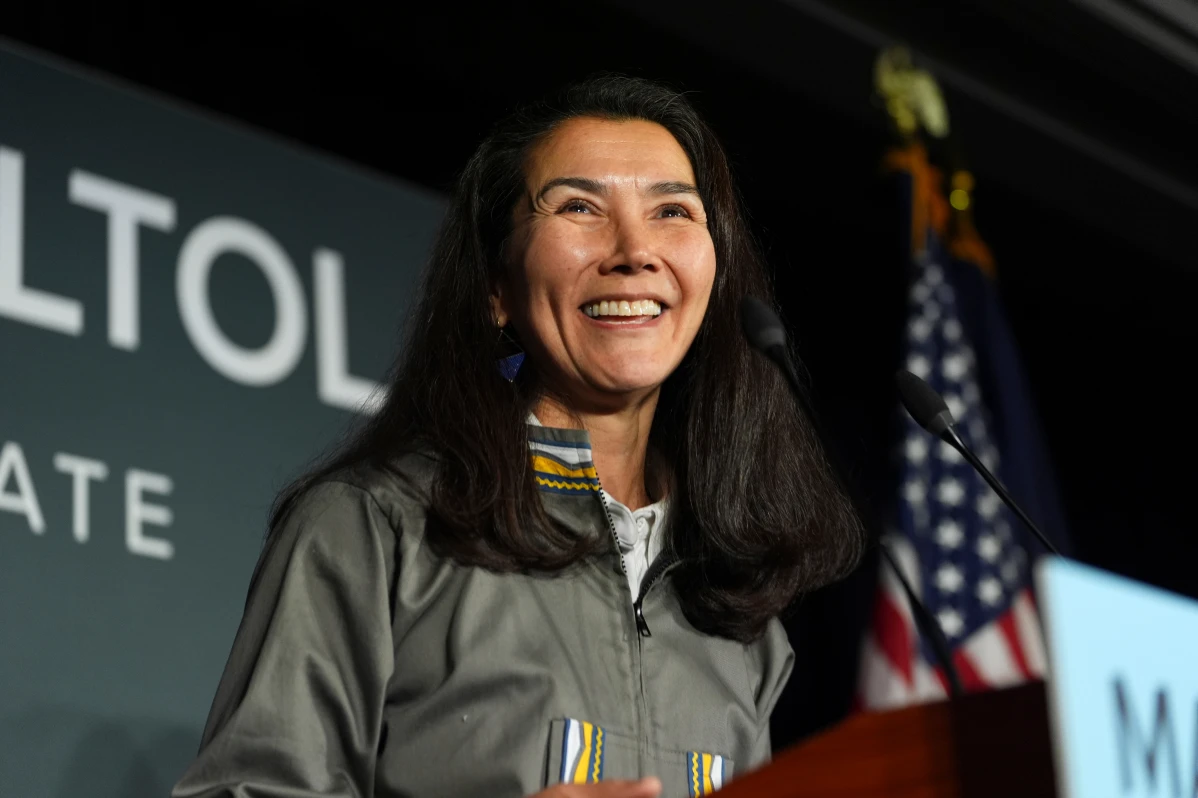
The administration of United States President Donald Trump has moved to withdraw its legal challenge against the certification of Democrat Mary Peltola’s victory in Alaska’s Senate election, following her defeat of incumbent Republican Senator Dan Sullivan.
The Justice Department on Thursday, November 19, asked the 9th US Circuit Court of Appeals to declare the case moot and dismiss the lawsuit, which sought to prevent Alaska election officials from certifying Peltola’s victory over concerns about possible voter confusion involving two candidates with the same name.
The controversy centred on the presence of two candidates named Dan Sullivan on the ballot. One was the incumbent Republican senator, Daniel S. Sullivan, while the other was Daniel J. Sullivan Jr., a retired schoolteacher from the fishing community of Petersburg, who contested the election as an independent candidate.

The Trump administration had argued that the second candidate’s presence could mislead voters intending to support the incumbent senator, potentially affecting the outcome of the election.
The lawsuit, filed at Trump’s direction, sought to delay certification of the results pending an investigation into whether voters had mistakenly cast ballots for the second Sullivan instead of the Republican incumbent.
However, a federal judge had already dismissed the case, ruling that the government lacked the legal standing to bring the challenge and had failed to provide a workable way to investigate possible voter confusion without compromising ballot secrecy.

Alaska’s Supreme Court had also ruled that the second Sullivan was legally entitled to appear on the ballot.
Peltola went on to defeat the incumbent senator, securing 50.13 per cent of the vote and winning an outright majority. Her total was greater than the combined votes received by both Sullivan candidates and the other contenders.
In its latest court filing, the Justice Department asked the appeals court to overturn the lower court’s dismissal, vacate the underlying order and return the case for dismissal on the grounds that the election had already been decided.
The move effectively signals the administration’s intention to end the legal battle after Peltola’s victory, although the appeals court must still act on the request.
The lawsuit attracted criticism from election officials and civil liberties advocates, who questioned the federal government’s attempt to interfere with the state’s handling of its election.
Alaska’s Republican-controlled state government also opposed the administration’s legal position, describing the challenge as legally meritless and filing arguments supporting the dismissal of the case.
Responding to the latest development, Peltola said voters had delivered a clear message about the direction they wanted for Alaska and expressed readiness to begin work on their behalf.
The controversy intensified after reports emerged that members of Peltola’s campaign had allegedly been involved in efforts to recruit the second Dan Sullivan to enter the race, potentially drawing votes away from the Republican incumbent.
Peltola has denied involvement in the alleged recruitment effort, while the retired teacher has maintained that he entered the contest independently.
President Trump had previously called for Peltola to be prosecuted over the alleged scheme, while federal investigators travelled to Alaska ahead of election day.
The latest development marks another retreat by the Trump administration from a high-profile legal challenge involving election administration. The Justice Department had also recently moved to dismiss a separate lawsuit concerning approximately 20,000 ballots in California.
The decision to seek dismissal of the Alaska case brings the legal dispute closer to an end, while leaving broader questions about federal intervention in state-run elections and the limits of presidential influence over electoral processes.