
Business
Warsh Defends Fed Divisions After Policymakers Vote to Hold Rates

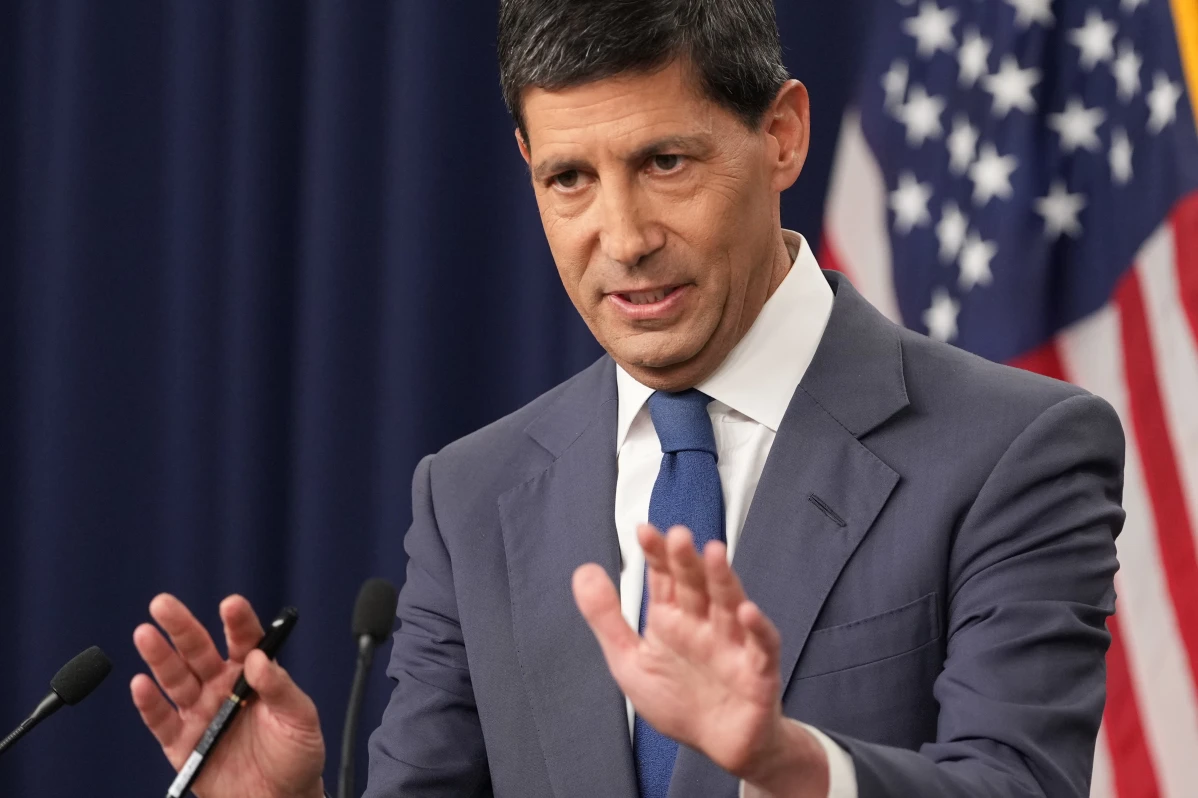
The U.S. Federal Reserve has kept its benchmark interest rate unchanged, but the decision exposed an unusually sharp divide within the central bank as three policymakers voted in favour of raising borrowing costs. The split underscored growing concern among some officials that inflation remains too persistent despite signs of easing price pressures.


The Federal Open Market Committee (FOMC) voted 9-3 to leave the federal funds rate in a target range of 3.50% to 3.75%, marking the fifth consecutive meeting in which rates have remained unchanged. The three dissenting members; Lorie Logan of Dallas, Beth Hammack of Cleveland and Neel Kashkari of Minneapolis, favoured an immediate 0.25 percentage-point increase, arguing that inflation risks continue to outweigh concerns about slowing economic growth.
The decision came amid renewed inflationary pressures linked to rising global energy prices following escalating tensions in the Middle East. While recent inflation data showed some improvement, policymakers remain concerned that higher oil prices and resilient consumer demand could keep inflation above the Fed’s long-term target of 2%.
At a post-meeting press conference, Fed Chair Kevin Warsh downplayed the significance of the internal divisions, describing the debate as a “good family fight.” He said vigorous disagreement among policymakers strengthens the decision-making process rather than weakening it.
“The better way to get policy right, that’s our North Star,” Warsh said, stressing that open debate is a normal part of setting monetary policy. He also noted that a large majority of committee members ultimately supported keeping rates unchanged.
Warsh emphasised that the decision should not be interpreted as a signal that future rate increases are off the table. Instead, he reiterated that upcoming decisions will depend on economic data, particularly inflation, employment and developments in global energy markets. He also maintained that the Federal Reserve remains fully committed to returning inflation to its 2% target.
Financial markets reacted cautiously to the announcement. U.S. stock indices slipped modestly after the decision, while Treasury yields edged higher as investors increased expectations that the Fed could resume raising interest rates at its next meeting in September. The U.S. dollar weakened slightly against a basket of major currencies.
Economists said the three dissenting votes were particularly significant because they revealed a growing faction within the central bank that believes inflation risks require more aggressive action. Many analysts now expect September’s policy meeting to be closely watched, with incoming inflation reports and labour market data likely to determine whether the Fed resumes tightening monetary policy.
The rate decision also comes against a politically sensitive backdrop. President Donald Trump has repeatedly argued that lower interest rates would provide additional support for economic growth, although he has been less publicly critical of Warsh than he was of previous Fed leadership. Despite the political pressure, Warsh has consistently insisted that the Federal Reserve will remain independent and make decisions based solely on economic conditions.
With inflation still above target, geopolitical tensions threatening to push energy prices higher and divisions emerging inside the Federal Reserve itself, investors now see the September meeting as a potential turning point. Whether policymakers opt for another pause or decide to raise rates again will depend largely on how inflation and the broader economy evolve over the coming weeks.