
Business
Oil Breaks Above $100 as Middle East Conflict Sends Shockwaves Through Global Markets

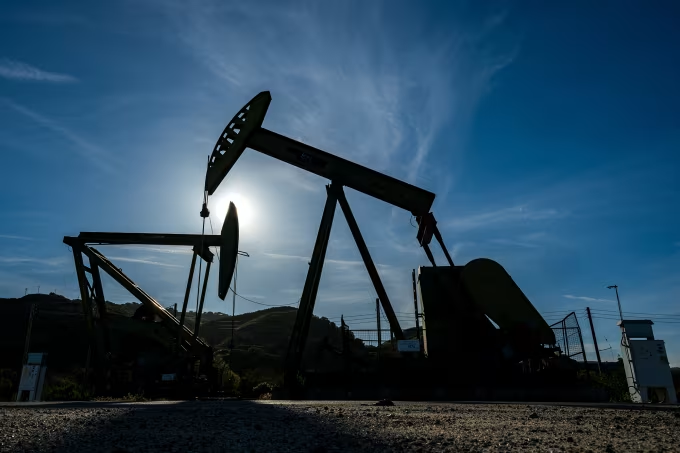
Global oil prices have climbed above the $100-a-barrel mark, intensifying concerns over fuel costs, inflation and the wider economic impact of the escalating conflict in the Middle East.


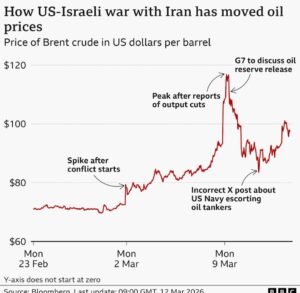
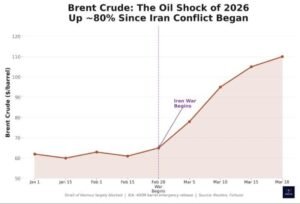
Brent crude, the international benchmark, briefly rose above $100 a barrel on Wednesday, reaching about $100.19 before easing back to around $99.93. U.S. West Texas Intermediate (WTI) also climbed, trading near $94.52 a barrel. The move marks Brent’s first return above the $100 threshold since late July.
The latest surge has been driven largely by growing fears that the expanding conflict could disrupt crude supplies and shipping routes across the Middle East.
The renewed rise follows a series of military developments involving the United States, Iran and Iran-backed forces in the region.
Reuters reported that attacks by Houthi forces on Saudi energy infrastructure have added to concerns about supplies moving through the Red Sea, while shipping through the strategically important Strait of Hormuz has already been severely disrupted.

The Strait of Hormuz is one of the world’s most important energy chokepoints. Any prolonged disruption could have consequences far beyond the Middle East, particularly for countries that depend heavily on crude shipments from the Persian Gulf.
The Financial Times reported that Brent gained about 2.1% as renewed US-Iran hostilities raised concerns over the security of the waterway and global oil distribution.
The latest move has revived fears of a much larger oil-price shock if the conflict continues to interfere with production or transportation.

The Associated Press reported that analysts at Bank of America have warned that oil could move into a $95-$120 range, with an even sharper spike possible if critical energy infrastructure is damaged.
Goldman Sachs, Bank of America and HSBC have also recently raised their crude-price outlooks amid increasing geopolitical risks. Reuters noted that the International Energy Agency expects global oil supply to decline by about 4.3 million barrels per day in 2026, adding another layer of pressure to the market.

A sustained rise in crude prices could eventually feed into the cost of petrol, diesel, aviation fuel, transportation and other energy-intensive goods.
The impact is already being felt in some markets. AP reported that average U.S. gasoline prices have risen 26% year-on-year to about $4.15 per gallon, while diesel prices have climbed sharply. Airlines are also facing higher fuel costs, potentially putting further pressure on ticket prices.
For oil-producing countries such as Nigeria, higher international crude prices could provide a boost to government and foreign-exchange revenues if production levels remain strong. However, higher global energy prices can also increase domestic inflationary pressures through transportation and other costs.
The latest rally demonstrates how quickly geopolitical developments can translate into movements in global commodity markets.
Brent had settled at $97.92 a barrel in the previous session before pushing through the $100 threshold, while WTI had settled around $93.03.
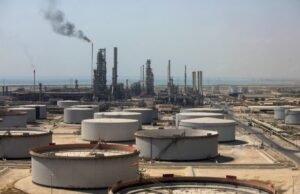
For now, traders are watching developments around Iran, the Strait of Hormuz, the Red Sea and major Middle Eastern energy facilities for signs of whether the latest price surge will be temporary or develop into a prolonged supply shock.
With the conflict still unfolding, the prospect of oil remaining above $100 a barrel is likely to remain a major concern for governments, businesses and consumers worldwide.