Politics
Former President Jonathan Warns Against ‘Unwholesome’ Trend of Governors, Political Actors Descending on Off-Cycle Election States

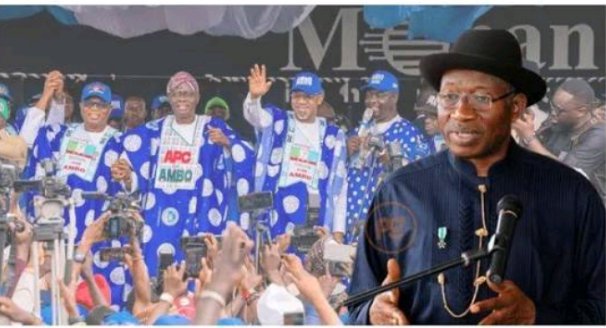
Former President Goodluck Jonathan has raised the alarm over what he termed an “emerging trend” of serving governors, senior political office holders, and party leaders converging on states conducting off-cycle elections, warning that the practice, if unchecked, poses a serious threat to Nigeria’s fragile democracy.
In a personally signed statement titled “Osun And The Need To Set New Boundaries For Political Conduct in off-cycle Elections,” released on Tuesday, Jonathan expressed concern over the atmosphere of apprehension, intimidation, and undue pressure created by the heavy presence of powerful political figures and their large entourages during governorship polls in Osun, Ekiti, and Ondo States.
“The conduct witnessed around the recent elections in Osun, Ekiti and Ondo States was, in my view, unusual. It is not a practice that should become normal in a democratic society,” Jonathan stated.
He recalled that similar incidents occurred during the 2013 Anambra and 2014 Ekiti governorship elections while he was President, and he took swift action to halt them. “Upon being briefed, I ordered party leaders and senior government officials to leave the states immediately,” he said.
The former President commended the Independent National Electoral Commission, security agencies, political parties, and the people of Osun State for the peaceful conduct of the recent election.
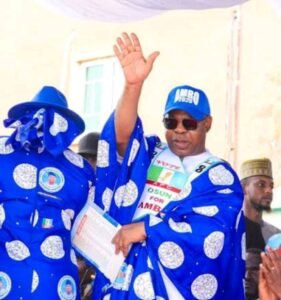
However, he stressed that the growing practice of political mobilisation by top office holders on election day must be interrogated as a national issue, not a partisan dispute.
“We must ask ourselves whether the increasing deployment of political power and large-scale mobilisation by senior office holders on election day in states holding elections is consistent with the spirit of free, fair and peaceful democratic competition. This hardly happens in other democratic countries,” he noted.
Jonathan cautioned that if the trend becomes established, it could lead to a dangerous spiral where opposing parties match political power with political power, turning elections into battles for survival rather than peaceful contests for the people’s mandate.
“Such a development would not strengthen our democracy. It would deepen political tensions,” he warned.
To address the issue, Jonathan called on the National Peace Committee to convene an urgent stakeholders’ engagement involving political parties, INEC, security agencies, the National Assembly, the Nigerian Bar Association, the Nigeria Governors’ Forum, civil society, and the media. He said the meeting should help establish clear boundaries and expectations for political conduct before “practices that are unusual today become accepted as normal tomorrow.”
“Those of us who have occupied public office must recognise that our conduct carries a greater responsibility. The power and influence attached to public office should be used to strengthen democratic institutions, not to create apprehension among political opponents or citizens,” Jonathan added.
He stressed that the conversation is essential to protect Nigeria’s democracy and preserve peace, noting that the National Peace Committee has the moral authority to lead such a dialogue.