Security
Matawalle, Kano Gov Move to Strengthen Security After Bandit Attack as FG Unveils 5-Year Plan

The Federal Government has announced plans to deploy additional military equipment to Kano State following the August 29 bandit attack on Chiroma Village in Garun Mallam Local Government Area.
The Minister of State for Defence, Bello Matawalle, disclosed this on Monday during a condolence and security assessment visit to the Kano State Government House.
Matawalle also revealed that President Bola Tinubu had constituted a committee to develop a five-year defence and security plan aimed at tackling insecurity and strengthening Nigeria’s security architecture.

According to him, the Federal Government will provide additional fighting vehicles, weapons and other operational equipment to Kano to enhance the capacity of security forces to protect vulnerable communities and respond swiftly to attacks.
“We will do more to improve security in Nigeria,” the minister said, assuring residents that the Tinubu administration remained committed to restoring lasting peace across the country.
Troops Rescue Kidnap Victims
The renewed security measures followed the August 29 attack on Chiroma Village, which triggered a military response involving troops of 3 Brigade, Kano, and personnel of the Joint Task Force.
Matawalle said the Commander of 3 Brigade, Brigadier General Jimoh, led a joint rescue operation involving troops from the Hawan-Kwano and Kwanar Dangora JTF camps.
He said the operation resulted in the successful rescue of kidnapped victims around the Yan-Kifi Bridge and Marabar Kwari areas of Garun Mallam.

The minister commended the troops for their swift response and pledged continued Federal Government support for the Armed Forces and other security agencies.
He said the government would increasingly focus on proactive military operations, strategic planning and stronger coordination among federal, state and local authorities.
Matawalle Meets Military Commanders
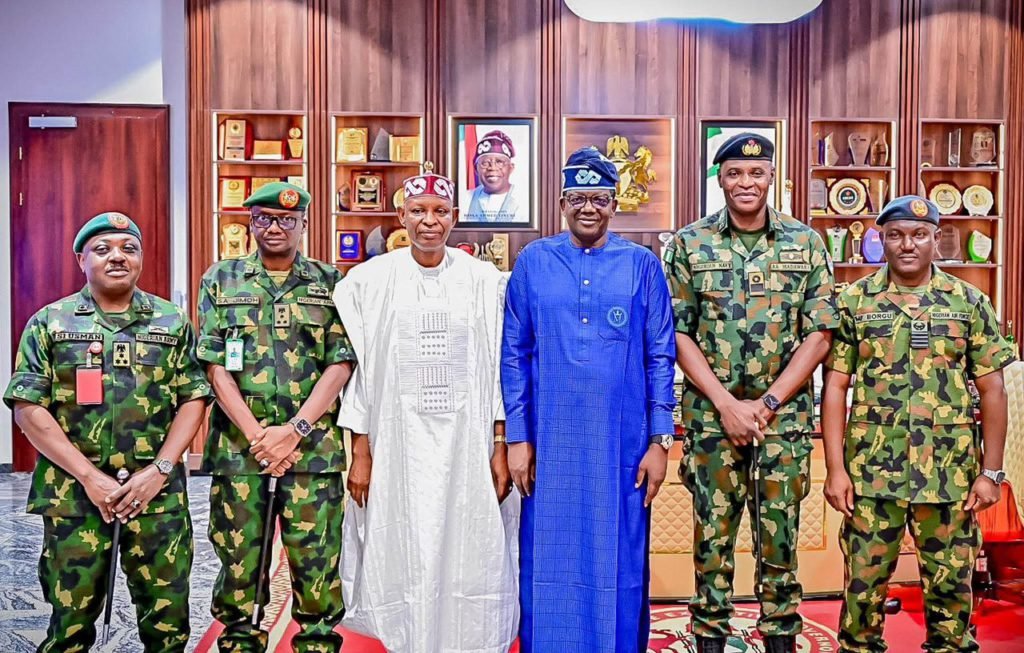
During his visit, the minister also held a closed-door security meeting with commanders of 3 Brigade and other military formations in Kano.
He directed the commanders to sustain ongoing operations and intensify efforts to protect communities considered vulnerable to attacks.
Matawalle said the government was determined to equip security agencies with the resources required to protect lives and property and safeguard the nation’s territorial integrity.
“We will continue doing everything possible to support our security services to ensure our country is safe,” he said, expressing optimism that sustained efforts would eventually bring insecurity under control.
The minister, however, acknowledged that military action alone would not completely resolve the security challenges facing the country.
He called for greater cooperation among state and local governments, traditional institutions, communities and security agencies.
“It takes the combined effort of local government, state and federal levels to tackle this issue of insecurity,” Matawalle said.
He also urged residents to provide security agencies with timely and credible intelligence to assist ongoing operations.
Kano Govt Pledges Support
Governor Abba Kabir Yusuf thanked the minister for visiting the state and pledged continued cooperation between the Kano State Government and the Federal Government.
Yusuf said the state would intensify its own security measures to complement federal operations and prevent insecurity from taking permanent root in Kano.
“We are confident in your leadership. At the state level, we will continue to do what needs to be done to ensure security and stability in Kano,” the governor said.
He added that Kano would continue to support President Tinubu’s efforts to strengthen national security and translate the Federal Government’s commitments into greater protection for residents.
The planned deployment of additional military hardware is expected to strengthen the immediate response capacity of security forces in Kano, while the proposed five-year defence and security plan is expected to provide a longer-term framework for tackling banditry, kidnapping and other forms of violent crime.
The effectiveness of the measures, however, will depend on sustained operations, adequate resources, intelligence sharing and effective coordination between security agencies and communities.