
Business
Gold Stays Strong Ahead of Crucial US Employment Data

Gold prices held broadly steady on Friday as investors turned their attention to the highly anticipated US nonfarm payrolls report, which could provide fresh clues about the Federal Reserve’s next interest-rate decision.
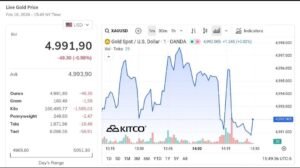
Spot gold was trading around $4,468 per ounce early Friday, according to Reuters, after the precious metal jumped more than 2% in the previous session. The market was heading for a modest weekly gain as traders positioned themselves ahead of the employment figures.

The US jobs report, due later Friday, has become one of the most important pieces of economic data for financial markets because it could influence expectations for the Fed’s September policy meeting.
Economists expect the US economy to have added about 56,000 jobs in August, following an unexpected loss of 23,000 jobs in July, while the unemployment rate is forecast to remain at 4.1%.
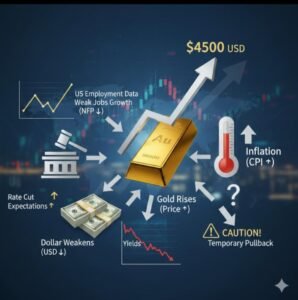
A weaker-than-expected report could reinforce expectations that the Federal Reserve will avoid raising interest rates and potentially support gold.
Gold tends to benefit when interest rates and bond yields fall because the metal does not pay interest. Lower yields reduce the opportunity cost of holding bullion.
Conversely, stronger employment figures could strengthen expectations for tighter monetary policy, potentially pushing the US dollar and Treasury yields higher and putting pressure on gold.
Gold’s latest move higher was partly triggered by comments from Federal Reserve Governor Christopher Waller, who indicated he could support leaving interest rates unchanged if inflation continues to moderate.
His comments reduced market expectations for a September rate increase. Reuters reported that the probability of a rate hike at the Fed’s September 15-16 meeting fell to about 54% from 62% following Waller’s remarks.

Lower Treasury yields and a weaker dollar provided additional support for bullion.
Gold futures also gained strongly, with December futures settling about 2.8% higher at $4,539.90 an ounce on Thursday.
The jobs report is arriving against a complicated economic backdrop.

Oil prices have been climbing amid renewed US-Iran tensions, raising concerns that higher energy costs could add to inflationary pressures. Brent crude was heading for its strongest weekly gain since mid-July, while US crude was also sharply higher.
That creates a difficult situation for the Federal Reserve: a weakening labour market could argue for easier monetary policy, but higher energy prices could make policymakers more cautious about cutting or keeping rates low.

Investors will therefore be watching not only the headline payroll number but also unemployment, wage growth and revisions to previous employment figures.
The relationship between US monetary policy and gold has been particularly important this year.
Earlier in the summer, weaker-than-expected US employment data helped drive a sharp rally in bullion as traders reduced expectations for higher interest rates. Gold gained more than 2% after a weak payrolls report in July, according to Reuters.
The latest jobs figures could produce another significant move.
A disappointing report would likely strengthen the case for lower rates and could push gold higher, while a surprisingly strong labour market could revive rate-hike expectations and weigh on bullion.

For now, however, investors are waiting.
Gold is holding its ground, but the US jobs report could determine whether the next major move is higher or lower.