
Business
NUPRC Records 97.4% Compliance With Domestic Crude Supply Obligation

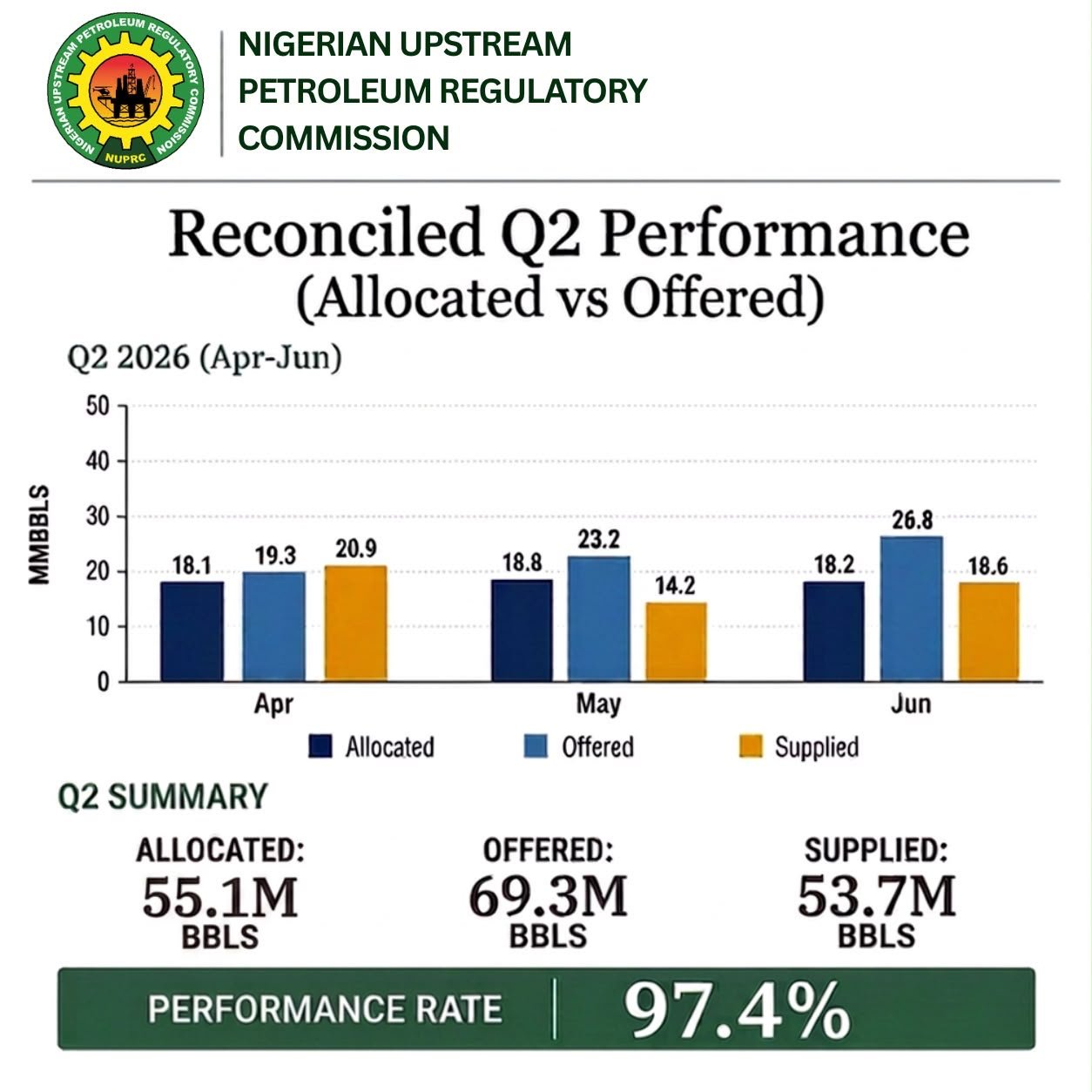
The Nigerian Upstream Petroleum Regulatory Commission (NUPRC) has recorded a 97.4 per cent performance rate in the implementation of Nigeria’s Domestic Crude Supply Obligation (DCSO) during the second quarter of 2026.
The regulator disclosed this in its latest Q2 2026 statistics on the enforcement of the DCSO, implemented under Section 109 of the Petroleum Industry Act.
According to the NUPRC, a total of 53.7 million barrels of crude oil and condensate were supplied to domestic refineries between April and June 2026.

The Commission said the figures demonstrate that the DCSO is being actively administered and enforced, while noting that improved compliance coincided with an increase in Nigeria’s domestic crude oil production.
The statistics showed significant participation by the Dangote Refinery, which had a crude requirement of about 63 million barrels during the quarter.
According to the NUPRC, producers offered the refinery approximately 68.1 million barrels, representing about 98 per cent of all crude volumes offered under the domestic supply arrangement.
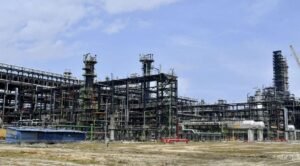
However, the refinery eventually accepted 52.6 million barrels, equivalent to about 78 per cent of the total volume offered to it.
The figures highlight the scale of crude supply available to Nigeria’s largest refinery as the country continues efforts to increase domestic refining and reduce reliance on imported petroleum products.

The Domestic Crude Supply Obligation is intended to ensure that crude oil producers operating in Nigeria make sufficient supplies available to domestic refineries.

The framework was established under Section 109 of the Petroleum Industry Act as part of broader government efforts to strengthen local refining capacity and improve energy security.
The NUPRC said the Q2 performance demonstrates continued enforcement of the obligation and increased interaction between crude producers and domestic refiners.
The regulator also linked the improved performance to rising local crude production, suggesting that increased output is providing more barrels that can potentially be allocated to domestic refineries.
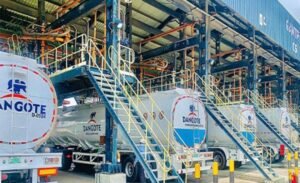
The latest figures come as Nigeria seeks to maximise the benefits of its growing domestic refining capacity, particularly with the Dangote Refinery operating at increasing scale.
The government has repeatedly stressed the need for crude producers to support local refineries through reliable domestic supplies.
For Nigeria, sustained crude availability to local refineries is considered critical to reducing dependence on imported refined petroleum products, conserving foreign exchange and strengthening the country’s energy security.

The NUPRC’s latest data therefore points to a stronger level of compliance with the domestic crude supply framework, although the gap between volumes offered and volumes eventually accepted by the Dangote Refinery remains significant.
The Commission said it would continue to administer and enforce the DCSO in line with the Petroleum Industry Act.