
General News
Dangote Deploys 4,000 More Machines For Refinery Expansion To 1.4m Bpd

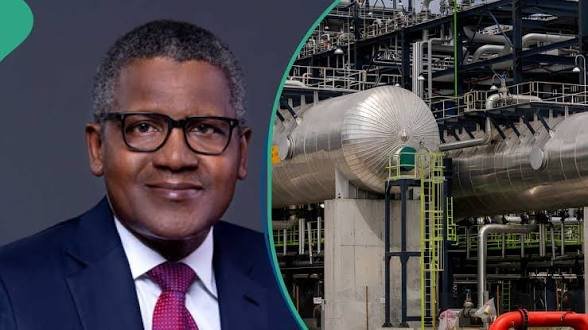
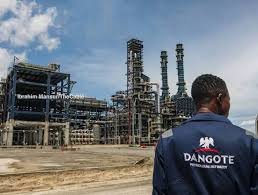
Dangote Industries Limited has acquired an additional 4,000 construction machines as it begins the expansion of its Lekki refinery from 650,000 barrels per day to 1.4 million barrels per day.
The latest acquisition brings the company’s construction equipment fleet to 6,500 machines, including 330 cranes, as work intensifies on the refinery expansion project.
The Group Vice President, Oil and Gas and Fertiliser, Devakumar Edwin, disclosed this on Friday while briefing editors during a tour of the refinery in Ibeju-Lekki, Lagos.
Edwin said Dangote initially acquired 2,563 pieces of construction equipment after Julius Berger and other contractors indicated that they lacked the capacity to construct the refinery’s main factory buildings.
“We ended up buying 2,563 pieces of equipment. We became the second largest company in the world in terms of construction equipment. Today, we are the largest because of the expansion. We have bought 4,000 more pieces of equipment; we have 6,500 pieces of construction equipment. We bought 330 cranes,” he said.
According to him, the decision to purchase the equipment was taken after the company determined that engaging foreign engineering, procurement and construction contractors would substantially increase project costs.
Edwin said the company would have had to bear the cost of shipping foreign contractors’ equipment into Nigeria and back after the project, while the contractors would also factor equipment depreciation into their charges.
“If I bring in a foreign contractor, I’ll have to ship in all his equipment, and I’ll have to ship back all his equipment, and those guys will also try to depreciate their equipment by adding it to our cost. By the end of the day, we end up paying a lot of money,” he said.
He recalled that Julius Berger, after reviewing the refinery’s drawings, declined to undertake the construction of the main process buildings because of capacity limitations.
“They said, sorry, we cannot do any of your factory buildings. We don’t have the capacity,” Edwin said.
He added that Julius Berger subsequently constructed 43 of about 127 auxiliary buildings, including canteens, transformer rooms, control rooms and firefighting houses.
Edwin said the company’s decision to build its own construction equipment fleet was also influenced by Nigeria’s infrastructure deficit.
He recalled that when Dangote constructed its Apapa sugar refinery in 1998, Nigeria had only two large cranes with a 150-tonne capacity.
For the Lekki refinery project, he said Dangote hired one of only two 5,000-tonne cranes available globally at the time and also acquired 330 cranes of its own.
“When we are operating in a country with an infrastructure deficit, it takes a lot of time to plan, a lot of money to invest in all these things that industries do not require,” he said.
Edwin said infrastructure developed during the first phase of the refinery would also support the expansion, thereby reducing both cost and construction time.
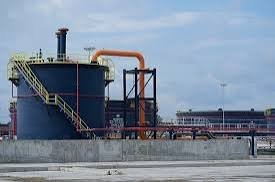
The facilities include a granite quarry with a 10 million-tonne capacity, 82 concrete batching plants, 203 transit mixers, a private port, an oxygen and welding-gas plant and accommodation facilities for up to 50,000 workers.
He also disclosed that the refinery was already operating above its original design capacity of 650,000 barrels per day.
“We have designed the refinery for 650,000, but we are now operating at 700,000. That is over 50,000 barrels per day above the design capacity. So the production volumes are even higher,” he said.
On the expansion project, Edwin said Dangote opted to use its own project company after international contractors quoted fees of about 12.5 per cent of an estimated $19.5bn capital cost.
According to him, the proposed charges would have amounted to approximately $2.5bn in contractor fees alone.
Edwin said the decision was ultimately taken to execute the project through Dangote Projects Limited, which handled detailed engineering, procurement and coordination of contractors.
“That is how we took up the challenge, and a Nigerian company, Dangote Projects Limited, designed the detailed engineering, went for the tenders, bought every single item, even the nuts and bolts, we bought directly, and engaged contractors, and we constructed the refinery,” he said.
Edwin described the Lekki facility as the world’s largest single-train petroleum refinery, saying the largest facility before it had a capacity of 430,000 barrels per day.
He said the refinery was designed to serve both domestic and export markets, with 44 per cent of its production originally intended to meet Nigeria’s requirements and 56 per cent earmarked for export.
He added that about 95 per cent of the refinery’s output comprises high-value products such as petrol, diesel and aviation fuel, while the remaining five per cent is an industrial product, including carbon black feedstock.
The refinery was designed to produce Euro 5 and Euro 6-grade petroleum products and process various African crude grades as well as United States West Texas Intermediate crude.
Edwin further disclosed that Dangote’s total refining capacity could rise to about 2.1 million barrels per day following the Lekki refinery expansion and the planned construction of a 700,000-barrel-per-day refinery in Kenya.