
General News
Nigeria-China Trade Jumps To $18bn In Six Months, New Investment Frontiers Emerge

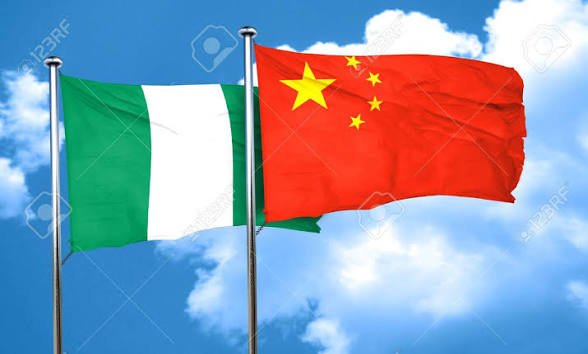
Nigeria-China trade has climbed to about $18 billion in the first half of the year, as Abuja and Beijing move to expand their longstanding partnership into power, renewable energy, manufacturing, technology transfer and skills development.
The Minister of Power, Joseph Olasunkanmi Tegbe, disclosed the figure in Abuja while representing President Bola Ahmed Tinubu at an event commemorating the 77th anniversary of the founding of the People’s Republic of China.
Tegbe said the latest figure came after bilateral trade reached approximately $28 billion at the end of last year, while Nigeria’s exports to China had also recorded significant growth.
He said the expanding trade relationship presented opportunities for both countries but stressed the need for Nigeria to secure greater value from the partnership through investments that strengthen local production and technical capacity.
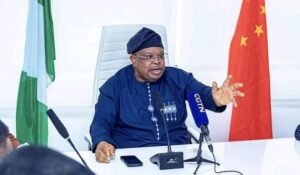
The minister identified electricity, renewable energy and domestic production of power equipment as priority areas for deeper cooperation between the two countries.
He said future investments should facilitate technology transfer, develop Nigerian expertise and enable local companies to participate more substantially in the value chains created by major projects.
Tegbe also praised China’s development trajectory since the establishment of the People’s Republic in 1949, citing its progress in manufacturing, science and technology, high-speed rail and clean energy.
He said China’s economic reforms had lifted hundreds of millions of people out of poverty and provided a foundation for sustained development.
According to him, Nigeria and China have built a broad-based partnership since establishing diplomatic relations on February 10, 1971, with cooperation now covering infrastructure, healthcare, education, technical training and trade.
He recalled that President Tinubu and Chinese President Xi Jinping elevated the relationship to a Comprehensive Strategic Partnership during the Forum on China-Africa Cooperation Summit in Beijing in September 2024.
Tegbe commended China’s participation in major Nigerian infrastructure projects, particularly railway modernisation and power development, describing the cooperation as an important component of Nigeria’s development efforts.
He also welcomed China’s implementation of zero-tariff treatment for 53 African countries, saying the measure could create additional opportunities for Nigerian exporters seeking access to the Chinese market.
He called for greater efforts to expand Nigeria’s production and export capacity so that the country could take full advantage of the preferential access.
The minister reiterated Nigeria’s commitment to the One China Principle, recognising the People’s Republic of China as the sole legal government representing China.
He said stronger trade, investment, people-to-people exchanges and development cooperation would further consolidate the relationship.
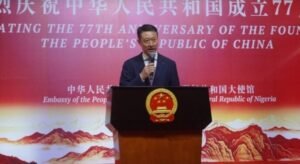
Chinese Ambassador to Nigeria, Yu Dunhai, described the partnership as an important pillar of China-Africa cooperation.
Yu, reflecting on his two years in Nigeria, praised Nigerians for their resilience, optimism and entrepreneurial spirit.
He said his visits to cities and rural communities had provided him with a deeper understanding of Nigerians’ determination to pursue development and seize economic opportunities.
The ambassador said China remained committed to its modernisation programme and to contributing to global development despite challenges confronting the world economy.
He disclosed that China’s economy expanded by 4.7 per cent in the first half of the year, with innovation in artificial intelligence, robotics, pharmaceuticals and renewable energy contributing to the country’s economic development.
Yu also reaffirmed China’s support for Africa’s integration and development, saying Beijing would continue to work with African countries through the Forum on China-Africa Cooperation and other strategic platforms.
He said the zero-tariff arrangement for 53 African countries was aimed at increasing African exports, strengthening industrial development and creating greater opportunities for economic cooperation.
The latest trade figures come as Nigeria seeks to expand exports, attract investment and develop domestic manufacturing capacity.
For Abuja and Beijing, the next phase of their relationship could therefore depend not only on the volume of trade but on how effectively bilateral investment generates jobs, transfers technology and strengthens Nigerian industries.
With more than five decades of diplomatic relations behind them, the two countries are positioning their partnership for a broader economic agenda one that increasingly links trade with energy, infrastructure with local manufacturing, and investment with skills and technology transfer.