
General News
ECOWAS Parliament Opens Accra Session, Links Climate Crisis To West Africa’s Security Challenges

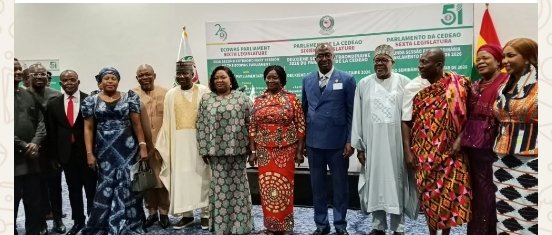
The Parliament of the Economic Community of West African States (ECOWAS) has opened its Second 2026 Parliamentary Seminar and Second Extraordinary Session in Accra, Ghana, with calls for stronger regional action to address the growing links between climate change, displacement and insecurity.
The high-level meeting, which began on Tuesday, September 22, 2026, brings together ECOWAS parliamentarians, regional institutions, the Ghanaian government and Parliament, development partners and other stakeholders to examine the impact of climate and environmental pressures on peace, security and human development across West Africa.
Ghana’s Vice-President, Prof. Jane Naana Opoku-Agyemang, attended the joint opening ceremony and reaffirmed the country’s commitment to regional cooperation and the work of the ECOWAS Parliament.
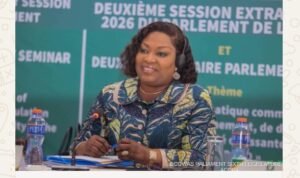
Also participating in the opening were the Speaker of the ECOWAS Parliament, Rt. Hon. Hadja Mémounatou Ibrahima; Leader of the Ghanaian Delegation, Hon. George Kwaku Ricketts-Hagan; representatives of the Parliament of Ghana and officials of the ECOWAS Commission.
Opening the session, Ibrahima called on parliamentarians to move beyond climate commitments and translate them into concrete legislation, adequately funded policies and measurable results.
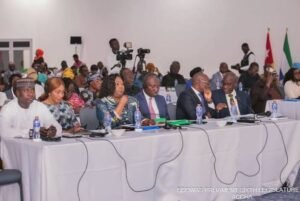
She said lawmakers have a critical role to play in strengthening climate resilience through effective legislation and oversight, particularly in protecting communities most exposed to environmental degradation and climate-related shocks.
The discussions are focusing on the emerging climate-security nexus, with participants examining how environmental changes are affecting livelihoods, food security, migration, displacement and community stability across the region.
Representing the President of the ECOWAS Commission, the Commissioner for Human Development and Social Affairs, Prof. Nassirou Bako-Arifari, highlighted the broad implications of climate change for livelihoods, population movements and regional security.
He reaffirmed the Commission’s commitment to strengthening regional cooperation and developing collective responses to challenges that could undermine stability and sustainable development in West Africa.
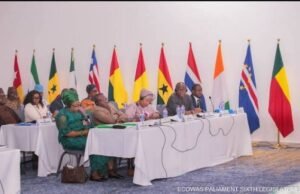
The United Nations Office for West Africa and the Sahel (UNOWAS) also made a presentation on the climate-security nexus, with emphasis on inclusive climate governance and the need to incorporate climate-related risks into regional peace and security strategies.
Participants subsequently held panel discussions on climate-related security threats, human security, displacement, resilience and financing for climate adaptation and response.
The deliberations are expected to produce practical recommendations for strengthening ECOWAS responses to climate-related threats while improving coordination among member states and regional institutions.
The Accra session comes as climate pressures increasingly intersect with some of West Africa’s most pressing development and security challenges.
Droughts, floods, land degradation, changing rainfall patterns and other environmental pressures can disrupt livelihoods and food systems, intensify competition over resources and contribute to migration and displacement.
Against this backdrop, the ECOWAS Parliament is seeking to strengthen the legislative dimension of regional integration by encouraging member states to improve climate policies, financing and parliamentary oversight.
The session is expected to deepen lawmakers’ understanding of the relationship between environmental change and regional stability while advancing discussions on how West African countries can build more resilient communities and institutions.