General News
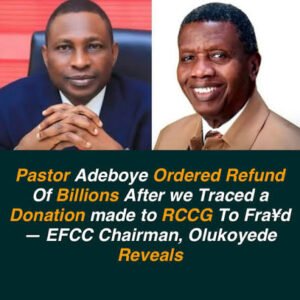
EFCC Flags Billions Donated to RCCG as Adeboye Orders Refund Within 24 Hours


The General Overseer of the Redeemed Christian Church of God (RCCG), Pastor Enoch Adejare Adeboye, has reportedly ordered the immediate refund of billions of naira donated to a church project after investigations by the Economic and Financial Crimes Commission (EFCC) allegedly linked the funds to proceeds of financial crime.
EFCC Chairman, Ola Olukoyede, disclosed this on Saturday, November 7, while speaking to pastors and other church workers during a meeting ahead of the RCCG’s annual Holy Ghost Congress.
According to Olukoyede, a member of the church had made a donation worth billions of naira towards an RCCG project. However, investigations by the anti-graft agency subsequently raised concerns about the source of the money, with findings allegedly indicating that the funds were proceeds of financial crime.

He said the commission brought its findings to the attention of the church leadership, prompting Adeboye to direct that the entire donation be returned within 24 hours.
The EFCC chairman commended the cleric for what he described as a demonstration of integrity and accountability, noting that religious institutions must uphold transparency, particularly in the management of substantial financial contributions.
Olukoyede warned churches and other religious organisations against accepting large donations without conducting appropriate checks to establish their sources.
He stressed that places of worship must not become channels through which individuals conceal, transfer or legitimise proceeds of criminal activities.
The EFCC boss further cautioned that religious affiliations, positions of influence or charitable contributions should not be used as shields by individuals seeking to evade accountability for financial misconduct.
In his response, Adeboye reportedly reiterated the church’s position against protecting anyone involved in financial wrongdoing.
He also urged pastors and church workers to maintain accurate financial records and ensure transparency in the collection and management of church funds.
The development highlights growing concerns over financial accountability within religious institutions, particularly as churches continue to receive substantial donations from members, businesspeople and other wealthy contributors.
However, the EFCC chairman did not disclose the identity of the donor, the exact amount involved or the specific RCCG project for which the donation was intended.
Neither were further details provided on the nature of the alleged financial crime or whether the donor is currently facing prosecution.
The reported decision by Adeboye to return the funds underscores the importance of due diligence in religious fundraising and the need for faith-based organisations to ensure that donations received are not proceeds of illicit activities.