General News
2027 Poll: INEC, Editors, CSOs Forge Partnership Against Disinformation, Vote-Buying

The Independent National Electoral Commission (INEC), the Nigerian Guild of Editors (NGE) and civil society organisations have renewed their commitment to strengthening collaboration ahead of the 2027 general elections, with a focus on rebuilding public trust, combating disinformation and protecting the integrity of the electoral process.
The commitment was made on Monday in Abuja at a strategic workshop for editors organised by the NGE in collaboration with INEC, with the theme, “Strengthening Democracy Through Partnership Among Editors, Civil Society and Electoral Institutions.”
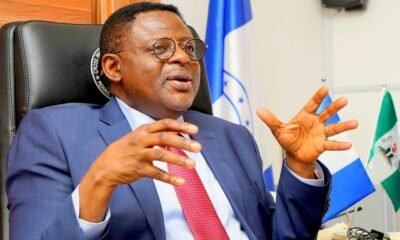
Declaring the workshop open, INEC Chairman, Prof. Joash Amupitan, SAN, said the engagement was taking place 101 days before the January 16, 2027 Presidential and National Assembly elections and 124 days before the February 6 Governorship and State Houses of Assembly polls.
Amupitan said the countdown made sustained cooperation between the electoral commission, the media and civil society particularly important, stressing that credible elections could not be achieved by INEC alone.

According to him, while operational efficiency was necessary, public trust remained central to electoral integrity and could only be strengthened through transparency, accountability and continuous engagement with stakeholders.
He urged editors to prioritise factual accuracy and verification in their coverage of the elections, warning that unverified rumours, sensational reporting, deepfakes and coordinated disinformation could undermine confidence in the electoral process.
The chairman disclosed that nationwide collection of Permanent Voters’ Cards would commence on Friday, October 9, urging editors to use their platforms to educate citizens on collection centres and encourage registered voters to collect their cards.
He said the three phases of the Continuous Voter Registration exercise produced 10,772,421 new registrations, while the National Register of Voters now stands at more than 103 million following the completion of the Automated Biometric Identification System cleanup.
Amupitan also disclosed that INEC had acquired 57,000 new BVAS devices and undertaken hardware, software and cybersecurity upgrades aimed at strengthening accreditation and result management.
He said the commission had completed eight of the 14 major activities contained in its revised timetable for the 2027 elections, while nationwide readiness assessments, logistics preparations and staff engagements were ongoing.
On vote-buying, the INEC chairman said the commission would adopt an uncompromising approach, working with the Federal Ministry of Justice, the Economic and Financial Crimes Commission, the Independent Corrupt Practices and Other Related Offences Commission and the Nigerian Financial Intelligence Unit to monitor illegal campaign spending and financial inducement.
He warned political actors against attempting to influence voters with cash or material gifts, stressing that elections should be determined by the choice of voters rather than financial inducement.
Earlier, the Chief Press Secretary to the INEC chairman, Oketola, described the workshop as a strategic engagement coming at a critical period in the countdown to the 2027 elections.
Oketola said editors occupied a crucial position in shaping public understanding of electoral processes because they determine what citizens read, hear and ultimately use to form opinions about developments in the country.
He said direct engagement with editors was therefore not an afterthought for the commission but a core part of its operational strategy ahead of the elections.

According to him, the workshop was designed around three key objectives, including rebuilding institutional trust through open dialogue between the commission and the media.
He said the engagement was intended to promote transparent, two-way communication between INEC leadership and newsroom gatekeepers, while creating a platform for editors to raise concerns and obtain clarification on electoral processes.
Oketola’s remarks reinforced the broader position presented by Amupitan that effective communication and timely verification would be essential to preventing information gaps that could be exploited to spread false or misleading claims during the election period.
The INEC chairman also proposed a three-point operational compact with the NGE, covering stronger fact-checking and verification desks in newsrooms, protection of journalists and election responders, and the establishment of a sustained editorial feedback mechanism between the commission and editors.
He said INEC would maintain an open channel with the media and civil society organisations throughout the electoral cycle, adding that timely access to verified information would help prevent the vacuum often filled by fake news.
The workshop brought together editors, INEC National Commissioners, civil society representatives, development partners, academics and other stakeholders involved in Nigeria’s democratic and electoral processes.
Amupitan said the commission had no preferred candidate or political party, insisting that its obligation was to the Constitution, the law and the Nigerian electorate.
He called on editors, civil society groups and electoral institutions to work together to build a public information environment driven by verified facts, civic responsibility and institutional accountability ahead of the 2027 elections.