
General News
COP31 Talks Collapse as 130 Nations Accuse Saudi Arabia of Blocking Fossil Fuel Deal


The United Nations climate negotiations at COP31 in Antalya, Turkey, have ended without an overarching political agreement, following disagreements over fossil fuels and climate financing, with Saudi Arabia facing criticism from a coalition of about 130 countries, including several African nations.
The breakdown marks the first time since the 2009 Copenhagen climate conference that a major UN climate summit has concluded without an overarching political deal, leaving key questions about the transition away from fossil fuels and financial support for vulnerable countries unresolved.
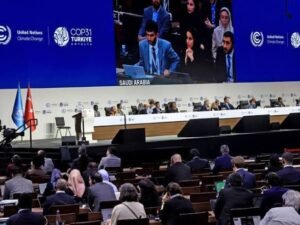
According to a report by Business Insider Africa, the dispute centred on demands by a coalition of countries for stronger commitments to move away from oil, gas and coal, which they consider major contributors to global warming.
Saudi Arabia was among the countries opposed to explicit language requiring a transition away from fossil fuels, arguing that conventional energy sources would remain necessary to meet global energy demand.
The disagreement reportedly intensified after a revised negotiating document removed references to fossil fuels, despite objections from the European Union and several climate-vulnerable countries.
Reuters reported that negotiators from Africa, Europe, Asia, Latin America and small island states accused Saudi Arabia of exerting disproportionate influence over the negotiations, including allegedly enjoying greater access to the conference presidency.
Ireland’s climate minister, Darragh O’Brien, speaking on behalf of the European Union, criticised the influence of oil-producing countries on the negotiations.
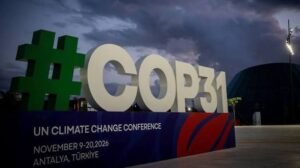
“This COP, I believe, was hijacked by some oil states,” he said.
However, the Turkish COP31 presidency rejected allegations that some countries received preferential treatment, maintaining that all negotiating groups had equal access.
The disagreement exposed continuing divisions between oil-producing countries and governments pushing for stronger global commitments to reduce dependence on fossil fuels.
Previous climate agreements reached in Glasgow in 2021 and Dubai in 2023 had included explicit references to reducing or transitioning away from fossil fuels, making the omission from the latest negotiating document a major point of contention.
African climate financing demands unresolved
Beyond the dispute over fossil fuels, the collapse of the negotiations left African countries without a clearer financing framework to address the growing effects of climate change.
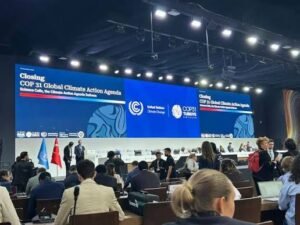
African negotiators had pushed for developed countries to provide predictable adaptation financing, including a proposed target of at least $120 billion annually by 2035 for developing countries.
The proposal, which appeared in an earlier negotiating draft, was removed from the revised text before the summit concluded.
The funding was expected to support climate-resilient infrastructure, agricultural production, water management and preparations for increasingly severe droughts, floods and other extreme weather events.
According to the Ghana News Agency, environment ministers from Ghana, Zambia, Senegal, Sierra Leone and Kenya called for a financing framework with clear timelines, accountability mechanisms and measurable commitments.
Ghana’s Environment Minister, Zanetor Agyeman-Rawlings, warned that announcing financial targets without establishing how the funds would be delivered would not address the continent’s needs.
“A figure alone is not a commitment,” she said.
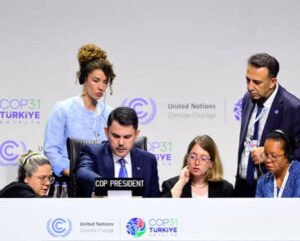
The African Group of Negotiators also called for climate financing to be provided mainly through grants and highly concessional arrangements rather than loans that could further increase the debt burdens of vulnerable economies.