Oil and Gas
NUPRC Targets 3GW Power Boost, $2bn Investment Through Gas Flare Commercialisation Programme


The Nigerian Upstream Petroleum Regulatory Commission (NUPRC) is targeting up to 3 gigawatts (GW) of additional electricity generation and approximately $2 billion in investments through the commercialisation of gas flares under the Nigerian Gas Flare Commercialisation Programme (NGFCP).
The Commission Chief Executive of NUPRC, Mrs. Oritsemeyiwa Eyesan, disclosed this at the NUPRC/PETAN Energy Evolution Exchange Spotlight at the Offshore Technology Conference (OTC) 2026 in Houston, Texas.
“Today, we are working towards converting those flares into about 3 gigawatts of electricity. This project is ongoing,” Eyesan said.
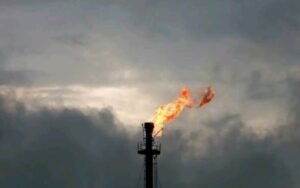
She explained that the initiative is part of a broader strategy to eliminate routine gas flaring and convert wasted resources into economic value, noting that Nigeria is moving beyond imposing penalties on companies for flaring to actively harnessing the resource through structured programmes that allocate flare sites to capable investors.
“We are not just satisfied with the penalties that companies pay for flaring. We are determined to eliminate flaring by commercialising it. The programme is designed to concession flare sites to companies with the technical capacity to convert them into value,” she stated.
The NGFCP is projected to capture between 250 and 300 million standard cubic feet per day of currently flared gas, reduce approximately 6 million tonnes of CO2 emissions each year, and generate over 100,000 employment opportunities.
It is also expected to yield 170,000 metric tonnes of liquefied petroleum gas annually, facilitating access to cleaner cooking fuel for about 1.4 million households.
In December 2025, NUPRC granted permits to 28 companies under the programme, following a competitive bidding process that allocated 49 flare sites to 42 initial bidders. The restructuring was implemented after the COVID-19 period and the enactment of the Petroleum Industry Act.
Of the 43 flare gas sites originally identified for award, 27 have so far been successfully awarded, with implementation efforts ongoing.
Eyesan, however, issued a stern warning to awardees, stating that the Commission will conduct evaluations one year after each award to determine whether considerable progress has been made.
“Where there is insufficient progress, the Commission will take appropriate regulatory action, including revocation of the award where necessary,” she said.
The NUPRC noted that Nigeria currently has over 215 trillion cubic feet (TCF) of proven gas reserves and an estimated total reserve base of about 600 TCF, providing a strong foundation for power generation, industrialisation, exports and broader economic development.
Minister of State for Petroleum Resources (Gas), Rt. Hon. Ekperikpe Ekpo, called for a deliberate and aggressive implementation of Nigeria’s gas commercialisation programme to ensure the country achieves its 2030 target of eliminating routine gas flare.
“The core objective is to add value to our gas resources by converting them into critical products and services. We must move away from environmental pollution and toward productive resource utilization,” the minister stated.
An NGFCP official emphasised that while the permits represent an important achievement, the next phases require prompt progress.
“The real work starts now,” the official added. “This programme will create economic, industrial and environmental value while strengthening Nigeria’s energy transition”.
The programme supports Nigeria’s broader Energy Transition Plan by transforming flared gas from a potential environmental concern into a resource for economic development.
Assistance has come from various partners, including Power Africa, KPMG, the World Bank’s Global Gas Flaring Reduction partnership, USAID, and financial institutions.
Nigeria flared 323 billion standard cubic feet of gas in 2025, worth an estimated $1.1 billion, according to the National Oil Spill Detection and Remediation Agency (NOSDRA), underscoring the economic and environmental significance of the commercialisation initiative.