
Business
Nigeria Proposes $10bn AU Peace Fund Amid Declining Foreign Aid

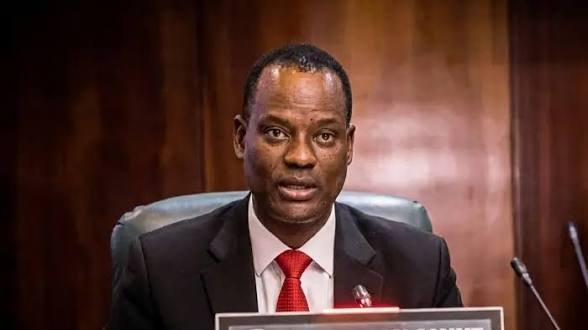
Nigeria has proposed the establishment of a $10 billion African Union (AU) Peace Fund over the next decade to strengthen the continent’s capacity to finance peace and security operations without excessive dependence on foreign assistance.
The Minister of Finance and Coordinating Minister of the Economy, Taiwo Oyedele, presented the proposal at the 27th Extraordinary Session of the AU Executive Council on Financing the Union in Accra, Ghana.
According to a statement by the Ministry of Finance, Oyedele proposed that the fund be financed through contributions from member states, philanthropic organisations and African capital, with investments managed under sovereign wealth fund principles to generate sustainable returns.
The proposed $10 billion target exceeds the existing $1 billion funding target under consideration for the AU Peace Fund, although Nigeria indicated its willingness to support the initial target.
Oyedele said the proposal was part of efforts to strengthen Africa’s financial independence as development assistance from international partners continues to decline.
He disclosed that African member states currently finance only 25 per cent of the AU’s budget and contribute four per cent of its programme funding, against a target of 75 per cent.
He argued that the funding gap makes it necessary for African countries to improve domestic resource mobilisation and establish sustainable financing arrangements for the continental organisation.
The minister said Nigeria’s position on AU financing reforms was guided by three principles: fiscal discipline, institutional efficiency and financial leverage.
On fiscal discipline, he advocated concentrating resources on fewer, high-impact priorities, supported by a credible medium-term fiscal framework and performance-linked spending limits.
He also called on technical experts of the Forum of Finance Ministers F15 to validate projections that could increase member states’ contributions to $779 million by 2031, almost four times the current ceiling.
However, he cautioned that the proposed increase must be assessed against the fiscal constraints confronting African countries.
On institutional efficiency, Oyedele identified 29 areas of duplication within the AU system, which he said could cost the organisation up to $36 million.
He urged the AU Commission to eliminate overlapping functions, implement outstanding audit recommendations and explore additional revenue sources, including income from AU-owned properties.
Regarding the proposed Peace Fund, the minister advised against spending its principal, recommending that the interest-only rule be maintained until a sustainable replenishment mechanism is established.
Under the arrangement, investment returns would provide recurring funding for peace initiatives, while contributions from member states and other sources would support the growth of the fund.
Oyedele also urged African countries with outstanding financial obligations to fulfil their commitments within an agreed timeframe.
He called on the Accra meeting to produce a concrete implementation plan, rather than end with general commitments on financial reforms.
The minister urged the AU Commission to address identified institutional inefficiencies and report progress at the organisation’s 2027 mid-year session.
He further requested the F15 technical experts to fully cost the proposed financing options and examine alternative funding arrangements, while the commission develops sustainable mechanisms for replenishing the Peace Fund.
The proposal comes amid broader efforts by the African Union to strengthen the continent’s financial architecture.
Recently, the AU unveiled the African Credit Rating Agency (AfCRA), an initiative designed to provide independent assessments of African economies and address concerns about high borrowing costs.
Ugandan President Yoweri Museveni, who chairs the African Peer Review Mechanism, said at the agency’s launch that Africa needed adequate and affordable capital, arguing that the continent’s economic realities must be properly reflected in assessments by global financial institutions.
The Chairperson of the AU Commission, Mahmoud Ali Youssouf, said the agency would objectively assess risks facing African economies while maintaining the independence required for credibility.
Oyedele reaffirmed Nigeria’s commitment to reforms that promote equitable financial contributions, responsible resource management and a financially sustainable African Union.


