
General News
Women Hold Half of Nigeria’s Population but Remain Underrepresented in Power — Obiabunmuo

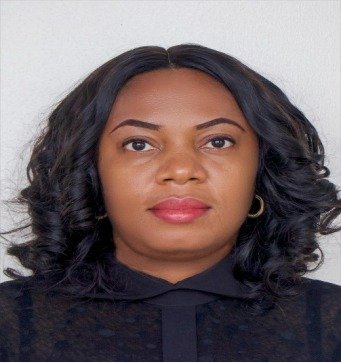
By Dr Adaobi Obiabunmuo
Women account for nearly half of Nigeria’s population but continue to face significant inequalities in education, political representation and protection from gender-based violence, according to an analysis by Dr Adaobi Obiabunmuo.
In an article titled “Women and Inequalities in Nigeria: The Numbers Say It’s Raining Testosterone!”, Obiabunmuo examines how gender disparities continue to shape women’s access to education, leadership positions and justice across the country.
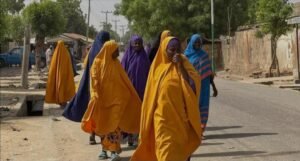
The article highlights figures from the Federal Ministry of Education’s 2024/2025 school census, which put female learners at 49.6 per cent of total enrolment nationwide.
However, the analysis argues that enrolment figures alone do not reflect the full extent of educational inequality, particularly as the gap between boys and girls widens at higher levels of education.
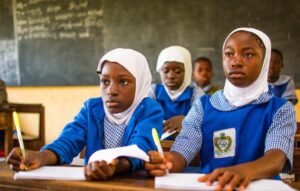
Data from UNESCO’s 2023 estimates show that girls recorded an 80.3 per cent primary school completion rate, compared with 88.5 per cent for boys. At the lower secondary level, the figures stood at 69.7 per cent for girls and 86.1 per cent for boys, while upper secondary completion was 55.5 per cent for girls against 75.3 per cent for boys.
The figures point to persistent barriers affecting girls’ ability to complete their education, including poverty, early marriage, insecurity and cultural practices.
Obiabunmuo also draws attention to sexual and gender-based violence, noting that women and girls bear a disproportionate burden, although men and boys can also be victims.
Citing the National Human Rights Commission’s October 2026 data, she highlights 1,873 reported domestic violence incidents, 18 sexual violence cases and six rape cases during the month.
The analysis warns that reported cases may represent only a fraction of the actual problem, given the stigma, fear, limited access to justice and other barriers that discourage survivors from reporting abuse.
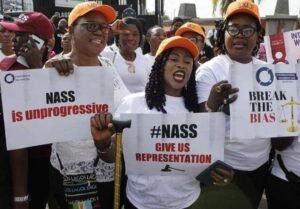
Political representation forms another major focus of the article.
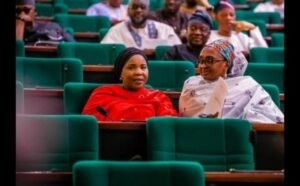
According to figures cited by Obiabunmuo, women occupy only about 4.5 per cent of seats in Nigeria’s 10th National Assembly, leaving men with approximately 95.5 per cent of legislative representation.
The disparity is also reflected at the state level. Of the 1,019 lawmakers elected into the 36 state Houses of Assembly in 2023, only 48 were women. At least 15 states reportedly emerged from the elections without a single female legislator.
The situation is particularly pronounced in the North-West, where the article identifies only two female state legislators across the seven states, both representing Kaduna State.
Obiabunmuo argues that women’s participation in elections, political campaigns and party activities has not translated into adequate representation in institutions responsible for making laws, allocating public resources and determining national priorities.
She also questions why Nigeria continues to lag behind several African countries in women’s political representation, citing Rwanda’s parliamentary representation as an example of what greater inclusion can achieve.
The article references Nigeria’s revised National Gender Policy for 2021–2026, which sets a 50:50 gender parity target for elective and appointive positions.
It further calls for stronger enforcement of free and compulsory basic education, improved school safety, particularly in conflict-affected communities, and the removal of financial and structural barriers confronting women seeking political office.
On gender-based violence, Obiabunmuo urges authorities to ensure that perpetrators face legal consequences regardless of their political influence or social status, while survivors receive adequate protection and access to remedies.
She maintains that women’s involvement in public life should go beyond voting and campaigning to include meaningful participation in the decisions that shape the country’s future.
Dr Adaobi Obiabunmuo is Programmes Manager at the Public and Private Development Centre (Primorg).