
Politics
ADAMAWA GOVERNOR FINITRI INSISTS PRESIDENCY MUST REMAIN IN SOUTH UNTIL 2031, SAYS RELATIONSHIP WITH ATIKU CORDIAL DESPITE POLITICAL DIVERGENCE

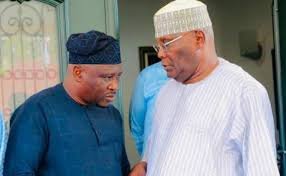
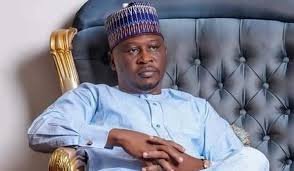
Governor Ahmadu Fintiri of Adamawa State has said his relationship with the chieftain of African Democratic Congress (ADC) and former Vice President, Atiku Abubakar, remains cordial despite defecting from the Peoples Democratic Party (PDP) to the All Progressives Congress (APC). Speaking during a televised interview, the governor said his relationship and communication with Atiku remain cordial despite political differences.
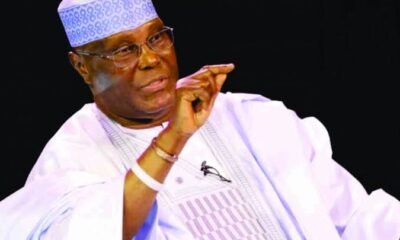
Atiku, also from Adamawa State, who is currently associated with the ADC, is seeking support to contest the presidency again after emerging as the PDP candidate in the 2023 election won by President Bola Tinubu. Fintiri said he believes that the presidency should remain in the South until 2031, saying no northerner should join the 2027 presidential race in the interest of fairness and national unity. He said power rotation remains vital to sustaining political stability in the country.
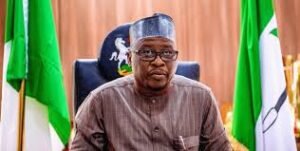
While acknowledging that every Nigerian has a constitutional right to seek elective office, Fintiri maintained that the South should be allowed to complete its turn under the informal zoning arrangement as against Atiku who wants to contest as president come 2027. Fintiri stressed that Nigeria’s unity should take precedence over individual ambition, insisting that the South deserves to complete an eight-year tenure before power shifts back to the North.
He added that if no alternative candidate emerges, northerners should support President Tinubu to complete a second term, noting that some policies of the current administration are beginning to show positive results.
On the resignation of Atiku’s son, Adamu, from the Adamawa State Executive Council, the governor described the move as understandable. According to him, the younger Atiku stepped aside to align politically with his father, adding that such decisions often carry moral considerations beyond partisan interests.
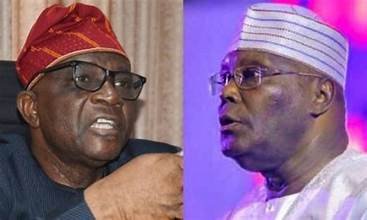

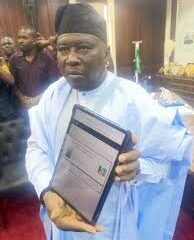






Politics
NNPP Condemns Move to Impeach Kano Deputy Governor, Describes It as Attack on People’s Mandate

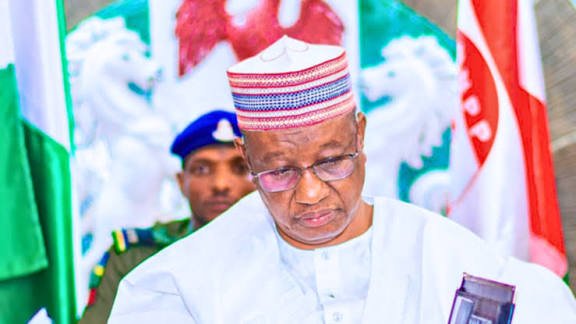
The New Nigeria People’s Party (NNPP) has strongly condemned the move by the Kano State House of Assembly to impeach the state’s Deputy Governor, Aminu Abdussalam Gwarzo, describing the action as a politically motivated attempt to undermine the mandate freely given by voters.
In a press statement issued in Abuja on Thursday, the party’s National Publicity Secretary, Ladipo Johnson, said the development reflects what he described as desperate tactics by political actors determined to wrest control of the state through means other than the ballot box.
Johnson alleged that the deputy governor was being targeted because of his refusal to abandon the party and join the ruling All Progressives Congress (APC), accusing some political figures of betraying the mandate given to the NNPP by the people of Kano State during the 2023 elections.
According to him, the impeachment process being initiated in the state assembly is a calculated move aimed at facilitating what he termed a political takeover of the state’s mandate by the APC.
“This is not just about one individual. What we are witnessing is an attempt to undermine the will of the people of Kano who voted for the NNPP,” Johnson said, adding that the party views the process as a political manoeuvre disguised as a constitutional procedure.
The NNPP reaffirmed its support for the deputy governor and the electorate in Kano State, insisting that the mandate given to the party in the 2023 Nigerian general election remains valid for the four-year term.
The party also urged residents of the state to remain calm despite what it described as a major provocation.
Johnson further warned that political actors involved in what he termed the subversion of the electorate’s mandate would ultimately be held accountable by voters in future elections.
He stressed that while legislators may wield authority within the assembly, the ultimate power rests with the people through the ballot box.
“The NNPP remains firm and undeterred,” the statement concluded.

The Inter-Party Advisory Council (IPAC) has raised serious concerns over certain provisions of the Electoral Act 2026, warning that political parties may boycott the 2027 general elections if the National Assembly fails to amend what it described as problematic sections of the law.
The warning was contained in a communiqué issued at the end of the IPAC General Assembly meeting held on February 26 at the council’s national secretariat in Abuja.
In the statement jointly signed by IPAC National Chairman, Dr. Yusuf M. Dantalle, and National Secretary, Barr. Maxwell Mgbudem, the council acknowledged the efforts made in enacting the Electoral Act 2026, which was intended to address shortcomings observed in the Electoral Act 2022. However, it expressed concern that some provisions in the new law could undermine the development of political parties and weaken Nigeria’s multiparty democracy.
According to IPAC, certain sections of the Act are inconsistent with its guiding objective of deepening democracy in Nigeria and may limit the constitutional rights of political parties to manage their internal affairs.
One of the council’s major objections is the exclusion of indirect primaries under Section 84(2) of the Act. IPAC argued that the removal of indirect primaries infringes on the constitutional right of political parties to determine how they select candidates for elections.
The council stressed that judicial precedents in Nigeria have consistently affirmed the autonomy of political parties in administering their internal affairs, including the process of nominating candidates.
IPAC also recalled its role in safeguarding Nigeria’s democratic process during the tense period surrounding the collation of results in the 2023 presidential election, when it said the council resisted attempts by some actors to disrupt the democratic order.
Given the current situation, IPAC said it would draw the attention of Nigerians and the international community—including the United Nations, the European Union, the Economic Community of West African States (ECOWAS), and diplomatic missions such as the United States and United Kingdom embassies—to its concerns.
The council maintained that urgent amendments to the Electoral Act are necessary to ensure that the 2027 general elections are free, fair, credible, and inclusive. It also stated that it reserves the right to challenge some provisions of the Act in court.
IPAC warned that if the National Assembly fails to address the identified issues, political parties under its umbrella may boycott the 2027 general elections and reject the outcome as illegitimate.
Among the key areas IPAC wants amended is the restoration of indirect primaries, which it said should remain an option for political parties in selecting candidates.
The council also called for the removal of the requirement for party members to provide their National Identification Number (NIN), arguing that the provision could disenfranchise many Nigerians who do not yet possess the identification number.
It further demanded the expungement of Sections 77(4), (5), (6), and (7) of the Act, stating that the provisions infringe on citizens’ constitutional right to freedom of association.
Another major demand is the restoration of mandatory electronic transmission of election results after their announcement at polling units. IPAC noted that the absence of this provision was a major flaw during the 2023 presidential election and should not be repeated.
The council also advocated stronger penalties for vote buying, describing it as one of the most serious electoral malpractices that undermine the credibility of elections.
In addition, IPAC called for the restoration of the presentation of forged certificates as grounds for election petitions. According to the council, removing this provision creates an opportunity for individuals with questionable credentials to hold public office and undermines the integrity of the democratic process.
It urged the National Assembly to align the Electoral Act with constitutional provisions that disqualify individuals with forged credentials from holding elective offices, warning that failure to do so could lead to avoidable legal disputes and damage Nigeria’s democratic image.
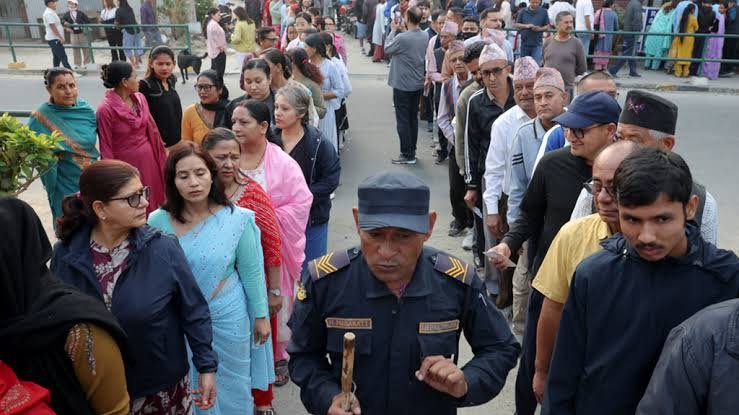
Polling stations across Nepal closed on Thursday as the Himalayan nation concluded voting in a crucial general election expected to determine the country’s political direction following months of unrest and the resignation of former Prime Minister K. P. Sharma Oli.
Vote counting is expected to begin shortly after the polls closed at 5 p.m. local time, with early trends likely to emerge by Friday, according to the Election Commission of Nepal. However, officials said final results could take up to a week to be fully compiled.
At least half of the country’s 19 million eligible voters had cast their ballots by mid-afternoon, election authorities said, with turnout expected to approach the 61 percent recorded in the 2022 election.
The election comes nearly six months after violent youth-led protests that resulted in the deaths of 77 people during a security crackdown. The unrest forced the resignation of then prime minister K. P. Sharma Oli and triggered calls for sweeping political reforms.
Nepal, a nation of about 30 million people located between China and India, has struggled with decades of political instability, high unemployment, and widespread corruption—issues that dominated this year’s election campaign.
Voters turned out early at polling units set up in schools, temples and historic courtyards across the country, including in the capital Kathmandu. Authorities deployed more than 300,000 security personnel, including members of the military, to maintain order at over 23,000 polling stations nationwide.
“This election has to reinstate democracy in the country. Political anarchy, lawlessness and violence need to be controlled,” K. P. Sharma Oli told reporters after casting his vote in Balkot, Bhaktapur.
Oli, who leads the Communist Party of Nepal (Unified Marxist–Leninist), is among more than 3,400 candidates contesting seats in the 275-member parliament across 65 political parties.
Other key contenders include the Nepali Congress led by Gagan Thapa and the Nepal Communist Party, which includes former Maoist insurgents who later joined mainstream politics.
However, much of the public attention has been focused on the rising influence of the three-year-old Rastriya Swatantra Party, whose prime ministerial candidate Balendra Shah has gained strong backing from young voters.
The 35-year-old rapper-turned-politician and former mayor of Kathmandu has attracted large crowds both online and at campaign rallies, presenting himself as a reformist alternative to Nepal’s traditional political establishment.
Nepal’s political landscape has been dominated for decades by a handful of parties, with the country witnessing 32 government changes in the past 35 years.
For many voters, economic hardship and unemployment remain the most pressing concerns.
In Jhapa district, 70-year-old voter Menuka Chauhan said she was worried about her son working abroad in Qatar as a security guard.
“I can’t sleep at night. I worry all the time. My son tells me bombs keep dropping there. I wish there were employment opportunities here,” she said.
Analysts say the election outcome will largely depend on whether political leaders can respond to demands raised during the youth protests last September.
“The election is critical to address the aspirations of the youths expressed during the Gen Z protests,” political analyst Puranjan Acharya said.
Under Nepal’s electoral system, voters elect 275 members of parliament through a mixed system comprising 165 seats decided through direct first-past-the-post voting and 110 seats allocated through proportional representation.