
International
Polls Close In Nepal’s General Election Amid Calls For Political Change

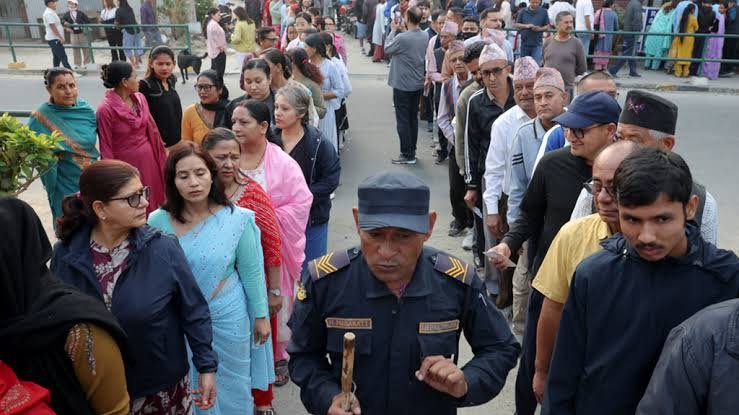
Polling stations across Nepal closed on Thursday as the Himalayan nation concluded voting in a crucial general election expected to determine the country’s political direction following months of unrest and the resignation of former Prime Minister K. P. Sharma Oli.
Vote counting is expected to begin shortly after the polls closed at 5 p.m. local time, with early trends likely to emerge by Friday, according to the Election Commission of Nepal. However, officials said final results could take up to a week to be fully compiled.
At least half of the country’s 19 million eligible voters had cast their ballots by mid-afternoon, election authorities said, with turnout expected to approach the 61 percent recorded in the 2022 election.
The election comes nearly six months after violent youth-led protests that resulted in the deaths of 77 people during a security crackdown. The unrest forced the resignation of then prime minister K. P. Sharma Oli and triggered calls for sweeping political reforms.
Nepal, a nation of about 30 million people located between China and India, has struggled with decades of political instability, high unemployment, and widespread corruption—issues that dominated this year’s election campaign.
Voters turned out early at polling units set up in schools, temples and historic courtyards across the country, including in the capital Kathmandu. Authorities deployed more than 300,000 security personnel, including members of the military, to maintain order at over 23,000 polling stations nationwide.
“This election has to reinstate democracy in the country. Political anarchy, lawlessness and violence need to be controlled,” K. P. Sharma Oli told reporters after casting his vote in Balkot, Bhaktapur.
Oli, who leads the Communist Party of Nepal (Unified Marxist–Leninist), is among more than 3,400 candidates contesting seats in the 275-member parliament across 65 political parties.
Other key contenders include the Nepali Congress led by Gagan Thapa and the Nepal Communist Party, which includes former Maoist insurgents who later joined mainstream politics.
However, much of the public attention has been focused on the rising influence of the three-year-old Rastriya Swatantra Party, whose prime ministerial candidate Balendra Shah has gained strong backing from young voters.
The 35-year-old rapper-turned-politician and former mayor of Kathmandu has attracted large crowds both online and at campaign rallies, presenting himself as a reformist alternative to Nepal’s traditional political establishment.
Nepal’s political landscape has been dominated for decades by a handful of parties, with the country witnessing 32 government changes in the past 35 years.
For many voters, economic hardship and unemployment remain the most pressing concerns.
In Jhapa district, 70-year-old voter Menuka Chauhan said she was worried about her son working abroad in Qatar as a security guard.
“I can’t sleep at night. I worry all the time. My son tells me bombs keep dropping there. I wish there were employment opportunities here,” she said.
Analysts say the election outcome will largely depend on whether political leaders can respond to demands raised during the youth protests last September.
“The election is critical to address the aspirations of the youths expressed during the Gen Z protests,” political analyst Puranjan Acharya said.
Under Nepal’s electoral system, voters elect 275 members of parliament through a mixed system comprising 165 seats decided through direct first-past-the-post voting and 110 seats allocated through proportional representation.