
Editorial
CTN SPECIAL REPORT: THE WEEK IN REVIEW — UPDATES ON FOUR CRITICAL FRONTS

Tracking the Editorial Promise | Monday, April 27 – Saturday, May 2, 2026
OPENING NOTE

On Monday, we promised to go deeper into four critical stories: the opposition alliance, the Boko Haram captives, the cabinet reshuffle, and the Hormuz ceasefire. We also carried forward the ADC legal war from last week’s coverage.
This is our accounting. No fluff. No spin. Just the truth.
1. THE OPPOSITION ALLIANCE: OBI AND KWANKWASO SEAL ‘OK MOVEMENT’ DEAL
What we reported on Monday: Backroom talks were intensifying among Atiku, Obi, Amaechi, and Kwankwaso, but trust was low and the question of “who leads” remained unresolved.
What has happened since (Monday – Saturday):
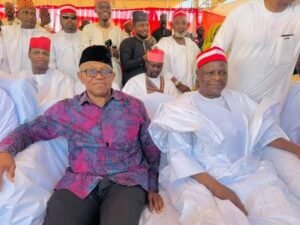
The Obi-Kwankwaso ticket is now a done deal. Multiple sources confirm that Peter Obi and Rabiu Musa Kwankwaso have formally agreed to run together on the African Democratic Congress (ADC) platform. Under the agreement, Kwankwaso will run as Obi’s vice-presidential candidate — a complete reversal of Kwankwaso’s 2023 position, when he insisted he had a higher political ceiling than Obi.
Why Kwankwaso accepted the VP slot: Several factors appear to have changed his calculus. First, Obi’s strong 2023 performance far outpaced Kwankwaso’s numbers. Second, the prevailing sentiment favours a southern president in 2027. Third, the realisation that facing Tinubu individually is a losing strategy. Fourth, Obi’s pledge to serve only one term if elected — meaning Kwankwaso would be well-positioned for 2031.
The ticket is being branded the “OK Movement” — Obi-Kwankwaso Movement, also merging Obidient and Kwankwasiyya movements. Online spaces are already rallying behind the acronym.
The Ibadan opposition summit of April 24-25 saw Atiku Abubakar, Rotimi Amaechi, Kwankwaso, and Rauf Aregbesola gather in Oyo State, hosted by Governor Seyi Makinde. The summit, themed “That We May Work Together for a United Opposition to Sustain Our Democracy,” served as a pre-negotiation arena before the Obi-Kwankwaso deal was finalised days later.
Reactions from other camps: Atiku’s camp dismissed the alliance as “expected,” insisting Atiku remains the “most experienced and sellable candidate” in the ADC race. Amaechi’s camp called it a “marriage of convenience” that won’t alter the primary dynamics.
What this means for 2027: The ADC primary is now shaping up as a three-way contest — Obi-Kwankwaso versus Atiku versus Amaechi. The OK Movement consolidates the South-East and North-West blocs, two of Nigeria’s largest voting regions. However, Atiku’s national structure and Amaechi’s Rivers/APC-splinter network cannot be counted out.
CTN assessment: The OK Movement is the most significant opposition realignment since 2022. But the ADC’s internal legal war — now partially resolved by the Supreme Court — could still affect the platform’s stability. We are watching whether the remaining legal hurdles are cleared before the primary.

2. THE ADC LEGAL WAR: SUPREME COURT SPEAKS — INEC RESTORES MARK LEADERSHIP
What we reported last week and earlier this week: The ADC leadership crisis was in legal limbo. INEC had removed Senator David Mark and his executives from its portal, citing a Court of Appeal order for parties to maintain status quo ante bellum. The case was headed for the Supreme Court.
What has happened (Thursday, April 30 – Saturday, May 2):
THE SUPREME COURT RULING
On Thursday, April 30, a five-member panel of the Supreme Court led by Justice Mohammed Lawal Garba delivered a unanimous judgment that significantly altered the ADC leadership landscape.
What the court did: The Supreme Court set aside the Court of Appeal’s “status quo ante bellum” order — the directive that INEC had cited as the basis for removing the Mark-led leadership from its portal. The court held that the appellate court acted beyond its jurisdiction by unilaterally issuing such a preservative order after it had already dismissed the underlying appeal. The court ruled that giving such an order “in an appeal it had already dismissed was unnecessary, unwarranted and improper.”
What the court did NOT do: The Supreme Court did not make a final determination on who the authentic national leadership of the ADC is. Instead, the court directed all parties to return to the Federal High Court for an accelerated hearing of the substantive suit on its merits. The appeal succeeded only in part — the aspect challenging the trial court’s jurisdiction was dismissed.
What this means legally: According to lawyer Aloy Ejimakor, the ruling is “procedural and interim” — it temporarily removes a major roadblock that had paralysed the Mark faction, “but it does not grant the ADC a clean bill of legal health.” The substantive leadership dispute remains alive and pending at the Federal High Court.
INEC RECOGNITION — THE KEY DEVELOPMENT
Within hours of the Supreme Court judgment, INEC restored the names of the David Mark-led leadership to its official portal.
As of Thursday evening, the INEC portal now lists Senator David Mark as National Chairman, Ogbeni Rauf Aregbesola as National Secretary, Dr. Mani Ibrahim Ahmed as National Treasurer, Akibu Dalhatu as National Financial Secretary, and Professor Oserheimenn Osunbor as National Legal Adviser.
Why this matters: INEC had previously removed these names on April 1, citing the Court of Appeal’s status quo order. With that order now vacated, the commission moved swiftly to comply with the Supreme Court ruling. SAN Jibrin Okutepa, lead counsel to Senator Mark, publicly praised INEC for acting “without prompting” and “without pretending that it was yet to be formally served with the judgment.”
THE LEGAL WAR IS NOT OVER — CAVEATS REMAIN
Despite INEC’s recognition, multiple legal vulnerabilities persist.
First, a separate restraining order still stands. On April 29, 2026 — just one day before the Supreme Court judgment — Justice Abdulmalik of the Federal High Court issued an order restraining INEC from recognising or participating in any state congresses organised by the disputed Mark-led caretaker committee. That order remains in force independently of the Supreme Court ruling.
Second, the substantive case is still pending. The original suit, filed by aggrieved member Nafiu Bala Gombe challenging the validity of the Mark-led leadership, must now be heard fully at the Federal High Court. Whichever side loses can appeal again.
Third, a deregistration threat looms. Some former lawmakers have filed processes seeking to compel INEC to deregister the ADC entirely, citing alleged failure to meet statutory requirements.
Fourth, congress validity is still disputed. Senator Mark himself has stated that the ADC will appeal the lower court ruling restraining INEC from recognising its recent congresses.
THE POLITICAL DIMENSION
The timing is significant: the Supreme Court ruling and INEC recognition come just days after Peter Obi and Rabiu Kwankwaso finalised their agreement to run on the ADC platform for 2027. With INEC now formally recognising Mark as ADC National Chairman and Aregbesola as National Secretary, the party’s legal standing for candidate nomination is substantially strengthened — though not yet fully secure.
Reacting to the judgment, former Vice President Atiku Abubakar — himself now a contender in the ADC primary — welcomed the Supreme Court’s affirmation of Mark’s leadership but cautioned against complacency, saying the broader political struggle remains unresolved.
The ADC itself, in a statement signed by National Publicity Secretary Mallam Bolaji Abdullahi, welcomed the ruling as a “clear validation” of its leadership position. However, the party also warned: “We do not mistake it for the end of the struggle.”
CTN assessment: The Supreme Court gave the Mark-led ADC a lifeline, and INEC has restored recognition. But the legal knife fight is not over — it has merely moved to a different courtroom. For now, the opposition’s 2027 vehicle has its doors unlocked. Whether it stays that way depends on the Federal High Court.
3. THE BOKO HARAM CAPTIVES: ULTIMATUM EXPIRED — EXECUTIONS IMMINENT
What we reported on Monday: A 72-hour ultimatum was ticking. Boko Haram threatened to execute captives unless the government released detained women and children.
What has happened since:
The 72-hour deadline has expired. A faction of Boko Haram, Jama’atu Ahlis-Sunna Lidda’awati Wal-Jihad (JAS), announced that all negotiations have collapsed. In a video released Thursday, a group spokesperson speaking in Hausa declared: “The Nigerian government, you should know this: money does not blind us, and the 72-hour deadline we gave you has already expired. That negotiation has expired.”
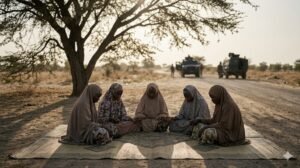
The number of captives is now confirmed at 416 — mostly women and children held in Goshe, also known as Ngoshe, in Borno State. They have been in captivity since the March 30 attack on a military base in Ngoshe.
Military achievements reported: The Defence Headquarters announced that in April alone, 201 terrorists were neutralised, 284 arrested, and 188 kidnapped victims rescued across all theatres. In the North East specifically: 136 fighters killed, 114 arrested, and 18 rescued.
Senate intervention: On April 21, the Senate passed a resolution urging the Federal Government to intensify efforts to secure the captives’ release. Senators Tahir Monguno, Ali Ndume, and Kaka Lawan sponsored the motion. Ndume warned that insurgents had threatened to “disperse” the captives if urgent action was not taken.
Current status: As of Saturday morning, no government official has confirmed any progress. The video statement suggests the faction is preparing to carry out its threat.
CTN assessment: The situation is dire. With negotiations officially declared “expired” by the insurgents, the next 48 hours are critical. We are monitoring for any signs of a military rescue operation or a last-minute backchannel breakthrough.

4. THE CABINET RESHUFFLE: EDUN AND DANGIWA OUT — WHAT OUR SOURCES GOT RIGHT
What we reported on Monday: Edun was removed due to policy friction over the 2027 budget; Dangiwa’s removal was tied to the Kano political war and pruning Ganduje’s influence.
What has happened since (official confirmation):
The reshuffle was officially confirmed on April 20. President Tinubu approved the exit of Wale Edun as Finance Minister and Ahmed Musa Dangiwa as Housing Minister. Taiwo Oyedele, formerly Minister of State for Finance, has been elevated to substantive Minister of Finance and Coordinating Minister of the Economy. Muttaqha Rabe Darma has been nominated as the new Minister of Housing.
The official reason: SGF George Akume said the changes were aimed at “strengthening cohesion, synergy in governance, and achieving more impactful delivery on the economy” under the Renewed Hope Agenda.
What our sources were right about: First, Edun’s budget friction. Our report that Edun opposed the N49 trillion budget was consistent with post-removal analysis. Under Edun’s watch, Nigeria slumped to the fifth-largest economy in Africa, and the country is now implementing three budgets simultaneously — 2024, 2025, and 2026 — a first since independence.
Second, Dangiwa and the Kano connection. Dangiwa is widely seen as a Ganduje loyalist. His removal is viewed within political circles as a quiet pruning of the Kano governor’s influence ahead of 2027. The new minister, Muttaqha Rabe Darma, is a technocrat with no known political base in Kano.
What’s next: Akume noted that “the process of reinvigoration shall be continuous” — meaning more ministers may be affected as the administration approaches its third anniversary on May 29.
CTN assessment: Our Villa sources were accurate. This reshuffle was never about “routine” changes. It was about budget control and Kano politics.

5. THE HORMUZ CEASEFIRE: IT BROKE. PETROL PRICES BROKE WITH IT.
What we reported on Monday: The ceasefire was fragile. We warned: “When it breaks, petrol prices will break with it.”
That warning has now materialised.
What has happened since:
The ceasefire has failed. The Strait of Hormuz remains effectively closed. The US-Iran naval standoff has not been resolved, and Washington shows no sign of easing its blockade. US Treasury Secretary Scott Bessent has stated that pressure will continue “until the Iranian oil industry collapses.”
Crude price explosion: Brent crude jumped from 105 to 118 US dollars per barrel in 48 hours following the ceasefire collapse. From 66 dollars on February 28 — pre-crisis — Brent now sits above 118 dollars.
Dangote refinery reacts: The Dangote Petroleum Refinery raised its gantry price from N1,200 to N1,275 per litre on Wednesday. The refinery briefly halted its pro forma invoice entry process, disrupting supply scheduling.
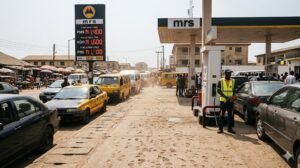
Pump prices now: Petrol has hit N1,400 per litre in many parts of the country. In Lagos and the South-West, prices range from N1,315 to N1,350. In northern states, the N1,400 mark has been crossed. In border communities, prices are nearing N1,700 due to restricted supply.
NNPC profiting from the chaos: The NNPC has raised official selling prices for all 37 Nigerian crude grades for May-loading cargoes. Bonny Light is up by 6.13 dollars per barrel compared to April. Forcados is up by 7.01 dollars.
What PETROAN is saying: The Petroleum Products Retail Outlet Owners Association of Nigeria warned that prices could exceed N1,500 per litre if the Middle East crisis is not de-escalated.
CTN assessment: The ceasefire is dead. Petrol prices are now at historic highs. The government is caught in a paradox: oil revenues are swelling, but Nigerians are paying the price at the pump. Without a domestic pricing model decoupled from global benchmarks, prices will continue to track the tides of the Middle East.
BONUS: MAY DAY 2026 — TINUBU DECLARES NATIONAL EMERGENCY
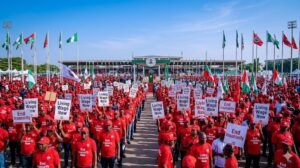
What happened: On May Day, Friday, President Tinubu declared insecurity and poverty as national emergencies during his address at Eagle Square, Abuja.
Key declarations: “There cannot be decent work where workers fear for their lives, where wages cannot feed a family, or where insecurity disrupts farms, factories, markets, and other economic activities.” The government has launched a Community Protection Guards Initiative, recruiting 45,000 young Nigerians. Cash transfers have reached 15 million vulnerable households, with 7.5 million Nigerians reportedly lifted out of poverty.
Opposition reaction: Atiku described the occasion as one of “grief” for Nigerian workers, accusing the administration of delivering “renewed hardship” instead of “renewed hope.” Obi called on workers to demand leadership anchored on “competence, character, capacity, credibility, and compassion.”
Labour’s demand: The NLC and TUC announced they will only support parties that commit to their charter of demands — including security, free education, and public healthcare — ahead of 2027. In Lagos, the NLC demanded a minimum wage increase from N85,000 to N225,000.
—
CLOSING NOTE
This was the week the opposition finally moved beyond talk — with the Obi-Kwankwaso deal reshaping 2027 calculations. The Supreme Court gave the ADC a legal lifeline, restoring INEC recognition to the Mark-led leadership, though legal battles continue.
The Boko Haram ultimatum has expired. The next 48 hours will determine the fate of 416 captives.
The cabinet reshuffle is complete — but our sources say more changes are coming.
The Hormuz ceasefire is dead. Petrol prices have crossed N1,400 per litre and are climbing.
CTN will continue tracking. No fluff. No spin. Just the truth.
—
CTN — Tracking what shapes Nigeria’s future, and the world that shapes Nigeria.









1 Comment