
Analysis
DOES A MINISTER HAVE POWERS UNDER NIGERIAN LAW TO DICTATE, COMMAND, OR INTIMIDATE A MILITARY OFFICER?


By Pelumi Olajengbesi, Esq.
The recent confrontation in Abuja between the Minister of the Federal Capital Territory and a Nigerian military officer at a duty post has ignited a basic and elementary constitutional question, who commands the Armed Forces of Nigeria, how are the powers delegated, and to whom does a soldier answer under Nigerian law?

The answer is unambiguous. The 1999 Constitution (as amended) vests the command and operational use of the Armed Forces in the President as Commander-in-Chief. That authority is exercised strictly through the lawful military chain of command and may be delegated only to a member of the Armed Forces, and not to any civilian minister.
The Armed Forces Act operationalizes this structure by placing day-to-day command in the Chief of Defence Staff and the Service Chiefs, from whom orders flow to theatre/formation commanders, unit commanders, and then to troops in the field. A soldier on post takes instructions only from his superior officers, to whom he is directly answerable, and from no one else.
By contrast, a minister’s authority is purely executive and administrative. Sections 147–148 of the Constitution empower the President to assign “any business of the Government” to ministers; and for the FCT specifically, section 302 allows the President to appoint an FCT Minister “who shall exercise such powers and perform such functions as may be delegated to him by the President.” That delegation concerns civil administration, not military command, which the Constitution separately and specifically ring-fences under section 218.
It is therefore pertinent to submit that while the Minister of the FCT has the authority to represent the President within the FCT, such powers are limited to civilian administration and are not the same as exercising control over a member of the Armed Forces.
It follows that no minister can lawfully countermand a soldier’s orders, question an operational posting, or issue binding instructions to an officer on a duty beat. A soldier’s duty post is where his commanders assign him, and his accountability runs within that chain of command.
While the Minister of FCT has authority over all the lands under the FCT and has powers to dictate the use in line with the Law. When a he meets obstruction from a Military command the proper options available to him is to escalate the matter through the established security architecture and the relevant commanders, or engage with the President at most to address such issues, not to confront the officer at post. Such behavior is reckless, primitive and an abuse of office.
The criminal law protects officers on lawful duty from interference. The Constitution’s Fifth Schedule classifies all members of the Armed Forces as public officers. In the southern states of Nigeria(Criminal Code regime), section 197 criminalises obstructing or resisting a public officer in the discharge of duty. Within the FCT (Penal Code regime), provisions such as sections 148–149 (obstructing a public servant in the discharge of lawful functions) and section 153 (threat of injury to a public servant) are against by conduct that seeks to browbeat officers at their posts. These are enforceable norms that safeguard the integrity of public duties.
There is no special shield for ministers who cross the line. A minister has no Constitutional immunity, as such is limited under section 308 to the President, Vice-President, Governors, and Deputy Governors. A minister who intimidates or obstructs an officer on duty should be investigated and, where appropriate, prosecuted like any other citizen.
In sum, the law draws a bright line, while the ministers run civilian administration, the President only, through the military chain of command, controls the troops. A ‘soldier’ at his post answers to his commanders, not to politicians, and the criminal law forbids attempts to insult, intimidate, or countermand him while he discharges his duty.
The Wike episode should be addressed decisively by the government for one singular reason. Some Nigerians in political offices have cultivated the habit of assuming they are all-powerful and often disregard the limits of their authority. Tolerating such conduct risks more serious confrontations in the future from politicians.

Pelumi Olajengbesi is a Legal Practitioner and Senior Partner at Law Corridor.








Analysis
Ozoro Festival Scandal Sparks National Debate on ‘Weaponised Traditions’ and Cultural Reform
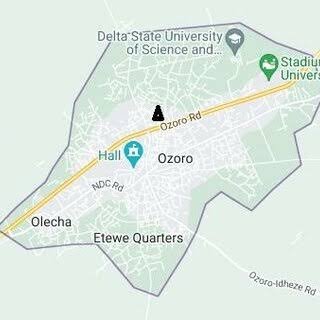
The controversy surrounding the Ozoro Festival in Delta State has ignited a nationwide debate over harmful cultural practices, following viral videos showing acts of sexual violence and widespread outrage across Nigeria.

The scandal has led to the arrest of six suspects by the police, including a community leader, but many Nigerians argue that the response falls short of justice and fails to address deeper cultural issues.
Critics have described the Ozoro Alue-Do Festival as a “weaponised tradition,” accusing it of reinforcing misogyny and enabling abuse under the guise of cultural celebration. Some members of the Isoko community, however, insist the issue is being misrepresented.
A female indigene, who spoke anonymously, condemned what she described as systemic discrimination against women within the culture, alleging that harmful practices are often excused and victims silenced.
“Women are blamed even in cases of abuse, while perpetrators are shielded,” she said, pointing to long-standing traditions that, in her view, enable injustice.
But cultural analyst Anote Ajelouruo cautioned against sweeping generalisations, arguing that the festival’s origins must be understood within historical context.
He noted that fertility rites were common in many ancient societies and said isolated incidents of misconduct should not define an entire cultural heritage.
“Every society had practices shaped by limited knowledge at the time. What matters is ensuring such traditions are not hijacked or abused,” he said.
Lessons from Ibadan
Observers say reform is possible, pointing to the transformation of the Oke’Badan Festival in Ibadan, which has evolved from a chaotic and unsafe event into a structured cultural celebration.
Journalist and historian Temilade Adeyemi recalled that the festival was once notorious for harassment of women, with vulgar displays and public misconduct.
Today, however, it is widely regarded as a symbol of cultural pride, featuring organised performances and safer participation for women.
Path to Reform
Experts say any attempt to reform the Ozoro Festival must be driven by the community, with traditional leaders playing a central role in redefining its purpose.
They also stress the importance of accountability, urging authorities to ensure that those arrested are prosecuted to rebuild public trust.
Increased participation of women in planning and decision-making is seen as critical to reshaping the festival into a safer and more inclusive event.
Analysts further recommend sustained public education and media engagement to highlight positive cultural values while discouraging harmful practices.
Uncertain Future
Despite the outrage, questions remain over whether meaningful reform will take place or if the festival will continue to attract criticism.
For now, attention remains on both community leaders and law enforcement authorities, as Nigerians watch closely to see whether the incident will mark a turning point or another missed opportunity for change.

By AVM Rtd Akugbe Iyamu MNSA fsi
Extreme weather conditions are unexpected, unusual or severe weather events that fall outside normal patterns, often causing significant disruption, damage to infrastructure, and environmental destruction.
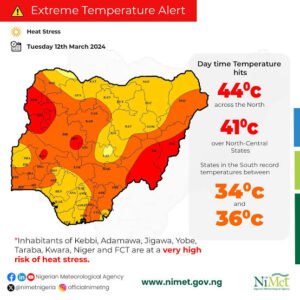
Examples include heatwaves, intense hurricanes, flooding, severe droughts, and tornadoes. These events are becoming more frequent due to climate change.
Nigeria is a country perpetually under elections frenzy: campaigning, off cycle and other electoral activities. These political manifestations always offered little attention to key areas of the environment that threatens economic growth and development, security and poverty, inequality and hunger. As of early 2026, Nigeria hosts over 3.7 million internally displaced persons (IDPs) driven from their homes by conflict, insecurity, and climate disasters. The vast majority of this displacement is concentrated in the North-East and North-West regions, with around 3,900 camps and host communities providing temporary shelter. Currently, Africa is experiencing intensified extreme weather events driven by climate change, primarily manifested as severe droughts, devastating floods, and extreme heatwaves. These events, such as the 2020-2023 Horn of Africa drought and 2024 regional flooding, are becoming more frequent, severely impacting food security, agriculture, and infrastructure.
For instance the death situation in Kenya has risen to 66 and Ethiopia 125 deaths with 11,000 displaced. This is a clear and present danger to Africa and is likely to stretch the existing response measures. At this point NIHSA, NiMet and other agencies need to be called out to show visible signs to the 2026 Seasonal Climate Prediction. At this point, the country need more emphasis in advising all stakeholders to shift from reactive to proactive climate-informed planning to ensure food security and protect infrastructure. Nigeria need to step up preparation against what we see coming as extreme weather in 2026. From the situations in Ethiopia and Kenya, it is obvious that 2026 will be characterized by variable rainfall and cyclone bomb. We have seen prolonged dry spells, and higher-than-average temperatures early in the year that have threatened the health and security of Nigerians. Based on the 2026 Seasonal Climate Prediction (SCP) unveiled by the Nigerian Meteorological Agency (NiMet) on February 10, 2026, the country need to do more. Judging from the heavy snow in the northern hemisphere, nigeria need key preparations that include using AI for better forecasting, tailored agricultural advice, and flood warning systems.
2026 should not be treated like other years. With insecurity, poverty, inequality, high taxation, higher borrowings and higher energy costs, negligence will unravel the economy and underbelly of Nigeria energy security system. Time to act is now because there are too many negatives conflating the country and we have to solve the issues of environmental challenges because when you lack the structure, you attract rupture.
The Federal Government, through the National Orientation Agency (NOA) should be promoting the dissemination of the SCP to local farmers to ensure it directly informs field decisions.
AVM RTD AKUGBE IYAMU MNSA fsi
CONSULTANT ON CLIMATE CHANGE AND ANALYST ON ENVIRONMENTAL POLICIES
PRESIDENT ASSOCIATION OF ENVIRONMENTAL PROTECTION AND CLIMATE CHANGE PRACTITIONERS

FFK Raises Fresh Questions Over El-Rufai’s Actions, Security Allegations
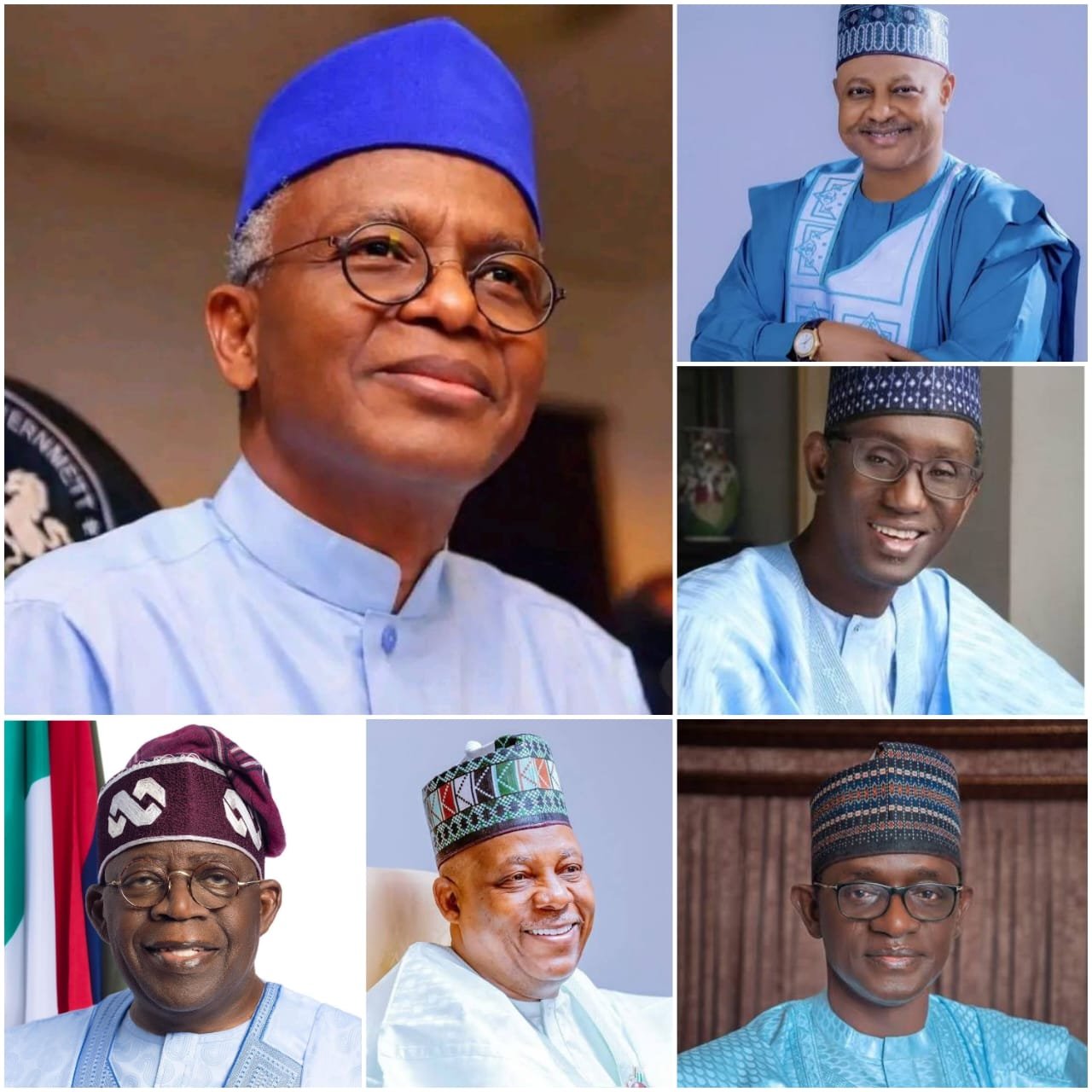
Former Minister of Aviation, Femi Fani-Kayode, has again raised concerns about the actions and statements of former Kaduna State Governor, Nasir El-Rufai, describing some of them as matters that require clarification in the interest of national security.
In a lengthy statement titled “More Questions for Nasir El-Rufai,” Fani-Kayode said he was still awaiting answers to several issues he had previously raised regarding El-Rufai’s conduct while serving in public office.
He also expressed sympathy after reports that El-Rufai allegedly suffered a nosebleed while in detention, noting that he hoped the former governor would soon respond directly to the questions raised.
Fani-Kayode accused the former governor of carrying out several demolition exercises during his tenure as Minister of the Federal Capital Territory and later as governor of Kaduna State, claiming that the actions affected residential buildings, communities and facilities, including some used by vulnerable groups.
He further alleged that some of the demolitions occurred close to the end of El-Rufai’s tenure in May 2023, including operations reportedly conducted by the Kaduna State Urban Planning and Development Authority in areas such as Gbagyi Villa and other communities.
According to him, critics had described the demolitions as vindictive, while affected residents alleged that some structures were removed despite legal disputes over the properties.
The former aviation minister also raised issues relating to policies implemented during El-Rufai’s administration in Kaduna State, including restrictions on certain religious activities and the suspension of state-sponsored pilgrimages at the time.
Fani-Kayode additionally referenced tensions between El-Rufai and some political figures, including Kaduna State Governor Uba Sani, claiming the relationship deteriorated after the former governor left office.
Beyond the political issues, the statement also touched on security-related concerns, particularly allegations surrounding the bugging of phones and claims involving the possible importation of a toxic substance.
Fani-Kayode said such matters, if true, could pose serious national security implications and called for relevant security agencies to investigate thoroughly.
He expressed confidence that institutions such as the Department of State Services, the Nigerian Police Force, and other intelligence bodies would look into the allegations and determine the facts.
Fani-Kayode maintained that his remarks were intended to raise questions and encourage transparency, emphasizing the need for clarity on issues that could affect national stability and public confidence.