
General News
Dollar Climbs Toward 2026 Peak as Oil Price Surge Fuels Global Inflation Fears

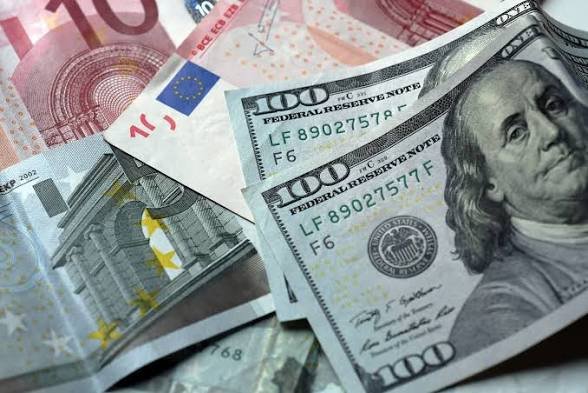
The U.S. dollar strengthened for a third straight day on Thursday, hovering near its highest level in 2026 as rising energy prices heightened global inflation concerns and forced investors to reconsider expectations for central bank interest-rate policies.
The currency’s rally comes amid escalating tensions in the Middle East, which have triggered sharp swings in oil markets and raised fears of a prolonged economic shock if the conflict persists.

The greenback’s safe-haven status has boosted demand, particularly as the United States remains a net energy exporter. The surge has placed pressure on currencies of major energy-importing economies.
Since the start of the war involving the United States, Israel and Iran, the Indian Rupee and the Japanese Yen have each weakened by more than 1.5 percent against the United States Dollar. Meanwhile, the Euro and the South Korean Won have fallen roughly 2 percent and 3 percent respectively.
Strategists say Europe’s heavy reliance on imported energy is contributing to the euro’s weakness. Lefteris Farmakis, a strategist at Barclays, noted that the euro typically loses around 0.5 percent for every 10 percent increase in oil prices and about 2.5 percent when natural gas prices double.
The euro slipped slightly to $1.1558, close to its lowest level since November, while the British Pound Sterling fell 0.2 percent to $1.338. The yen also weakened, briefly crossing the 159-per-dollar mark before settling near 158.66, its weakest level since July 2024.
Oil markets remain highly volatile. Brent Crude futures surged more than 10 percent at one point, touching $101.59 per barrel despite efforts by the International Energy Agency to stabilise markets through the release of a record 400 million barrels from strategic reserves.
European natural gas prices have also jumped about 70 percent since the conflict began, at one point doubling within days.
The spike in energy costs is now reshaping expectations around global interest rates. Financial markets indicate that the European Central Bank could raise interest rates as early as June, while the Federal Reserve may delay any rate cuts until September.
Meanwhile, U.S. President Donald Trump said Washington was in “very good shape” in its conflict with Iran, adding that the United States would closely monitor developments around the strategic Strait of Hormuz, a critical route for global oil shipments.
Analysts warn that continued volatility in energy markets could further dampen investor confidence and deepen pressure on global currencies in the weeks ahead.