
General News
Fani-Kayode’s Diplomatic Row With South Africa Deepens As Pretoria Issues Formal Warning

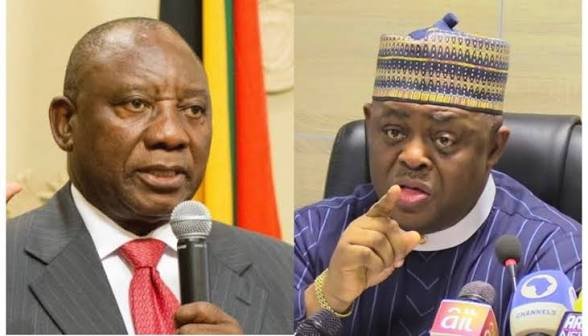
Nigeria’s diplomatic relations with South Africa have come under renewed strain following a controversy involving Nigeria’s newly appointed High Commissioner to Pretoria, Femi Fani-Kayode, over the omission of his speech from a televised diplomatic ceremony.
The disagreement has escalated, with South Africa’s Department of International Relations and Cooperation (DIRCO) issuing a formal diplomatic démarche to the Nigerian envoy over his handling of the incident and subsequent public comments.
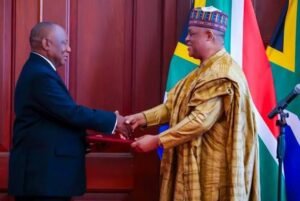
The controversy began on November 13, when Fani-Kayode presented his Letters of Credence to South African President Cyril Ramaphosa at the Sefako Makgatho Presidential Guest House in Pretoria, alongside representatives of 14 other countries.
The ceremony, which formally marked the commencement of his diplomatic assignment, was streamed by the South African Presidency.
However, the broadcast was interrupted during the presentation by the French Ambassador, Antoine Michon, before switching to Ramaphosa’s address to the assembled diplomats.
Fani-Kayode subsequently alleged that Nigeria was deliberately excluded from the livestream, claiming that the introductions and speeches of the other 14 diplomatic representatives were broadcast while his own address was omitted.
In a statement posted on his official X account, the former Minister of Aviation described the development as unacceptable and suggested that some elements in South Africa were uncomfortable with Nigeria’s presence.
He said he raised the matter directly with Ramaphosa during a subsequent photo session, adding that the South African President directed relevant officials to address the complaint.
The Nigerian envoy also declined an interview invitation from the South African Broadcasting Corporation (SABC), citing the treatment of his delegation.
Following his protest, the South African Presidency released a fuller recording of the ceremony, including Fani-Kayode’s speech.
South African presidential spokesperson, Vincent Magwenya, however, faulted the envoy’s reaction, describing it as inappropriate and arguing that he had misunderstood the circumstances surrounding the broadcast interruption.
The SABC also defended its coverage, explaining that the ceremony was transmitted on its SABC News LIVE channel on SABC+ and that Fani-Kayode’s arrival was featured on its DStv Channel 404.
The disagreement took another turn on November 17 when DIRCO Director-General, Zane Dangor, met with Fani-Kayode to convey the South African government’s concerns about his conduct and public comments.
During the meeting, Dangor reminded the Nigerian envoy of Article 41 of the 1961 Vienna Convention on Diplomatic Relations, which requires diplomatic agents to respect the laws and regulations of their host country and conduct official business through appropriate diplomatic channels.
South Africa maintained that diplomatic disagreements should be addressed through established communication procedures, while reaffirming its commitment to preserving relations with Nigeria.
The development has generated divided reactions among Nigerians and foreign affairs observers, particularly over the extent to which diplomatic representatives should publicly challenge perceived acts of disrespect against their countries.
Foreign affairs analyst Paul Ejime argued that while Fani-Kayode was entitled to seek clarification over the omission, his public reaction was inconsistent with the restraint and discretion expected of an ambassador.
He maintained that diplomatic assignments require tact, emotional intelligence and familiarity with established international protocols, warning that public confrontations could complicate bilateral engagement.
A retired ambassador, Ogbole Amedu Ode, also questioned aspects of the envoy’s conduct, including his physical interaction with Ramaphosa during the ceremony, which he considered inappropriate in a formal diplomatic setting.
However, global affairs analyst Anngu Orngu defended Fani-Kayode’s response, arguing that Nigeria was entitled to demand an explanation if its delegation was singled out during an important diplomatic event.
He maintained that the country’s dignity and historical contributions to South Africa’s liberation struggle should not be overlooked in the management of bilateral relations.
Nigeria played a significant role in the struggle against apartheid through diplomatic, political and financial support for the liberation movement. Its contribution remains an important part of the historical relationship between both countries.
Relations between Abuja and Pretoria have, however, experienced periodic tensions over xenophobic attacks against Nigerians and other African nationals, immigration concerns, economic competition and diplomatic disagreements.
The latest controversy has therefore renewed questions about how both countries can manage disagreements without undermining broader cooperation.
For Nigeria, the immediate challenge is to ensure that the conduct of its diplomatic representative advances the country’s interests while maintaining constructive engagement with the host government.
For South Africa, addressing concerns over the broadcast disruption and sustaining confidence with a longstanding African partner remain important to preventing the incident from developing into a wider diplomatic dispute.
The latest development underscores the delicate balance between defending national interests and observing the diplomatic conventions governing relations between sovereign states.